 Skip to content





Metallic epoxy floors have become increasingly popular among homeowners and business owners seeking a unique, eye-catching flooring solution. These stunning surfaces create mesmerizing visual effects that can transform any space into something truly spectacular. However, one phenomenon that often catches people off guard is the appearance of rainbow effects in their metallic epoxy floors. Understanding what causes these rainbow effects is crucial for anyone considering this type of flooring or dealing with unexpected color changes in their existing installation.
The rainbow effect in metallic epoxy floors is a complex optical phenomenon that can occur due to various factors during installation, curing, or even years after the floor has been completed. While some people find these rainbow patterns beautiful and desirable, others may view them as an unwanted defect that detracts from their intended design. The key to managing expectations and achieving desired results lies in understanding the science behind these colorful displays and the factors that influence their appearance.
Several elements contribute to the development of rainbow effects in metallic epoxy floors, including the type and concentration of metallic pigments used, the application technique, environmental conditions during installation, and the chemical composition of the epoxy system itself. The interaction between light and the metallic particles embedded in the epoxy creates interference patterns that can produce stunning iridescent effects reminiscent of oil slicks or soap bubbles.
Temperature and humidity during installation play crucial roles in how metallic pigments settle and cure within the epoxy matrix. When conditions aren’t optimal, the metallic particles may distribute unevenly or react differently than expected, leading to unexpected color variations and rainbow patterns. Understanding how humidity affects installation timing is essential for optimal results. Additionally, the thickness of the epoxy coating, the size and shape of metallic flakes, and even the underlying substrate preparation can all influence the final appearance of the floor.
Professional installers at companies like Top Gun Garage understand these variables and work diligently to control them throughout the installation process. However, even with careful planning and execution, some degree of color variation and rainbow effects may still occur due to the inherent nature of metallic epoxy systems. The key is knowing when these effects are normal and desirable versus when they indicate potential issues with the installation or materials.
Key Takeaways
Optical interference is the primary cause: Rainbow effects in metallic epoxy floors result from light interference patterns created when light waves interact with thin layers of metallic particles suspended in the epoxy coating.
Installation conditions matter significantly: Temperature, humidity, and air circulation during application directly impact how metallic pigments settle and cure, affecting the likelihood and intensity of rainbow effects.
Material quality influences outcomes: The type, size, and concentration of metallic pigments, along with the epoxy formulation, determine how susceptible a floor is to developing rainbow patterns.
Thickness variations create color shifts: Uneven application or areas where the epoxy coating varies in thickness can lead to different optical effects and rainbow appearances across the floor surface.
Chemical reactions can alter appearance: Interactions between different metallic pigments, epoxy components, or environmental contaminants may cause unexpected color changes and rainbow effects over time.
Prevention requires expertise: Professional installation techniques, proper surface preparation, and controlled environmental conditions significantly reduce unwanted rainbow effects while preserving desired metallic aesthetics.
Some effects are permanent: Once rainbow patterns develop and the epoxy has fully cured, they typically cannot be removed without complete floor refinishing or replacement.
Quality control is essential: Working with experienced contractors who understand metallic epoxy systems helps ensure predictable results and minimizes unexpected rainbow formations.
Understanding the Science Behind Rainbow Effects
The rainbow effect in metallic epoxy floors is fundamentally an optical phenomenon known as thin-film interference. This occurs when light waves reflect off different layers within the epoxy coating and interfere with each other, creating the characteristic rainbow patterns observed. In metallic epoxy systems, this interference happens between light reflecting off the surface of the epoxy and light reflecting off the metallic particles embedded within the coating.
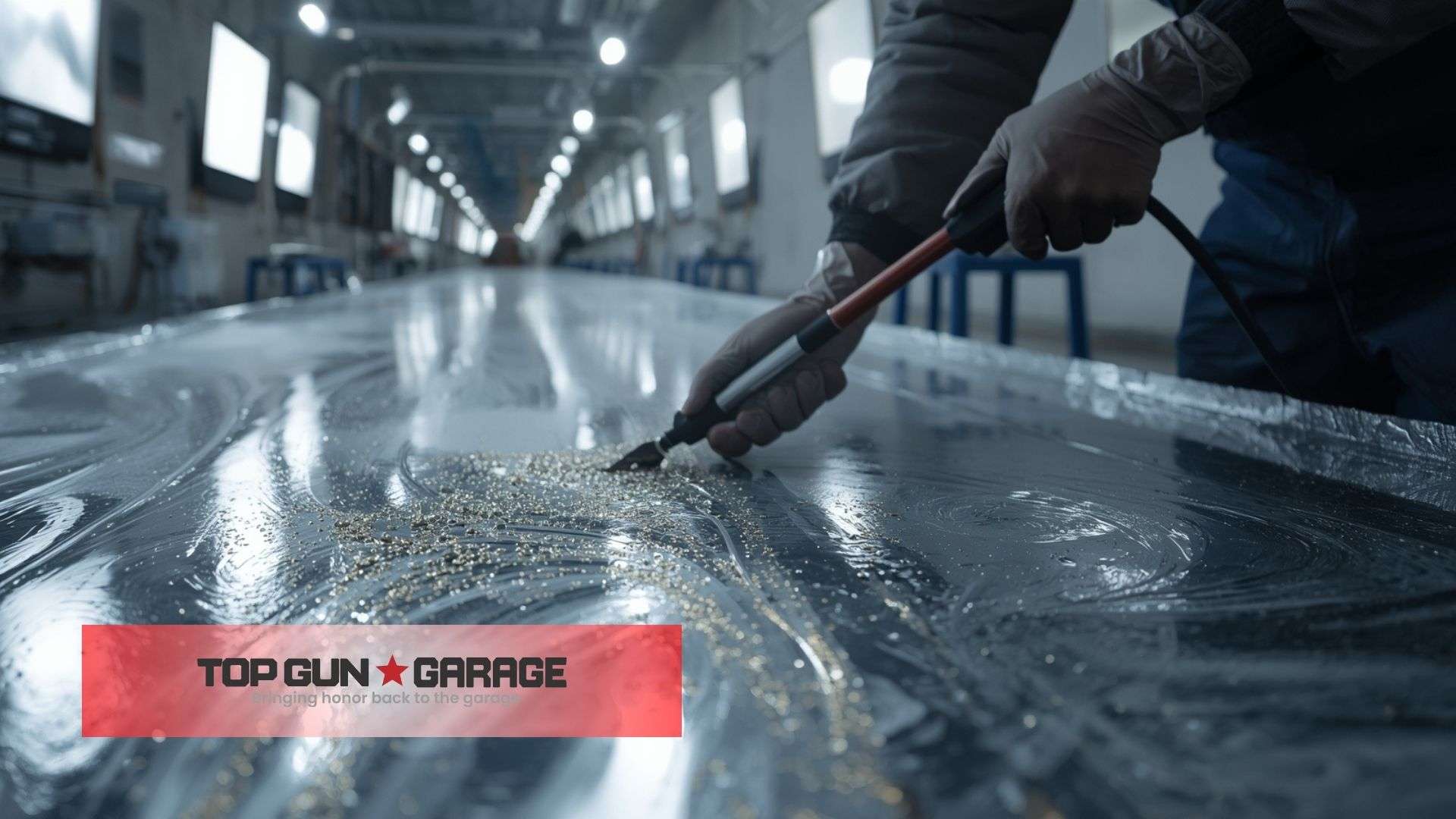
When white light hits the surface of a metallic epoxy floor, it encounters multiple reflecting surfaces at slightly different depths. Some light reflects immediately off the top surface of the cured epoxy, while other light penetrates deeper and reflects off individual metallic flakes or particles. As these reflected light waves travel back toward our eyes, they can either reinforce each other (constructive interference) or cancel each other out (destructive interference), depending on their wavelengths and the distances they’ve traveled.
The specific colors seen in rainbow effects depend on the thickness of the epoxy layer above the metallic particles and the angle at which the surface is viewed. Different wavelengths of light experience different degrees of interference, causing some colors to appear more vibrant while others are suppressed. Understanding what determines epoxy thickness helps explain these variations. This is why rainbow effects often appear to shift and change as one moves around the floor or as lighting conditions change throughout the day.
Metallic particles themselves contribute to this effect through their reflective properties and orientation within the epoxy matrix. Flat, plate-like metallic flakes tend to align parallel to the floor surface during application, creating consistent reflecting surfaces that enhance interference patterns. However, when these particles cluster together or orient at different angles, they can create localized areas of intense rainbow effects that may appear as patches or streaks across the floor.
Installation Factors That Trigger Rainbow Effects
The installation process itself plays a critical role in determining whether rainbow effects will appear in metallic epoxy floors. Temperature control during application is perhaps the most significant factor, as it affects both the viscosity of the epoxy and the rate at which it cures. Understanding how temperature affects epoxy molecular structure provides valuable insights. When temperatures are too high, the epoxy may cure too quickly, trapping metallic particles in uneven distributions that create rainbow patterns. Conversely, low temperatures can slow curing to the point where particles settle unevenly or environmental contaminants interfere with the finish.
Humidity levels during installation can also dramatically impact the final appearance of metallic epoxy floors. High humidity can cause moisture to become trapped in the epoxy as it cures, creating microscopic bubbles or haze that interfere with light transmission and reflection. This trapped moisture can enhance rainbow effects by creating additional reflecting surfaces within the coating. Professional installers understand these challenges and often recommend specific environmental conditions for optimal results, which is why many homeowners benefit from working with experienced contractors rather than attempting DIY installations.
The mixing and application technique used during installation significantly influences how metallic particles distribute throughout the epoxy. Overmixing can break down metallic flakes, reducing their reflective properties and altering the intended appearance. Undermixing, on the other hand, can lead to uneven distribution of particles, creating areas of varying metallic concentration that produce different optical effects. Learning about the metallic epoxy flooring process reveals proper application techniques. The speed and pattern of application also matter, as rapid or inconsistent spreading can cause particles to align differently or concentrate in certain areas.
Substrate preparation and primer selection can indirectly contribute to rainbow effects by affecting how the metallic epoxy adheres and cures. Poor surface preparation may lead to uneven absorption of the epoxy, causing variations in coating thickness that enhance interference patterns. Understanding how concrete is prepared is crucial for success. Similarly, incompatible primers or sealers can react with the metallic epoxy system, altering its optical properties and potentially creating unexpected color variations throughout the curing process.
Material Composition and Quality Considerations
The type and quality of materials used in metallic epoxy systems directly influence the likelihood and intensity of rainbow effects. Different metallic pigments have varying particle sizes, shapes, and reflective properties that affect how they interact with light. Aluminum flakes, for example, tend to produce bright, silvery reflections with minimal color interference, while copper or bronze particles may create warmer tones with more pronounced rainbow effects due to their inherent color properties.
Particle size distribution within metallic pigments plays a crucial role in determining optical effects. Uniform particle sizes tend to produce more predictable and consistent appearances, while mixed sizes can create complex interference patterns that manifest as rainbow effects. Larger particles typically reflect more light and create stronger metallic appearances, but they may also be more prone to settling unevenly during application, leading to localized color variations.
The epoxy resin formulation itself affects how metallic particles suspend and cure within the coating. Some epoxy systems are specifically designed to maintain particle suspension longer during application, allowing for more even distribution and reducing the likelihood of unwanted rainbow effects. Understanding the difference between epoxy types helps inform material selection. Others may cure more quickly or have different viscosity characteristics that influence particle movement and final positioning within the coating.
Quality control in manufacturing is essential for consistent results in metallic epoxy systems. Variations in pigment quality, contamination during production, or inconsistent formulations can all contribute to unexpected rainbow effects. Premium metallic epoxy products typically undergo more rigorous quality testing and use higher-grade materials, resulting in more predictable outcomes and fewer unwanted optical effects. This is why professional contractors often specify particular brands or product lines based on their experience with consistent performance and appearance.
Chemical compatibility between different components in the metallic epoxy system is another critical factor. When pigments, resins, hardeners, or additives are not properly matched, chemical reactions may occur that alter the optical properties of the cured coating. These reactions can happen immediately during mixing and application or develop slowly over time, leading to gradual changes in appearance including the development of rainbow effects months or even years after installation.
Environmental and Long-Term Factors
Environmental conditions both during and after installation can significantly impact the development of rainbow effects in metallic epoxy floors. UV exposure from sunlight or certain types of artificial lighting can cause photochemical reactions that alter the appearance of metallic particles over time. Understanding why epoxy floor colors fade in Florida sun reveals UV damage risks. While most modern epoxy systems include UV stabilizers, prolonged exposure may still lead to color shifts or the development of rainbow patterns that weren’t initially present.

Chemical exposure from cleaning products, automotive fluids, or other substances can also contribute to rainbow effects by altering the surface properties of the epoxy or reacting with metallic particles. Some chemicals may cause localized changes in the refractive index of the epoxy, creating areas where light interference patterns become more pronounced. Learning about how epoxy floors resist chemicals provides insights into protection capabilities. This is particularly relevant in garage applications where floors may be exposed to various automotive chemicals and cleaning agents over time.
Temperature cycling and thermal expansion can affect the distribution of metallic particles within the epoxy matrix. As the floor expands and contracts with temperature changes, internal stresses may cause slight movements in particle positioning, potentially altering optical effects. Understanding how Florida temperature fluctuations impact epoxy helps explain these changes. While these changes are typically minimal, they can become more noticeable over time, especially in areas subject to extreme temperature variations.
Mechanical wear and traffic patterns can also influence the appearance of rainbow effects over time. Areas of heavy foot traffic or equipment movement may experience surface wear that alters the thickness of the top coat or exposes metallic particles differently. This differential wear can create varying optical effects across the floor surface, with some areas showing more pronounced rainbow patterns than others.
Moisture infiltration from below the slab or through surface damage can cause long-term changes in metallic epoxy floors. When moisture becomes trapped beneath or within the coating, it can create additional reflecting surfaces that enhance interference patterns. In severe cases, moisture infiltration may cause delamination or other forms of coating failure that dramatically alter the floor’s appearance and optical properties.
Prevention and Management Strategies
Preventing unwanted rainbow effects in metallic epoxy floors begins with careful material selection and proper installation planning. Professional contractors like those at Top Gun Garage typically conduct test patches or samples to evaluate how specific material combinations will perform under actual installation conditions. This testing phase allows for adjustments to pigment concentrations, application techniques, or environmental controls before committing to the full installation.
Controlling environmental conditions during installation is crucial for achieving predictable results. This includes maintaining optimal temperature and humidity levels, ensuring adequate ventilation without creating drafts that could affect particle distribution, and protecting the work area from dust and other contaminants. Understanding what affects epoxy cure time in Naples climate helps optimize timing. Professional-grade dehumidifiers, heaters, or air conditioning systems may be necessary to maintain ideal conditions throughout the installation process.
Proper surface preparation is fundamental to preventing issues that could contribute to rainbow effects. This includes thorough cleaning, appropriate mechanical preparation to achieve proper surface profile, and application of compatible primer systems. Learning about proper surface profiling reveals best practices. Any contamination, inadequate cleaning, or surface irregularities can affect how the metallic epoxy adheres and cures, potentially leading to optical inconsistencies.
Training and experience in metallic epoxy application techniques are essential for achieving consistent results. Professional installers understand how to properly mix materials, maintain consistent application rates, and recognize early signs of potential problems. Understanding how the installation process works demonstrates proper procedures. They also know how to adjust their techniques based on real-time observations of how the materials are behaving during application.
Quality assurance throughout the installation process helps identify and address potential issues before they become permanent. This includes monitoring cure rates, checking for proper particle distribution, and making adjustments as needed during the application window. Experienced contractors maintain detailed records of installation conditions and techniques to help troubleshoot any issues that may arise and improve future installations.
Frequently Asked Questions
Can rainbow effects in metallic epoxy floors be fixed after installation?
Once rainbow effects have developed and the epoxy has fully cured, they typically cannot be removed without significant intervention. Minor effects might be minimized through careful buffing or application of additional clear coats, but pronounced rainbow patterns usually require partial or complete refinishing of the affected areas.
Are rainbow effects always considered a defect in metallic epoxy floors?
Not necessarily. Some rainbow effects can be quite beautiful and add to the unique character of metallic epoxy floors. The key is whether the effects match the client’s expectations and the intended design. What matters most is clear communication about potential outcomes during the planning phase.
Do certain colors of metallic pigments produce more rainbow effects than others?
Yes, some metallic pigments are more prone to rainbow effects than others. Silver and aluminum-based pigments tend to produce more pronounced interference patterns, while darker metallic colors like bronze or copper may show less dramatic rainbow effects due to their inherent color properties. Exploring metallic epoxy colors that change with lighting reveals design possibilities.
How long after installation might rainbow effects appear?
Rainbow effects can appear at different times depending on their cause. Installation-related effects are usually visible within the first few days as the epoxy cures. Environmental or chemical-induced rainbow effects may develop gradually over months or years of exposure.
Can lighting changes minimize the appearance of rainbow effects?
Yes, lighting can significantly impact how rainbow effects appear. Different light sources, angles, and intensities can either emphasize or minimize these optical effects. LED lighting with consistent color temperature often provides the most predictable appearance.
Is there a way to predict if rainbow effects will occur before installation?
While it’s impossible to predict with complete certainty, experienced contractors can assess risk factors such as environmental conditions, material selections, and substrate conditions. Test patches in inconspicuous areas can help evaluate potential outcomes before full installation.
Do rainbow effects affect the durability or performance of metallic epoxy floors?
Rainbow effects are typically a cosmetic issue and don’t usually impact the structural integrity or performance characteristics of the floor. The epoxy coating continues to provide protection and durability regardless of optical effects, unless the rainbow patterns are caused by underlying adhesion or curing problems.
Are there specific maintenance practices that can prevent rainbow effects from developing over time?
Proper maintenance including regular cleaning with appropriate products, avoiding harsh chemicals, and protecting the floor from excessive UV exposure can help maintain the original appearance. Learning proper cleaning processes ensures long-term quality. However, some age-related changes in optical properties may be unavoidable over very long periods.
Conclusion
Understanding what causes rainbow effects in metallic epoxy floors is essential for anyone considering this stunning flooring option or dealing with unexpected color changes in their existing installation. These optical phenomena result from complex interactions between light, metallic particles, and the epoxy matrix, influenced by factors ranging from installation techniques to environmental conditions and material quality.
While rainbow effects can sometimes be unexpected or unwanted, they’re often a natural consequence of the unique properties that make metallic epoxy floors so visually striking. The key to success lies in working with experienced professionals who understand these systems thoroughly and can help manage expectations while minimizing unwanted effects through proper planning, material selection, and installation techniques.
For homeowners and business owners considering metallic epoxy floors, the most important step is choosing qualified contractors who have extensive experience with these specialized systems. Professional installation not only reduces the likelihood of unwanted rainbow effects but also ensures that any optical phenomena that do occur enhance rather than detract from the overall design intent. With proper planning and execution, metallic epoxy floors can provide years of stunning visual appeal while maintaining their protective and functional properties.