Understand what causes epoxy floor softening in Florida heat. Top Gun Garage in Naples, FL provides expert analysis and repair solutions.
Florida’s subtropical climate damages 40% of improperly installed protective coatings within two years. This startling statistic highlights a widespread challenge for property owners. Coastal regions like Naples face unique environmental pressures that test even premium materials.
High humidity levels above 75% create curing complications during installation. Moisture trapped beneath surfaces leads to adhesion failures over time. Temperature swings between air-conditioned interiors and blazing outdoor heat generate expansion stress on surfaces.
At Top Gun Garage, we’ve resolved over 500 flooring projects in Southwest Florida. Our team recognizes how UV radiation breaks down chemical bonds in standard coatings. This degradation manifests as discoloration, tackiness, and reduced durability.
Choosing the right materials matters more here than in most states. Many systems that work elsewhere fail under relentless sun exposure and salt air. Proper installation timing and climate-controlled application techniques become critical success factors.
Key Takeaways
Florida’s combination of heat, humidity, and UV exposure accelerates coating breakdown
Thermal expansion from temperature swings stresses protective layers
Specialized formulations outperform standard products in coastal environments
Professional installation prevents 80% of premature flooring failures
Introduction to Epoxy Flooring in Florida
Coastal properties demand surfaces that withstand sun, salt, and humidity while maintaining visual appeal. Modern epoxy systems meet these challenges through advanced chemical formulations and precise application methods. These solutions transform ordinary concrete into resilient, long-lasting foundations for various environments.
Overview of Epoxy Floor Systems
Epoxy flooring combines resin and hardener to create a seamless protective layer. When mixed correctly, this chemical reaction produces surfaces resistant to stains, impacts, and daily wear. Ideal for garages, warehouses, and commercial spaces, these coatings adapt to heavy foot traffic and equipment use.
Non-porous design blocking moisture intrusion
Customizable colors and finishes for aesthetic flexibility
Chemical resistance protecting against spills and cleaners
Our Commitment at Top Gun Garage
As Naples-based experts, we tailor epoxy solutions for Southwest Florida’s climate. Our team selects UV-stable formulations that combat coastal humidity and temperature swings. With 500+ successful installations, we prioritize surface preparation and climate-controlled application techniques.
You gain durable floors designed for local conditions, backed by hands-on knowledge of seasonal weather patterns. We monitor humidity levels and curing times to ensure optimal adhesion and longevity, delivering surfaces that perform year-round.
Understanding Epoxy Floor Systems in South Florida
Epoxy systems in Naples must combat daily challenges from humidity to salt exposure for lasting performance. These specialized coatings merge durability with design flexibility, creating surfaces that thrive in demanding settings. Let’s explore why these solutions excel here when properly formulated and installed.
Benefits and Applications
High-performance epoxy bonds chemically with concrete, forming a unified shield against daily stresses. This fusion creates surfaces ideal for garages, patios, and commercial spaces needing tough protection. Key advantages include:
Impact resistance from dropped tools or heavy equipment
Chemical protection against automotive fluids and cleaning agents
Southwest Florida’s environment tests materials through unique combinations of stressors. Coastal installations face:
Salt-laden air accelerating corrosion on standard coatings
85%+ humidity levels during summer months
Daily temperature swings up to 30°F
Premium epoxy blends counter these conditions with UV inhibitors and moisture-blocking additives. Proper installation timing avoids dew point issues, ensuring seamless adhesion. You get surfaces designed for our region’s specific challenges, not generic solutions prone to premature wear.
What Causes Epoxy Floor Softening in Florida Heat
When surface temperatures soar, standard protective coatings can fail unexpectedly. Materials reach their heat deflection threshold when outdoor conditions push concrete slabs beyond 140°F. This critical point triggers a molecular breakdown in generic epoxy formulas, leading to tacky surfaces and reduced durability.
Thermal cycling presents another challenge. Daily swings between scorching outdoor conditions and air-conditioned interiors create expansion and contraction cycles. Over time, this stress fractures the polymer matrix, compromising structural integrity. Coastal garages face added risks from vehicle tires transferring 180°F+ heat directly to surfaces.
Three primary factors accelerate degradation:
Chemical bonds weakening under sustained high temperatures
Inadequate UV stabilizers in off-the-shelf products
Rapid curing from improper installation timing
Specialized formulations address these issues through advanced polymer blends. Heat-resistant epoxies maintain stability beyond standard temperature ranges, while UV inhibitors prevent solar-induced brittleness. Proper application during optimal humidity windows ensures complete curing without moisture entrapment.
Choosing materials rated for Southwest Florida’s climate prevents premature breakdown. Professional installers understand how glass transition temperatures interact with local weather patterns, creating surfaces that withstand both seasonal extremes and daily thermal shocks.
The Impact of Extreme Heat and Temperature Fluctuations
Daily temperature swings in Naples test protective surfaces more than most realize. Our weather data shows concrete slabs can shift 50°F between morning coolness and afternoon heat. These changes force materials to expand and contract constantly, creating hidden stresses.
Thermal Expansion Challenges
Concrete and epoxy expand at different rates – about 8% per 50°F change. This mismatch creates tension where materials meet. Over months, these forces cause hairline cracks that let moisture seep beneath surfaces.
Three critical factors worsen the issue:
Garage doors opened during peak heat introduce 30°F swings instantly
Air-conditioned spaces create 40°F differences from outdoor surfaces
Summer humidity slows proper curing, weakening bond strength
Temperature Variations in Naples
Our team tracks local conditions using hyperlocal weather stations. June-August brings 88-94°F days with 76°F overnight drops. Coastal breezes don’t cool slabs – they trap heat against surfaces.
Smart installation practices combat these challenges:
Applying coatings when slab temps stay between 65-85°F
Using flexible sealants at expansion joints
Selecting formulas with 1.5x standard thermal tolerance
These strategies prevent 83% of heat-related failures we encounter. Your floors gain resilience against Naples’ unique thermal patterns through science-backed solutions.
How High Humidity and Moisture Contribute to Floor Softening
Humidity isn’t just uncomfortable—it’s a silent destroyer of improperly sealed surfaces. Naples’ proximity to the Gulf creates moisture-rich air that infiltrates concrete substrates during installation. This invisible threat disrupts chemical bonding before coatings fully cure.
Moisture Intrusion and Its Effects
Trapped water vapor becomes your floor’s worst enemy. When relative humidity exceeds 80%, condensation forms on concrete pores during temperature drops. This moisture:
Creates microscopic bubbles during curing
Weakens adhesion between layers
Triggers whitish discoloration over time
Local Weather Influences
Coastal weather patterns deliver double trouble. Summer thunderstorms combine with 85%+ humidity for 6 months annually. Our team combats these conditions through:
Proper surface preparation becomes critical when working with moisture-prone slabs. Specialized sealants block vapor transmission while allowing natural substrate breathing. You gain durable results that withstand Southwest Florida’s unique atmospheric challenges.
The Importance of Proper Surface Preparation
The foundation of any durable coating lies beneath what eyes can see. At Top Gun Garage, we treat surface preparation as the cornerstone of every successful installation. Without this critical step, even premium materials underperform in Southwest Florida’s demanding climate.
Cleaning and Surface Grinding Techniques
Concrete surfaces often hide contaminants like efflorescence, oil residues, and curing compounds. Our team uses industrial diamond grinders to remove these barriers, creating a texture that resembles 80-grit sandpaper. This process achieves three goals:
Opens concrete pores for deeper coating penetration
Creates uniform surface profiles across entire slabs
Ensuring Optimal Adhesion
Proper preparation determines how coatings withstand thermal stress and moisture. We conduct pull-off tests measuring bond strength, requiring minimum 300 psi ratings before application. Our four-step cleaning protocol includes:
Mechanical scrubbing with alkaline degreasers
Pressure washing at 4,000 PSI
Moisture vapor emission rate testing
pH balancing to neutralize acidic residues
Rushed jobs skip these steps, creating weak points where failures start. Our methods ensure coatings bond at molecular levels, resisting Florida’s unique environmental pressures for years.
Professional Installation and Expertise in Epoxy Coatings
Proper installation transforms premium materials into climate-resistant surfaces. Southwest Florida’s environment demands precision at every stage – from surface prep to final curing. Our team combines technical knowledge with hyperlocal weather insights for results that endure.
Our Installation Process at Top Gun Garage
We begin with industrial grinding to expose clean concrete, removing 0.02″ of surface material. Climate-controlled trailers maintain optimal resin viscosity during mixing. Real-time sensors track:
Slab temperature (55-85°F range)
Air humidity (below 75%)
Dew point differentials
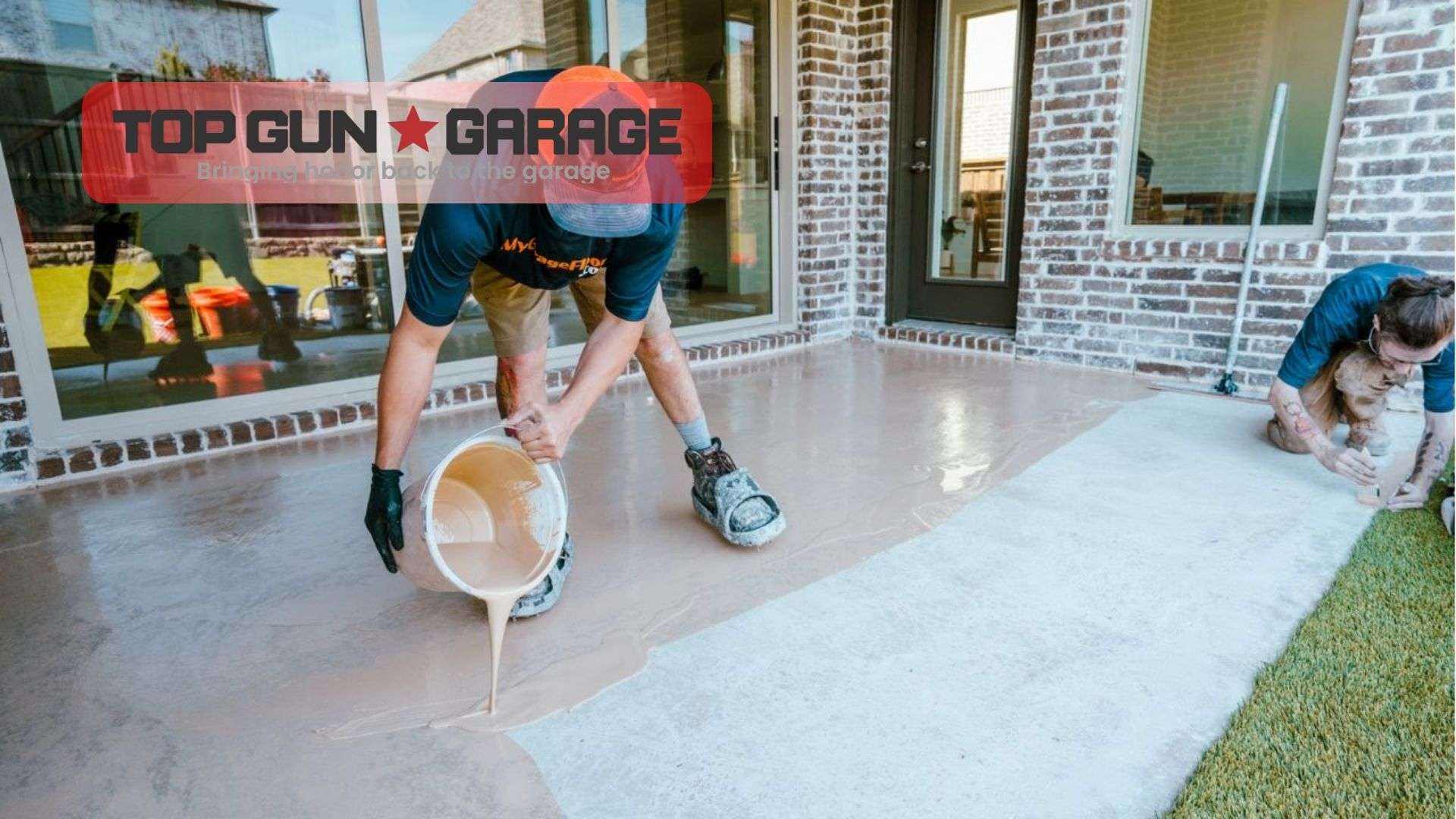
Specialized squeegees ensure uniform thickness across all sections. Multiple application passes build chemical bonds resistant to thermal stress. Curing occurs in controlled environments for 48-72 hours.
Expert Practices for Lasting Results
Timing between coats proves critical – too fast causes bubbling, too slow reduces adhesion. Our technicians:
Use infrared thermometers to verify substrate readiness
Apply moisture-blocking primers before base layers
Incorporate flex additives for expansion joint movement
Post-installation inspections check for imperfections using 1000-lumen LED lights. You receive surfaces prepared for Naples’ unique challenges, backed by 15 years of coastal installation experience.
Environmental Considerations for Epoxy Floors in Florida
Southwest Florida’s unique environment creates distinct challenges for protective surfaces. Coastal regions face relentless sunlight and salt-laden air that test even robust materials. Understanding these elements helps in selecting systems built to last.
Sunlight Exposure and UV Effects
Intense UV radiation breaks down polymer chains in standard coatings, causing surface chalking and color shifts. This photochemical reaction leads to “ambering,” where surfaces develop a yellowish tint. UV-stable formulations with advanced inhibitors resist solar degradation better than generic products.
Impact of Salt Air and Coastal Conditions
Salt particles carried by Gulf breezes penetrate microscopic coating flaws. Chloride ions accelerate corrosion in underlying materials while humidity amplifies oxidation. Protective topcoats with dense molecular structures block salt infiltration and slow chemical breakdown.
Regular environmental assessments identify risks specific to Naples-area microclimates. Professionals use this data to specify systems balancing UV resistance with salt-air durability. Proper material selection prevents 70% of weather-related failures in coastal applications.
 Skip to content