 Skip to content



When considering garage flooring options, environmental consciousness has become increasingly important for homeowners seeking sustainable solutions. Green building garage flooring certifications represent a comprehensive approach to selecting materials that minimize environmental impact while maintaining durability and performance standards. These certifications ensure that flooring products meet stringent environmental criteria throughout their lifecycle, from raw material extraction to end-of-life disposal.
The growing awareness of indoor air quality, resource conservation, and environmental stewardship has driven demand for certified eco-friendly flooring options. Garage spaces, often overlooked in green building considerations, present unique opportunities for implementing sustainable flooring solutions that contribute to overall home environmental performance. Understanding how proper garage floors improve air quality demonstrates the connection between flooring choices and indoor health. Understanding the various certification programs available helps homeowners make informed decisions that align with their environmental values while ensuring long-term functionality.
Professional flooring contractors increasingly recognize the importance of offering certified green products to meet evolving consumer demands. These certifications provide third-party validation of environmental claims, giving contractors and homeowners confidence in their material selections. The certification process involves rigorous testing and evaluation of factors including volatile organic compound emissions, recycled content, renewable materials usage, and manufacturing processes.
Modern green building garage flooring certifications encompass multiple aspects of environmental performance, including energy efficiency during production, transportation impacts, installation requirements, and maintenance considerations. This holistic approach ensures that certified products contribute positively to overall building sustainability goals while meeting the demanding performance requirements of garage environments.
Key Takeaways
GREENGUARD Certification: Focuses on low chemical emissions and indoor air quality, ensuring garage flooring materials don’t contribute to harmful indoor pollutants that can affect adjacent living spaces.
LEED Compliance: Many garage flooring products contribute to LEED points through recycled content, regional materials, and low-emitting materials categories, supporting whole-building sustainability goals.
Cradle to Cradle Certified: Evaluates materials across five categories including material health, renewable energy use, water stewardship, social fairness, and material reutilization for comprehensive sustainability assessment.
FloorScore Certification: Specifically addresses indoor air quality by testing and certifying hard surface flooring materials for low chemical emissions in indoor environments.
EPEAT Registration: While primarily for electronic products, some smart flooring systems and related technologies may carry EPEAT registration for environmental performance.
Energy Star Considerations: Certain flooring materials and installation methods can contribute to overall building energy efficiency, particularly in climate-controlled garage spaces.
Recycled Content Standards: Many certifications require specific percentages of post-consumer or post-industrial recycled content, reducing demand for virgin materials and supporting circular economy principles.
Durability Requirements: Green certifications often include longevity standards ensuring that sustainable materials provide long-term performance, reducing replacement frequency and associated environmental impacts.
Understanding Green Building Certification Systems
Green building garage flooring certifications operate within established frameworks designed to evaluate environmental performance across multiple criteria. These systems provide standardized methods for assessing materials, ensuring consistency and reliability in environmental claims. The most recognized certification programs have developed specific protocols for testing flooring materials under various conditions relevant to garage environments.

The certification process typically involves third-party testing laboratories that evaluate products according to established standards. These evaluations consider factors such as chemical emissions, resource utilization, manufacturing processes, and end-of-life considerations. Manufacturers must provide detailed documentation about their products’ environmental attributes and submit samples for independent testing to achieve certification status.
Different certification systems emphasize various aspects of environmental performance. Some focus primarily on human health impacts through emissions testing, while others take broader approaches encompassing lifecycle environmental impacts. Understanding the environmental impact of epoxy flooring provides context for these evaluations. Understanding these distinctions helps contractors and homeowners select certifications that align with their specific environmental priorities and project requirements.
The credibility of certification programs depends on their independence, scientific rigor, and transparency. Reputable programs maintain publicly available standards, use accredited testing laboratories, and require ongoing compliance monitoring. This infrastructure ensures that certified products consistently meet stated environmental performance criteria throughout their market availability.
GREENGUARD and Indoor Air Quality Standards
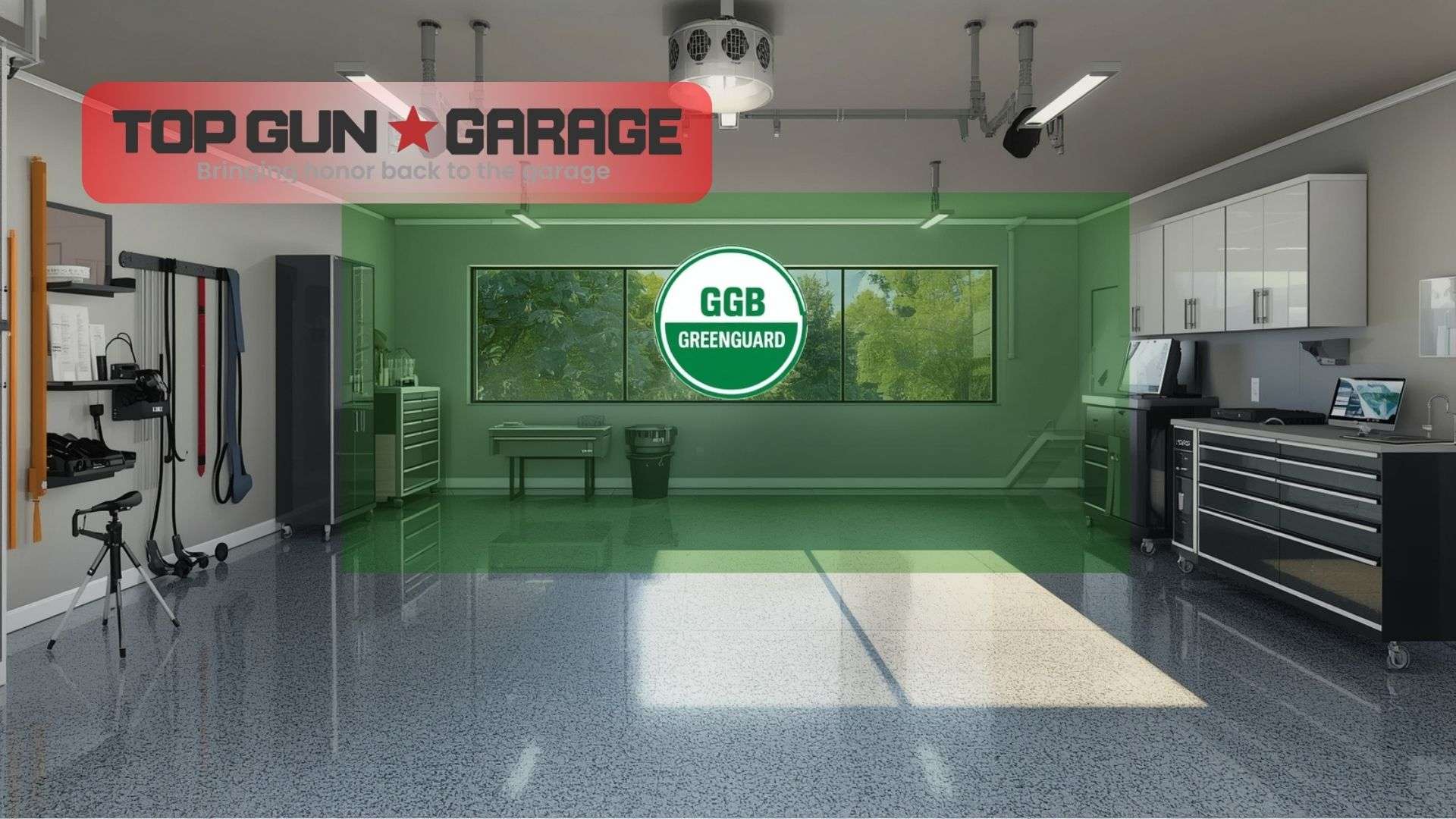
GREENGUARD certification represents one of the most stringent standards for indoor air quality in building materials, including garage flooring products. This certification program evaluates chemical emissions from materials under realistic indoor conditions, ensuring that certified products contribute to healthier indoor environments. For garage applications, this certification becomes particularly important when garages connect to living spaces or serve multiple functions beyond vehicle storage.
The GREENGUARD testing protocol subjects materials to elevated temperature and humidity conditions while measuring emissions of volatile organic compounds, formaldehyde, and other potentially harmful substances. Products must demonstrate emissions levels well below established health-based criteria to achieve certification. Understanding low-VOC garage flooring solutions reveals how these certifications translate to practical benefits. This rigorous testing process provides confidence that certified garage flooring materials won’t negatively impact indoor air quality in adjacent spaces.
GREENGUARD Gold certification represents an even higher standard, meeting additional criteria for sensitive environments such as schools and healthcare facilities. While garages may not require this elevated standard, homeowners with family members who have chemical sensitivities or respiratory conditions may prioritize GREENGUARD Gold certified materials for additional protection.
The certification program requires ongoing compliance monitoring, with manufacturers subject to periodic retesting to maintain certification status. This ongoing oversight ensures that production changes don’t compromise the environmental performance that earned initial certification. For contractors, recommending GREENGUARD certified materials demonstrates commitment to client health and environmental responsibility.
Many garage flooring materials, including epoxy coatings, polished concrete sealers, and resilient flooring products, are available with GREENGUARD certification. However, homeowners should understand that professional installation techniques can significantly impact the final environmental performance of these materials, making contractor expertise essential for achieving intended benefits.
LEED Credit Contributions and Material Requirements
Leadership in Energy and Environmental Design (LEED) certification provides a comprehensive framework for sustainable building practices, with specific credits available for environmentally responsible material selections. Garage flooring materials can contribute to multiple LEED credit categories, including Materials and Resources, Indoor Environmental Quality, and Innovation credits. Understanding these opportunities helps homeowners and contractors maximize their projects’ environmental benefits while working toward LEED certification goals.
The Materials and Resources credit category rewards the use of materials with recycled content, regional materials sourcing, and rapidly renewable materials. Many garage flooring options qualify for these credits through high percentages of post-consumer recycled content or regional manufacturing. Polished concrete floors, for example, can contribute significant points through local sourcing and minimal additional materials requirements, while recycled rubber flooring systems offer substantial recycled content contributions.
Indoor Environmental Quality credits focus on materials that support healthy indoor environments through low emissions and improved air quality. Garage flooring materials certified under programs like GREENGUARD or FloorScore can contribute to these credits, particularly important when garages serve as workshops, home gyms, or other occupied spaces. The proximity of garages to living areas makes these considerations relevant even for traditional vehicle storage applications.
Innovation credits provide opportunities for exceptional environmental performance or innovative approaches to sustainability. Some garage flooring systems incorporate novel technologies or materials that may qualify for innovation credits, such as permeable surfaces that manage stormwater runoff or flooring systems that contribute to energy efficiency through thermal properties. Exploring how reflective floors reduce energy costs demonstrates these innovative benefits.
Documenting LEED credit contributions requires careful attention to product specifications, sourcing information, and installation details. Professional contractors familiar with LEED requirements can ensure proper documentation and maximize credit opportunities. The complexity of LEED compliance often makes professional guidance essential for achieving certification goals while maintaining project quality and performance standards.
Cradle to Cradle and Circular Economy Principles
Cradle to Cradle Certified represents a holistic approach to material assessment that evaluates products across five categories: material health, renewable energy use, water stewardship, social fairness, and material reutilization. This comprehensive framework aligns with circular economy principles, ensuring that certified garage flooring materials contribute to sustainable cycles rather than linear waste streams. The certification program encourages manufacturers to design products with end-of-life considerations from the initial development stage.
Material health assessment under Cradle to Cradle standards involves detailed chemical analysis to identify and eliminate potentially harmful substances. This process goes beyond emissions testing to evaluate the inherent safety of all chemical components. For garage flooring applications, this thorough evaluation provides confidence that materials won’t pose health risks during installation, use, or eventual disposal or recycling.
The renewable energy criterion evaluates the energy sources used in manufacturing, encouraging the transition to clean energy for production processes. This consideration becomes increasingly important as the building industry recognizes the embodied energy impacts of material choices. Garage flooring manufacturers pursuing Cradle to Cradle certification must demonstrate progress toward renewable energy use in their operations.
Water stewardship evaluation considers both water usage efficiency and water quality protection throughout the manufacturing process. This criterion recognizes water as a precious resource requiring careful management. Social fairness assessment ensures that certified products support fair labor practices and community well-being throughout the supply chain, addressing the human dimensions of sustainability.
Material reutilization focuses on designing products for continuous cycles of use, either through biological or technical nutrient cycles. This approach encourages manufacturers to develop garage flooring materials that can be safely returned to natural systems or indefinitely recycled into new products. The certification levels (Bronze, Silver, Gold, Platinum) reflect increasing achievement across all five categories, providing clear pathways for continuous improvement.
FloorScore and Specialized Flooring Certifications
FloorScore certification, developed by the Resilient Floor Covering Institute in collaboration with Scientific Certification Systems, specifically addresses hard surface flooring materials and their indoor air quality impacts. This specialized certification program recognizes the unique characteristics and performance requirements of flooring materials, providing targeted evaluation criteria relevant to garage applications. The program’s focus on hard surface materials makes it particularly applicable to common garage flooring options.

The FloorScore testing protocol evaluates emissions of volatile organic compounds, formaldehyde, and other chemicals under standardized conditions that simulate real-world installation and use scenarios. This testing approach provides realistic assessment of how garage flooring materials will perform in actual applications, considering factors such as temperature variations, humidity levels, and air circulation patterns typical in garage environments.
Certification under FloorScore requires products to meet emissions criteria based on established health standards and building codes. The program’s alignment with California’s stringent air quality regulations ensures that certified products meet some of the most demanding environmental standards in North America. This alignment provides confidence for contractors and homeowners seeking materials that comply with current and anticipated future regulations.
The program covers various garage flooring categories, including luxury vinyl tiles, engineered flooring systems, adhesives, and surface treatments. This comprehensive coverage allows for coordinated material selections that maintain consistent environmental performance across all flooring system components. Contractors can specify complete FloorScore certified systems to ensure optimal indoor air quality outcomes.
FloorScore certification requires ongoing compliance monitoring and periodic retesting to maintain certification status. This ongoing oversight ensures continued environmental performance throughout the product’s market life. The program’s database provides easy verification of certification status, allowing contractors and homeowners to confirm product credentials during specification and purchasing processes.
Eco-Friendly Flooring Certifications and Material Options
Eco-friendly flooring certifications encompass various specialized programs designed to address specific environmental concerns and material categories. These certifications often focus on particular aspects of sustainability, such as renewable materials content, biodegradability, or carbon footprint reduction. Understanding eco-friendly garage flooring options reveals the breadth of sustainable choices. Understanding the scope and criteria of different certification programs helps contractors and homeowners select materials that align with their specific environmental priorities and garage usage requirements.
Forest Stewardship Council (FSC) certification applies to wood-based garage flooring materials, ensuring responsible forest management practices in material sourcing. While solid wood flooring may be less common in garage applications, engineered wood products and composite materials containing wood fibers can carry FSC certification. This certification provides assurance that wood components come from sustainably managed forests that maintain biodiversity and support local communities.
Sustainable Forestry Initiative (SFI) certification offers an alternative framework for wood product certification, emphasizing sustainable forest management and chain-of-custody tracking. Products carrying SFI certification demonstrate compliance with comprehensive forestry standards that address environmental, social, and economic considerations. For garage applications involving wood-based materials, SFI certification provides additional options for sustainable material sourcing.
Bio-based product certifications, such as those offered by the United States Department of Agriculture’s BioPreferred program, recognize materials derived from renewable biological resources. Some garage flooring materials, including natural rubber products and bio-based polymer systems, may qualify for these certifications. The program’s verification of renewable content provides transparency about the biological versus petroleum-based components in flooring materials.
Carbon footprint certifications evaluate the greenhouse gas emissions associated with product manufacturing, transportation, and lifecycle impacts. These certifications become increasingly important as building owners seek to minimize their projects’ climate impacts. Some garage flooring manufacturers provide carbon footprint declarations or certifications that quantify and verify their products’ climate impacts, enabling informed comparisons between material options.
Top Gun Garage: Professional Installation and Certification Expertise
Top Gun Garage brings extensive experience in sustainable garage flooring solutions, understanding the complexities of green building certifications and their practical applications. The team stays current with evolving certification programs and emerging sustainable materials, ensuring clients receive the most up-to-date information about environmentally responsible flooring options. Understanding sustainable concrete treatments reveals the commitment to eco-friendly solutions. The team recognizes that achieving certification benefits requires not only selecting appropriate materials but also implementing proper installation techniques that maintain environmental performance.
The approach to green garage flooring begins with comprehensive assessment of client goals, environmental priorities, and usage requirements. The team evaluates how different certification programs align with specific project objectives, whether focusing on indoor air quality, recycled content, or comprehensive lifecycle impacts. This assessment process ensures that certification choices support both environmental goals and practical performance requirements for each unique garage application.
Professional installation plays a crucial role in realizing the environmental benefits of certified materials. Technicians receive ongoing training in sustainable installation practices, understanding how proper techniques preserve the environmental attributes that earned products their certifications. Understanding how the installation process works demonstrates this commitment to quality. From surface preparation through final finishing, procedures are implemented that maintain indoor air quality benefits and ensure long-term performance that supports sustainability goals.
Relationships are maintained with manufacturers and suppliers committed to environmental responsibility, ensuring access to the latest certified products and emerging sustainable technologies. The supplier network includes companies pursuing continuous improvement in environmental performance, providing clients with cutting-edge options for sustainable garage flooring. This network enables offering comprehensive solutions that meet diverse certification requirements and environmental objectives.
Documentation and verification support represents another critical aspect of green flooring services. Detailed records of material certifications, installation procedures, and maintenance recommendations are provided that support LEED documentation requirements or other green building programs. The systematic approach to documentation ensures that environmental benefits are properly captured and verified throughout the project lifecycle.
Frequently Asked Questions
What is the difference between GREENGUARD and GREENGUARD Gold certification for garage flooring?
GREENGUARD certification ensures low chemical emissions for general indoor air quality, while GREENGUARD Gold meets additional criteria for sensitive environments like schools and healthcare facilities. For garage applications, GREENGUARD provides adequate protection for most situations, while GREENGUARD Gold offers extra assurance for families with chemical sensitivities.
How do green building garage flooring certifications affect material costs?
Certified materials may carry premium costs due to additional testing, sustainable sourcing, and specialized manufacturing processes. However, these initial investments often provide long-term value through improved durability, reduced maintenance requirements, and potential contributions to building certification programs that enhance property values.
Can existing garage floors be modified to meet green building certification requirements?
Existing floors can often be upgraded with certified coatings, sealers, or overlay systems that meet green building standards. The specific options depend on the current floor condition and the desired certification criteria. Professional assessment can determine the most effective approaches for achieving certification goals with existing substrates.
Do eco-friendly flooring certifications compromise durability in garage environments?
Modern certified materials are engineered to meet demanding performance requirements while maintaining environmental benefits. Many certification programs include durability criteria, ensuring that sustainable materials provide long-term performance. Understanding what determines epoxy floor durability reveals performance factors. Professional installation and appropriate material selection ensure optimal durability in garage applications.
How do I verify the authenticity of green building flooring certifications?
Legitimate certifications can be verified through the certifying organization’s official database or website. Look for specific certification numbers, expiration dates, and official logos. Reputable manufacturers provide clear documentation and verification methods for their certified products.
What maintenance requirements apply to certified green garage flooring?
Certified materials often specify compatible cleaning products and maintenance procedures that preserve environmental benefits. Using non-certified cleaners or inappropriate maintenance methods can compromise the environmental performance that earned the original certification. Understanding proper cleaning processes ensures continued benefits. Following manufacturer recommendations ensures continued environmental benefits.
Can garage flooring certifications contribute to home energy efficiency?
Some certified materials contribute to energy efficiency through thermal properties, reflectivity, or integration with radiant heating systems. Light-colored certified coatings can reduce lighting requirements, while thermal mass properties of polished concrete can support passive temperature regulation in conditioned garage spaces.
Are there regional differences in green building certification acceptance and requirements?
Building codes and green building programs vary by region, with some areas having specific requirements or incentives for certified materials. Local programs may recognize certain certifications while prioritizing others. Understanding environmentally responsible garage renovations reveals regional considerations. Understanding regional preferences and requirements helps optimize material selections for specific locations and regulatory environments.
Conclusion
Green building garage flooring certifications represent essential tools for homeowners and contractors committed to environmental responsibility and occupant health. These comprehensive programs provide third-party verification of environmental claims while ensuring that sustainable materials meet demanding performance requirements. Understanding the various certification options enables informed decision-making that balances environmental goals with practical garage flooring needs.
The evolution of certification programs continues to drive innovation in sustainable flooring materials and manufacturing processes. As environmental awareness grows and regulations become more stringent, certified products provide pathways for compliance while supporting broader sustainability objectives. Professional contractors play crucial roles in maximizing these benefits through proper material selection, installation techniques, and ongoing maintenance support.
Investment in certified garage flooring materials delivers multiple benefits beyond environmental performance, including improved indoor air quality, potential building certification contributions, and long-term value through enhanced durability and performance. The comprehensive approach of modern certification programs ensures that environmental benefits extend throughout the product lifecycle, from manufacturing through end-of-life management.
As the building industry continues embracing sustainable practices, green building garage flooring certifications will remain valuable resources for achieving environmental goals while maintaining the functionality and performance that garage spaces demand. Professional guidance ensures optimal outcomes that satisfy both environmental objectives and practical requirements for years to come.