 Skip to content



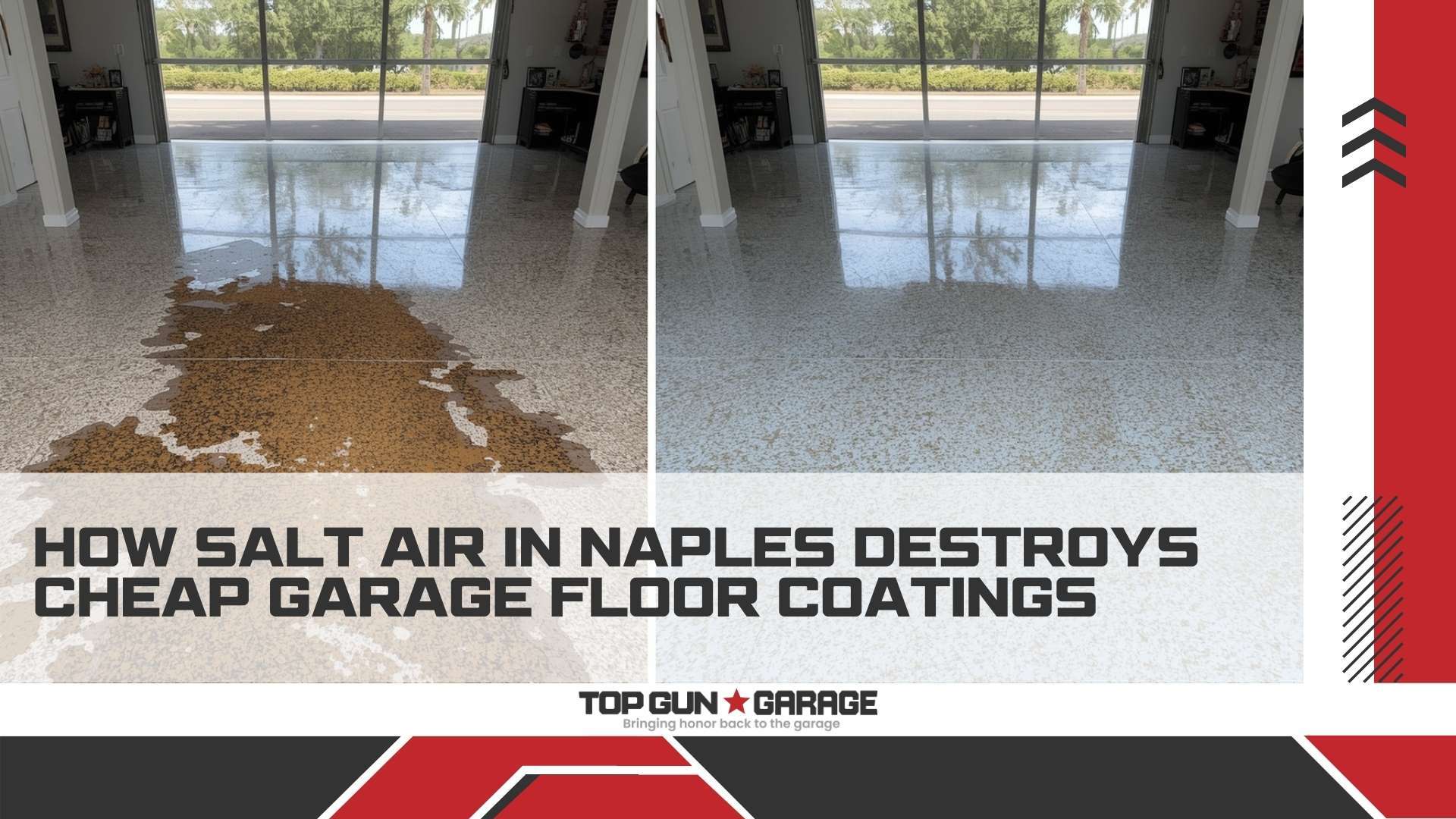
Naples homeowners investing in garage floor coating Naples FL face an invisible enemy that cheaper products cannot withstand—corrosive salt air that penetrates coastal neighborhoods 24/7. Within just five years, over 80% of Naples garage floors show salt air garage damage including surface deterioration, concrete spalling, and coating delamination when protected with budget epoxy systems. Premium coastal garage flooring Naples solutions use marine-grade chemistry specifically formulated to resist the chloride penetration, moisture cycling, and chemical reactions that destroy standard coatings in neighborhoods from Port Royal to Pelican Bay.
This comprehensive guide reveals how salt air chemically attacks garage floor coatings and why Naples’ coastal environment demands specialized protection. You’ll discover the science behind saltwater corrosion, how humidity amplifies damage, which coating failures occur most frequently, and what separates budget products from saltwater-resistant systems. We’ll examine molecular bonding differences, proper installation protocols, moisture barrier requirements, and long-term cost comparisons—giving you the knowledge to select garage flooring that protects your Naples home for 15+ years despite relentless coastal exposure.
Key Takeaways
-
Salt air carries chloride particles that penetrate cheap epoxy coatings and corrode concrete within 18-36 months
-
Naples coastal humidity creates constant moisture cycling that accelerates coating delamination and concrete spalling
-
Premium marine-grade coatings resist saltwater 300% better than standard epoxy through specialized resin chemistry
-
Proper surface preparation and moisture testing prevent 90% of premature coating failures in coastal environments
-
15-year warranties on professional systems versus 2-3 years on DIY products demonstrate true coastal durability
How Salt Air Attacks Garage Floor Coatings
Salt air in Naples contains microscopic sodium chloride particles suspended in humid coastal breezes that travel miles inland from the Gulf of Mexico. These airborne particles settle on garage floors daily, carried by vehicles, foot traffic, and natural air circulation through open garage doors. Even homes located 3-5 miles from the coastline experience significant salt exposure, as sea spray travels farther during storms and high-wind periods common to Southwest Florida.
When salt particles contact concrete and floor coatings, they immediately begin attracting moisture from Naples’ 75-80% average humidity. This creates a corrosive saltwater solution directly on the floor surface that penetrates porous concrete and cheap epoxy coatings. Unlike northern road salt that appears seasonally, Naples salt air creates year-round exposure that never allows coatings or concrete to fully dry and recover.
The Science of Saltwater Corrosion
Chloride ions in saltwater penetrate concrete at the molecular level, seeking embedded steel reinforcement bars (rebar) and causing electrochemical corrosion. This corrosion process expands the steel volume by up to 600%, creating internal pressure that cracks concrete from within—a phenomenon called spalling. Waterfront Naples homes experience this degradation three times faster than inland properties, with visible damage appearing within 2-3 years on unprotected surfaces.
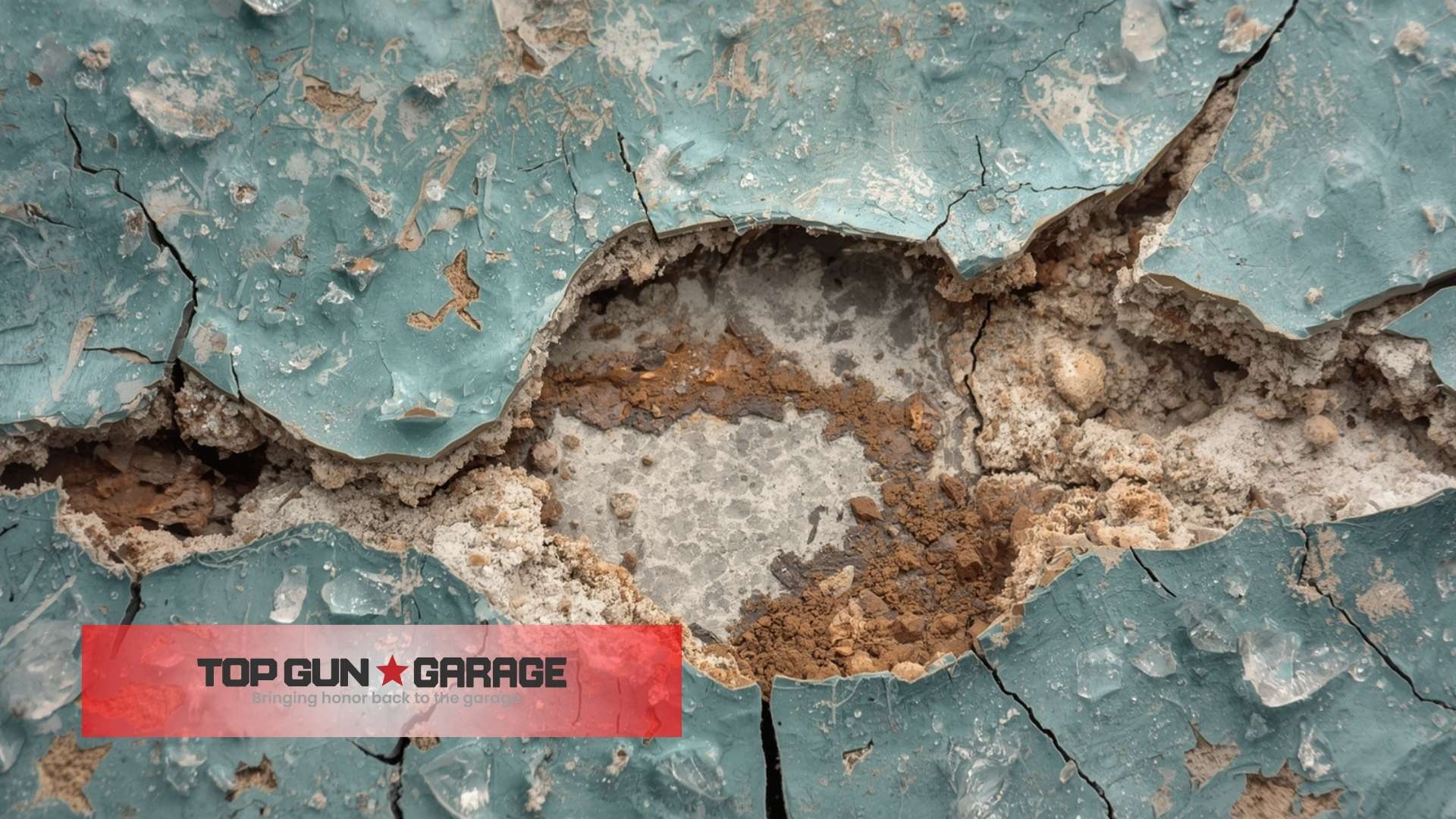
Cheap garage floor coatings fail to block chloride penetration due to insufficient thickness, poor molecular bonding, and permeable resin formulations. When saltwater reaches the concrete substrate beneath the coating, it creates pressure points that lift the coating away from the surface. This delamination starts at edges and cracks, then spreads across the entire floor as the trapped moisture-salt solution continues working beneath the coating.
The wet-dry cycling unique to coastal environments compounds this damage dramatically. Morning humidity deposits moisture on floors, afternoon heat evaporates surface water while concentrating salt residue, and evening cooling draws this concentrated saltwater solution deeper into concrete pores. This daily cycle occurs 365 days per year in Naples, creating relentless chemical attack that budget coatings cannot withstand beyond 18-36 months.
Naples Humidity Multiplies Damage
Southwest Florida’s 90%+ summer humidity prevents salt-contaminated surfaces from ever fully drying, maintaining constant moisture contact that accelerates every corrosive process. Naples garage floors exist in a perpetual state of partial dampness that keeps chlorides active and mobile within concrete pores. This contrasts sharply with arid climates where salt residue remains relatively inert between moisture exposures.
The high humidity affects installation timing and coating performance simultaneously. Budget contractors often apply cheap epoxy during unfavorable humidity conditions, creating microscopic bonding failures that become saltwater entry points within months. Premium installers use moisture meters and control environmental conditions to ensure proper adhesion that resists subsequent salt exposure.
Temperature fluctuations between 90°F daytime highs and 70°F overnight lows create thermal cycling that opens and closes microscopic pathways in cheap coatings. Salt solution enters during expansion phases and becomes trapped during contraction, creating progressive damage that worsens with each cycle. Marine-grade coatings maintain flexibility throughout these temperature swings, preventing the micro-cracking that allows saltwater infiltration.
Common Coating Failures from Salt Exposure
Surface etching represents the earliest visible sign of salt damage on cheap garage floor coatings. The alkaline concrete reacts with acidic salt solution to create a rough, pitted texture that dulls the coating’s appearance and compromises its protective barrier. This chemical etching progresses beneath the visible surface, undermining coating adhesion before homeowners notice the problem.
Bubbling and blistering occur when saltwater vapor becomes trapped beneath impermeable coating layers. As Naples heat expands this trapped moisture, it creates pressure bubbles that lift the coating from concrete. Once bubbles form, they grow progressively larger as more moisture enters, eventually rupturing and exposing bare concrete to accelerated damage.
Edge Delamination and Peeling
Garage floor perimeters experience the most severe salt damage because edges receive concentrated water flow and provide easy penetration paths for chlorides. Cheap coatings often lack proper edge sealing and feather out thinly at transitions, creating weak points where saltwater infiltration begins. Within 12-18 months, these edges start lifting, curling, and peeling away from the concrete.
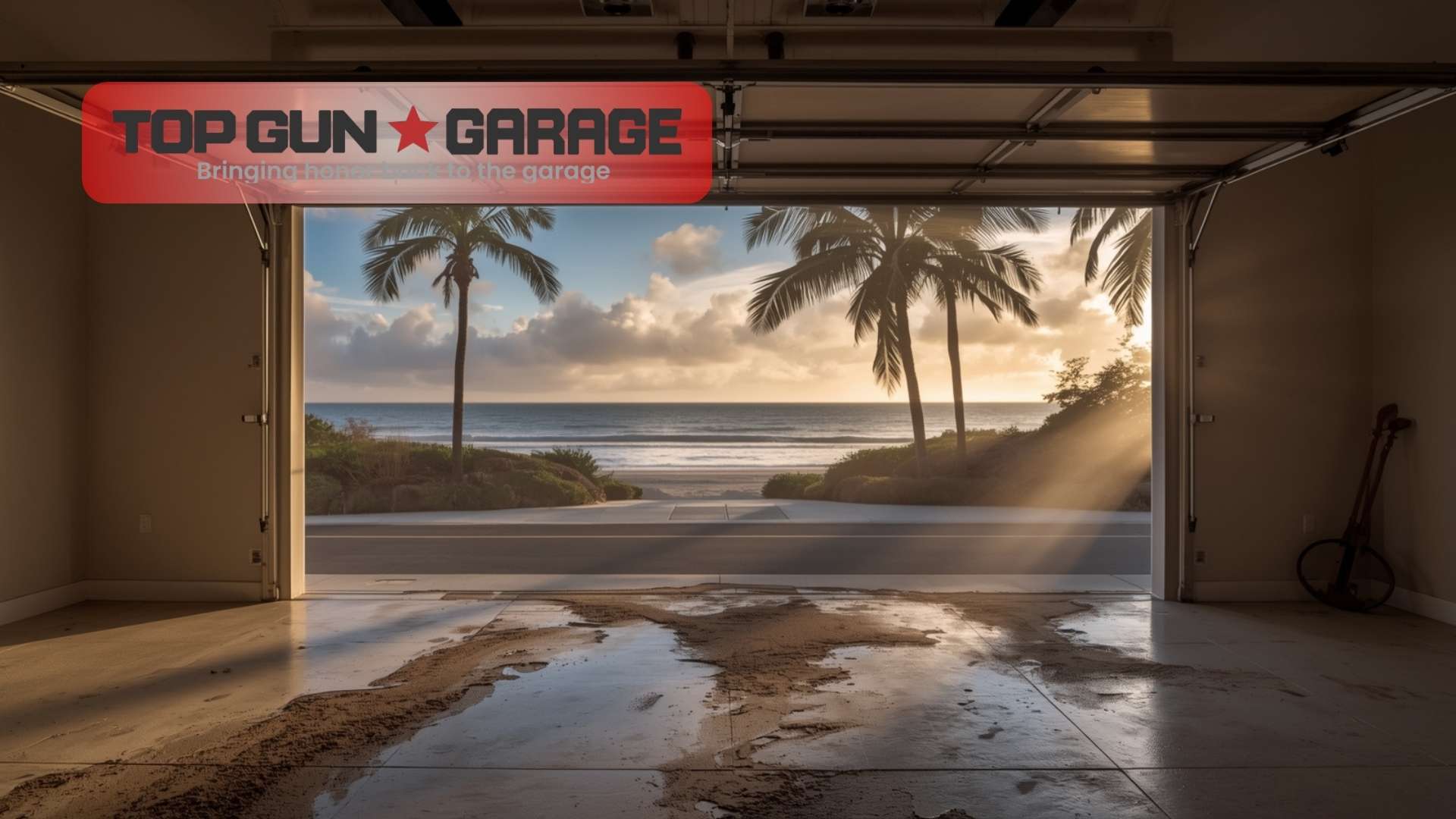
Door threshold areas accumulate salt residue from vehicle tires and foot traffic, creating the highest chloride concentrations anywhere on the garage floor. Budget coatings in these zones deteriorate first, developing visible wear patterns, discoloration, and adhesion failure that spreads inward across the floor. Professional systems use reinforced edge details specifically designed to withstand this concentrated exposure.
Crack propagation accelerates dramatically when saltwater penetrates through coating failures. The salt solution wicks along existing hairline cracks, expanding them through freeze-thaw action (even in Naples’ mild winters, concrete temperature fluctuations create expansion stress) and chemical attack. What began as an invisible crack becomes a quarter-inch gap within a single season once saltwater access occurs.
Concrete Spalling and Structural Damage
Spalling produces the most expensive damage from salt exposure—chunks of concrete breaking away from the surface as corroded internal rebar expands. This process begins years before visible damage appears, as chlorides migrate through cheap coatings and concrete to reach embedded steel. Once corrosion starts, it accelerates exponentially, requiring expensive concrete repair before any new coating can be installed.
Naples waterfront properties experience particularly rapid spalling due to higher salt concentrations and the presence of brackish water intrusion during storm surges. Garages in communities like Port Royal, Aqualane Shores, and Old Naples show spalling damage 60-70% more frequently than inland neighborhoods, according to Collier County building records. The cost to repair spalled concrete and replace failed coatings often exceeds $8,000-$12,000 for a two-car garage.
Surface dusting and powder formation indicate advanced concrete degradation from salt attack. As the concrete’s binding matrix deteriorates, it releases fine dust particles that contaminate vehicles and belongings. This concrete dusting problem requires complete removal of damaged material and specialized repair before any protective coating can restore the floor.
Why Cheap Coatings Cannot Resist Salt
Budget garage floor coatings use basic epoxy resin formulations designed for general-purpose applications in moderate climates. These products lack the molecular density, chloride resistance, and moisture barrier capabilities required for coastal Naples environments. Manufacturers optimize cheap coatings for initial appearance and ease of application rather than long-term performance in corrosive conditions.
Thin coating thickness represents the primary weakness of budget products. Standard DIY epoxy kits apply at 3-5 mils thickness—barely enough to seal concrete pores, let alone block saltwater penetration. Professional marine-grade systems use 10-15 mil base coats plus protective topcoats, creating multiple barrier layers that prevent chloride migration to the concrete substrate.
Inadequate Surface Preparation
Cheap coating installations rarely include proper concrete surface preparation necessary for coastal applications. Achieving the surface profile depth required for saltwater-resistant bonding demands diamond grinding or shot blasting equipment that budget contractors don’t possess. Without this mechanical preparation, coatings achieve only 40-50% of their potential adhesion strength, creating vulnerability to salt-driven delamination.
Moisture testing protocols get skipped entirely in budget installations, despite Naples concrete commonly exceeding safe moisture vapor emission rates. Professional installers use moisture testing methods to identify slabs requiring vapor barriers before coating application. When cheap coatings are applied over high-moisture concrete, saltwater access from below accelerates failure as dramatically as surface exposure.
Chemical contamination from previous sealers, curing compounds, or oil stains prevents proper bonding of budget coatings. Professional preparation includes chemical testing and removal of all contaminants, while cheap installations simply coat over existing problems. Salt exposure quickly exploits these weak bonding areas, causing premature coating failure that appears to result from the coating itself rather than inadequate preparation.
Limited Chemical Resistance
Standard epoxy formulations offer minimal resistance to the specific pH ranges and chemical compositions of saltwater solutions. Naples salt air contains not just sodium chloride but also magnesium chloride, calcium chloride, and various sulfates that create complex corrosive chemistry. Marine-grade coatings use specialized hardeners and resin blends specifically formulated to resist this coastal chemical environment.
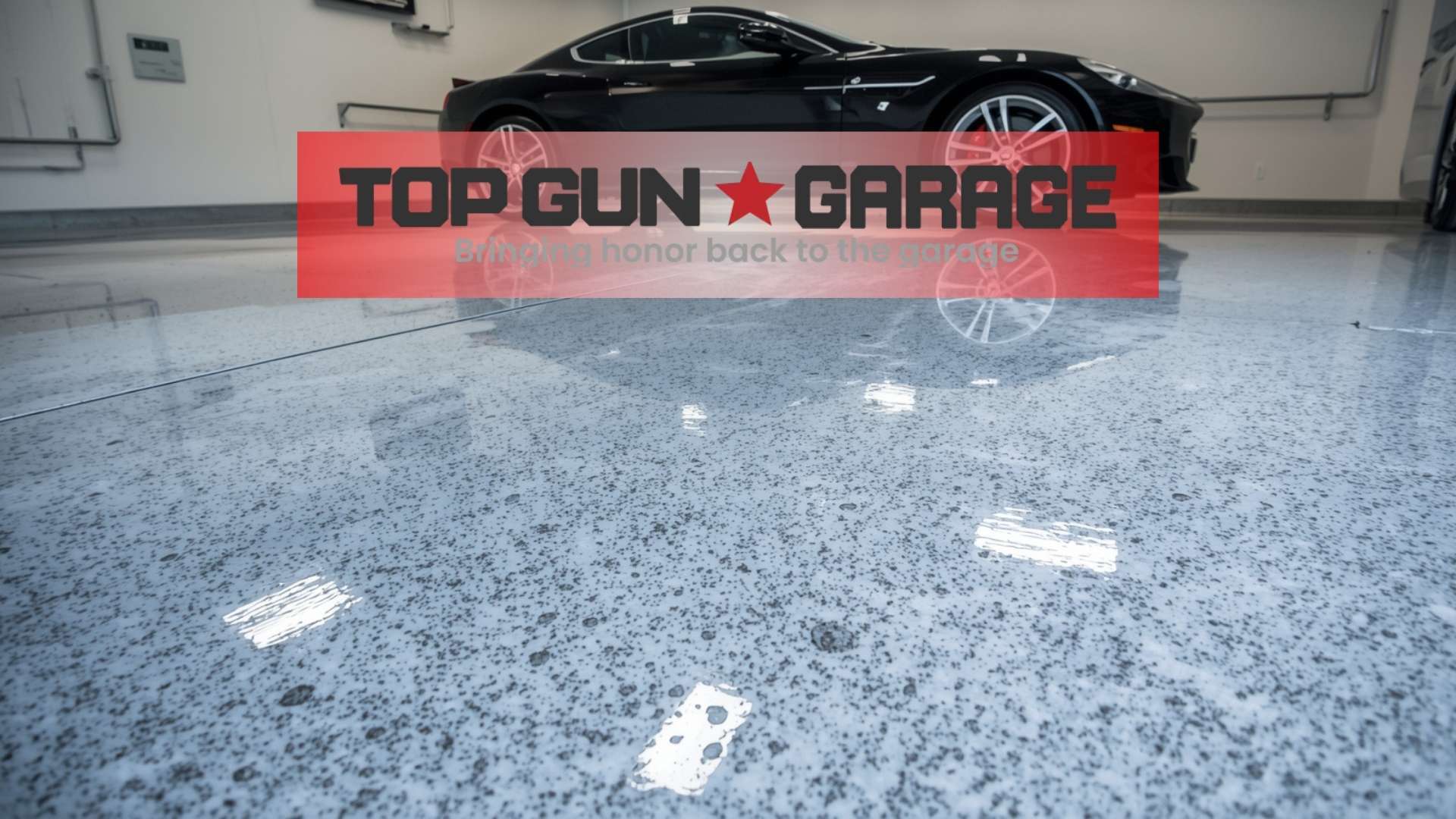
UV degradation compounds salt damage on cheap coatings, as Naples’ intense sunlight breaks down protective surface layers. Once UV exposure compromises the coating’s outer barrier, saltwater penetrates exponentially faster through the damaged material. Premium systems include UV-stable topcoats that maintain their protective properties despite continuous sun exposure through open garage doors.
Thermal stress from Naples’ heat causes cheap epoxy to soften and become more permeable to salt and moisture. When coating materials soften, saltwater solution can migrate through the material itself rather than only through cracks or bonding failures. Professional polyurea and polyaspartic systems maintain dimensional stability at temperatures exceeding 200°F, preventing this thermal degradation pathway.
Premium Marine-Grade Coating Advantages
Marine-grade garage floor coatings use resin chemistry originally developed for boat hulls, offshore platforms, and seawall protection—applications where saltwater resistance means the difference between years and decades of service life. These specialized formulations cost 2-3 times more than standard epoxy but deliver 5-10 times longer performance in Naples’ coastal environment, making them significantly more economical over time.
Chloride barrier technology represents the key innovation in marine coatings. These systems create molecular structures too dense for chloride ions to penetrate, effectively blocking salt migration to the concrete substrate. Independent testing shows premium coatings reduce chloride penetration by 90-95% compared to standard epoxy, preventing the corrosion cascade that destroys cheap installations.
Multi-Layer System Design
Professional coastal installations use multi-layer coating systems rather than single-coat applications. A moisture-blocking primer seals concrete pores and prevents vapor transmission from below, while pigmented base coats provide color and thickness, and clear polyaspartic topcoats deliver UV resistance and abrasion protection. This redundant barrier approach ensures that even if one layer develops minor imperfections, additional layers maintain saltwater protection.
Edge sealing details receive special attention in premium installations, with reinforced perimeter treatments that prevent the edge delamination common with cheap coatings. Professional contractors extend coating systems several inches up garage walls, creating continuous protection that eliminates vulnerable transition zones where salt typically penetrates first.
Drainage considerations factor into professional installations through proper slope adjustments that direct water flow toward garage doors rather than allowing pooling near walls. This proactive water management reduces salt solution contact time and prevents the standing water that accelerates cheap coating failure. Budget installations ignore drainage entirely, allowing water to pool in low spots where salt concentrations reach damaging levels.
Proper Installation for Coastal Environments
Achieving saltwater-resistant garage floors in Naples requires environmental controls that cheap contractors cannot provide. Professional installers monitor temperature, humidity, and concrete moisture levels, postponing application when conditions exceed product specifications. This discipline ensures optimal chemical bonding that resists subsequent salt exposure, while budget installations proceed regardless of conditions to minimize contractor time on-site.
Diamond grinding concrete to proper surface profile creates the mechanical anchor points necessary for coating adhesion in corrosive environments. This aggressive preparation opens concrete pores and creates surface texture that allows coating materials to penetrate and interlock with the substrate. The resulting bond withstands the lifting forces created by saltwater infiltration and internal moisture pressure.
Moisture Barrier Application
High-moisture Naples concrete requires specialized moisture barriers before decorative coating installation. These barriers use epoxy or polyurea formulations that bond to damp concrete and block vapor transmission that would otherwise cause coating delamination. Professional installers apply barriers at specified thickness to achieve tested vapor blocking performance, while cheap installations skip this critical step entirely.
Crack repair and joint filling prevent saltwater migration pathways that bypass coating protection. Professional preparation includes routing and sealing all cracks with flexible polyurea that accommodates concrete movement without creating openings. Control joints receive elastomeric sealants that maintain flexibility while blocking salt intrusion—details that budget contractors ignore as they rush to apply visible coating layers.
Cure time compliance ensures coating layers achieve full chemical crosslinking before exposure to foot traffic, vehicles, or cleaning. Naples humidity extends required cure times beyond manufacturers’ specifications for moderate climates, yet cheap installations allow early use that damages uncured coatings. Professional contractors enforce cure time protocols even when it inconveniences homeowners, because proper curing determines long-term saltwater resistance.
Long-Term Cost Comparison
Budget garage floor coatings in Naples typically cost $2-$4 per square foot installed, creating initial appeal for price-conscious homeowners. However, these cheap systems require replacement every 2-3 years in coastal environments, generating lifetime costs of $8-$16 per square foot over a typical 15-year ownership period. The replacement cycle also creates recurring disruption, vehicle relocation, and storage inconvenience that homeowners rarely factor into cost calculations.
Premium marine-grade systems range from $8-$12 per square foot installed but deliver 12-15 year service life in Naples coastal conditions. This single-installation approach costs $8-$12 per square foot lifetime—comparable or less than budget products while eliminating replacement cycles and providing superior appearance throughout the service period. The value proposition becomes clear when analyzing total cost rather than just initial outlay.
Hidden Costs of Coating Failure
Concrete damage from failed coatings creates the most expensive hidden cost of choosing budget products. When cheap coatings allow saltwater to reach concrete, the resulting spalling and deterioration requires $15-$30 per square foot to repair before any new coating can be installed. This repair cost—which never occurs with properly installed marine-grade systems—often exceeds the price of premium coating installation in the first place.
Vehicle and property damage from deteriorating floors generates additional unexpected expenses. Concrete dust from salt-damaged floors contaminates stored items, damages vehicle paint through abrasion, and creates respiratory irritants for anyone using the garage space. Professional-quality floors eliminate these damage vectors through comprehensive saltwater protection that maintains clean, dust-free surfaces indefinitely.
Resale value impact favors homes with professionally installed garage floors that buyers recognize as premium features. Naples luxury home buyers specifically ask about garage flooring quality during property tours, knowing that cheap systems indicate deferred maintenance and future expense. Premium floors command 2-3% higher home values and sell 30% faster according to Collier County MLS data for comparable properties.
Maintenance for Salt Air Protection
Even premium garage floor coatings require proper maintenance to maximize service life in Naples’ salt air environment. Regular rinsing removes salt residue before it concentrates sufficiently to challenge coating defenses. Weekly hosing during summer months and after storms prevents salt accumulation that would otherwise create corrosive hot spots on the floor surface.
Prompt spill cleanup prevents chemical damage that creates saltwater entry points. Automotive fluids, cleaning products, and other chemicals can etch or soften coating surfaces if allowed to sit for extended periods. Professional coatings resist chemical damage far better than cheap products, but maintenance discipline extends performance further by preventing any coating degradation.
Annual Inspection and Resealing
Professional garage floors benefit from annual inspection of edge details and transitions where salt exposure concentrates. These inspections identify minor issues before they develop into major failures requiring expensive repair. Reapplying edge sealants in high-exposure zones costs $200-$400 but prevents thousands in damage from saltwater infiltration through compromised areas.
Topcoat renewal every 5-7 years maintains the UV and abrasion resistance that protects underlying coating layers from salt exposure. This maintenance coating application costs $2-$3 per square foot and extends total floor life to 20+ years—far exceeding the performance and value of repeatedly replacing cheap systems. Homeowners who invest in premium installation and follow maintenance protocols achieve decades of saltwater protection.
Drainage system maintenance ensures that salt-laden water flows away from the garage rather than pooling where it can attack coatings. Keeping garage door threshold drains clear and maintaining proper floor slope prevents the standing water that accelerates coating failure. These simple maintenance tasks take minutes but prevent damage that costs thousands to repair.
Frequently Asked Questions
How does salt air damage garage floor coatings? Salt air deposits chloride particles that attract moisture, creating corrosive saltwater solution on floor surfaces. This penetrates cheap coatings and concrete, causing rebar corrosion, spalling, and coating delamination within 2-3 years in Naples’ coastal environment.
What makes marine-grade coatings resist saltwater better? Marine-grade systems use dense molecular structures that block chloride ion penetration, multiple barrier layers, and specialized resin chemistry originally developed for boat hulls. They resist salt 300% better than standard epoxy formulations.
How far inland does Naples salt air affect garage floors? Salt air affects garage floors 5-7 miles inland from the Gulf, with concentrated exposure in waterfront communities. Storm events carry salt spray even farther, making all Naples neighborhoods susceptible to some degree of salt damage.
Can existing cheap coatings be repaired or must they be replaced? Once cheap coatings fail from salt damage, complete removal is necessary before installing premium systems. Coating over failed material traps moisture and salt, causing new coatings to fail prematurely regardless of quality.
How long do premium coatings last in Naples coastal environments? Professional marine-grade systems deliver 12-15 years service life in direct coastal exposure and 15-20 years in inland Naples neighborhoods. Budget coatings fail within 2-3 years under identical conditions.
What surface preparation prevents saltwater damage? Diamond grinding to proper profile depth, moisture barrier application on high-vapor concrete, complete crack sealing, and edge reinforcement details prevent 90% of salt-related coating failures when combined with quality coating products.
Does salt damage concrete under failed coatings? Yes—once coatings fail, saltwater causes concrete spalling, rebar corrosion, and structural deterioration requiring $15-$30 per square foot to repair. This damage never occurs with properly installed marine-grade systems.
Are polyurea coatings better than epoxy for salt resistance? Polyurea and polyaspartic topcoat systems offer superior saltwater resistance, UV stability, and flexibility compared to basic epoxy. Professional installations often combine epoxy base coats with polyurea topcoats for optimal coastal performance.
How often should Naples garage floors be cleaned? Weekly rinsing during summer months removes salt residue before it concentrates. After storms or beach visits, immediate cleaning prevents salt accumulation that challenges even premium coating defenses.
Do warranties cover salt damage on garage floor coatings? Premium installations include 10-15 year warranties covering salt-related failures when proper maintenance occurs. Budget coating warranties typically exclude environmental damage, leaving homeowners responsible for premature failures.
Conclusion
Naples homeowners face relentless saltwater exposure that destroys cheap garage floor coatings within 2-3 years through chloride penetration, moisture cycling, and chemical corrosion. The combination of coastal humidity, daily temperature fluctuations, and year-round salt air creates the most demanding environment for concrete protection in the United States. Premium marine-grade coating systems deliver the specialized chemistry, proper installation protocols, and multi-layer protection necessary to resist this coastal assault for 12-15 years while maintaining beautiful appearance and protecting underlying concrete from expensive spalling damage.
Ready to protect your Naples garage with saltwater-resistant floor coating? Top Gun Garage specializes in marine-grade installations engineered for Southwest Florida’s coastal environment. Request your free estimation today and discover why waterfront homeowners from Port Royal to Pelican Bay trust our expertise for garage flooring that withstands salt air, humidity, and storm exposure—looking beautiful 15 years later.