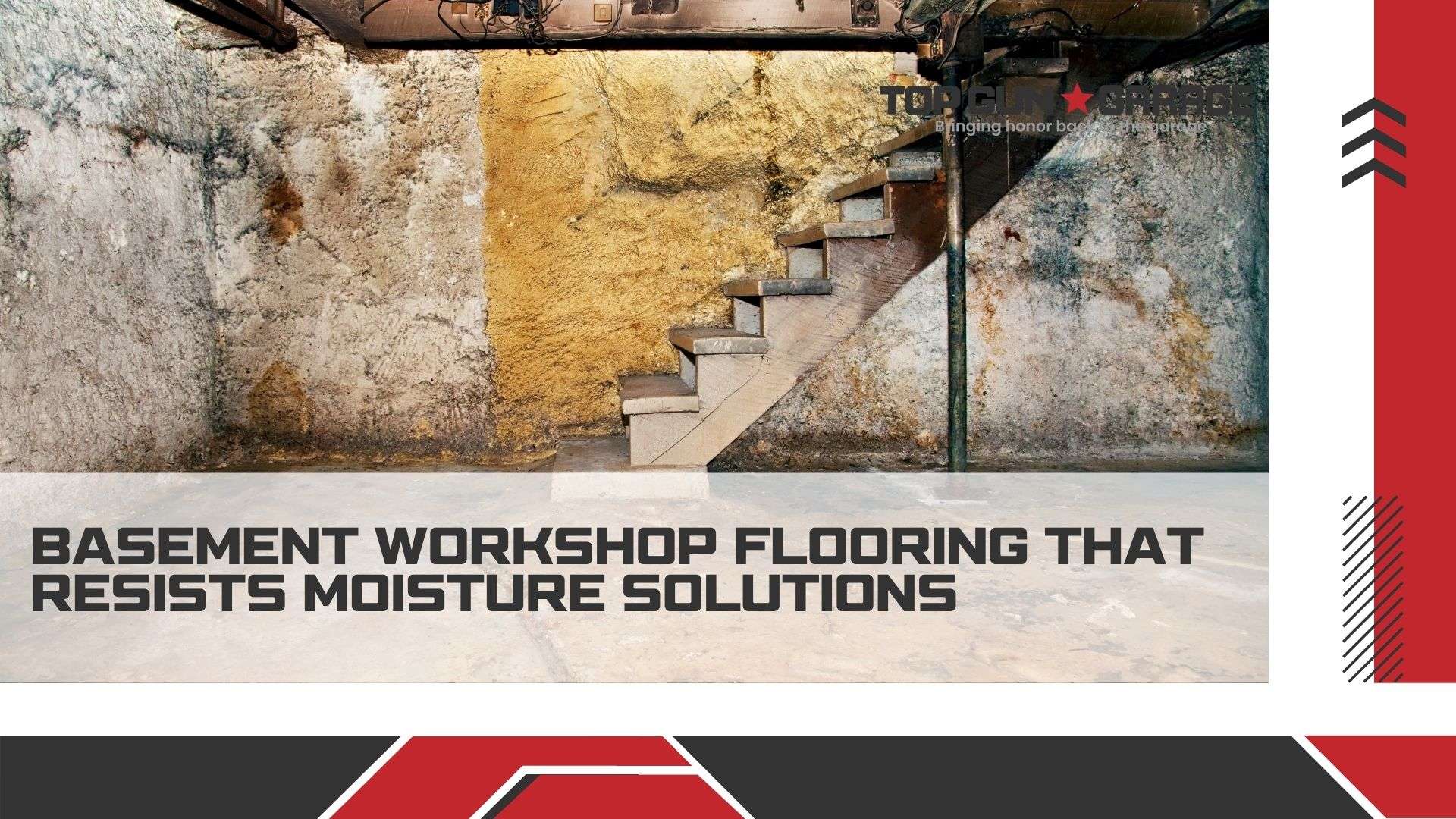
Discover basement workshop flooring that resists moisture with Top Gun Garage’s Buyer’s Guide. Serving Naples, FL, we provide expert advice for a moisture-resistant workshop.
Did you know 70% of below-ground spaces in U.S. homes experience moisture-related damage within their first five years? This hidden challenge turns functional areas into problem zones, especially in regions like Southwest Florida where humidity and groundwater create relentless pressure.
Creating a durable workspace below ground level requires more than basic materials. Traditional options warp, buckle, or trap mildew when exposed to dampness. At Top Gun Garage, we’ve seen how improper surface choices disrupt tool storage and project timelines in Naples homes.
The right foundation for your creative space must balance practicality with climate awareness. Southwest Florida’s unique weather patterns demand solutions that block water intrusion while supporting heavy equipment. We focus on materials engineered to outlast humidity spikes and accidental spills.
Key Takeaways
Moisture damage affects most below-ground spaces within five years
Climate-specific challenges require tailored material choices
Durability matters for tool storage and workspace safety
Proper installation prevents water infiltration at the source
Local expertise ensures compatibility with regional weather patterns
Our Expert Approach to Basement Flooring
Professional installation isn’t just about laying materials—it’s about creating defense systems against environmental threats. At Top Gun Garage, we combine precision engineering with Southwest Florida’s climate realities to deliver surfaces that protect your investment.
Top Gun Garage Perspective
Our team approaches every project as a unique puzzle. Collier County’s high humidity and seasonal rains require solutions that adapt to your space’s specific needs. We assess airflow patterns, ground moisture levels, and intended use before recommending materials.
Generic options often fail because they ignore critical variables. Our process includes:
Infrared scanning to detect hidden dampness
Pressure tests for existing vapor barriers
Load-bearing calculations for heavy equipment
Serving Naples FL and Surrounding Areas
Local expertise matters when dealing with coastal weather patterns. Homes near Venetian Bay face different challenges than those in Golden Gate Estates. We’ve mapped moisture trends across 50+ neighborhoods to predict trouble spots before installation begins.
Call (239) 488-7000 to schedule your evaluation. Our technicians arrive prepared with moisture meters and substrate analyzers, ensuring your final selection balances durability with practicality. Quality craftsmanship saves time and money by preventing costly do-overs.
Moisture Challenges in Your Basement Workshop
Did you know Naples basements face unique moisture threats from three directions? Our subtropical climate combines heavy summer rains, porous limestone soil, and high humidity to create perfect conditions for dampness. These factors work together to challenge even the most carefully built spaces.
Understanding Dampness and Its Impact
Water enters through cracks in foundation walls during summer storms. Warm air meeting cool concrete surfaces causes condensation. Hidden humidity seeps through porous materials over time. This triple threat creates ideal conditions for mold growth and material degradation.
Collier County’s Building Department reports 42% of home inspection failures relate to improper moisture control. Their guidelines require:
Vapor barriers with minimum 6-mil thickness
Mechanical ventilation moving 1 CFM per square foot
Annual drainage system inspections
Local Government Guidelines for Basement Safety
Naples’ flood zone maps dictate specific construction standards for below-ground spaces. Permits require moisture-resistant electrical systems and sealed joints in utility areas. The county mandates air quality tests for converted spaces to prevent mold-related health risks.
Proper planning protects both your tools and home’s structure. Ignoring these factors risks costly repairs and compromised air quality. Smart solutions start with understanding local environmental pressures.
Basement Workshop Flooring That Resists Moisture
Choosing the right surface for your creative space starts with materials designed to combat humidity at the molecular level. Modern solutions go beyond basic water protection, integrating advanced engineering to create impermeable shields against environmental stressors.
Key Features of Moisture-Resistant Materials
High-performance options use sealed composite cores that block liquid penetration completely. These dense layers stop water molecules from seeping into vulnerable sublayers, maintaining structural integrity during seasonal humidity spikes.
Look for products with absorption rates under 0.5%—critical for preventing warping under heavy tools. Porcelain tiles and commercial-grade vinyl excel here, outperforming traditional wood alternatives that swell when damp. Surface textures matter too; micro-grooved designs channel spills away while providing secure footing.
Three essential characteristics define superior options:
Integrated vapor barriers that seal edges automatically
Impact-resistant top layers that withstand dropped equipment
Premium epoxy floor coating demonstrate these qualities through chemical bonding with concrete. This fusion creates non-porous surfaces that repel liquids while allowing easy cleanup of oil or paint spills. Proper material selection ensures your space stays functional through years of projects.
Exploring Water-Resistant and Durable Flooring Options
Transform your underground workspace with materials engineered to combat humidity head-on. Advanced coatings and layered systems now offer seamless protection against spills and seasonal dampness while supporting heavy-duty use.
Benefits of Epoxy and Polyaspartic Solutions
Seamless coatings eliminate gaps where water could collect. Epoxy forms a glass-like shield that shrugs off oil, paint, and chemical splashes. Polyaspartic options cure in hours instead of days, minimizing downtime during renovations.
Three standout features make these coatings ideal:
Flexible formulas adapt to temperature-induced expansion/contraction
Textured finishes improve traction around machinery
The Versatility of Waterproof Vinyl and Tiles
Modern vinyl planks mimic wood grains and stone textures without moisture sensitivity. Interlocking click systems allow floating installations over uneven surfaces. Porcelain tiles provide stone-like durability with stain-resistant glazes.
Key advantages include:
Scratch-resistant wear layers protect against tool drops
Waterproof cores prevent warping from accidental spills
Low-profile designs maintain ceiling clearance
These solutions balance practicality with visual appeal, letting you create spaces that inspire creativity while standing up to real-world demands.
Preparing Your Basement for a Moisture-Resistant Floor
Proper groundwork transforms potential problems into lasting solutions for below-grade spaces. Before selecting materials, your foundation requires careful evaluation to create an optimal base for protection systems.
Subfloor Preparation and Drainage Essentials
Start by examining the concrete slab’s flatness. Variations exceeding ¼ inch over six feet can trap moisture under new surfaces. Self-leveling compounds fix uneven areas, creating smooth planes for proper adhesion.
Three critical preparation steps ensure success:
Remove all debris and old adhesives using industrial grinders
Install perimeter drainage channels if gutters overflow during storms
Clean surfaces prevent weak bonds between layers. Professionals often use diamond abrasion tools to expose fresh concrete pores. This process removes contaminants that could sabotage your installation.
Moisture barriers become essential when tests reveal high vapor transmission rates. Combine these with exterior French drains to redirect groundwater away from walls. Proper grading around your home’s foundation completes the defense strategy.
Installation Insights for Long-Lasting Floors
Achieving a flawless finish starts long before materials touch the ground. Proper techniques determine whether your creative space remains functional through seasonal shifts and heavy use. Surface preparation acts as the unsung hero of durable installations.
Best Practices for a Uniform, Secure Installation
Expert technicians approach each project with three non-negotiable priorities. Clean, level surfaces receive diamond grinding to remove hidden contaminants. Temperature-controlled environments allow materials to acclimate before placement.
Critical steps in our process include:
Precision gap spacing around edges for natural material expansion
Multi-stage adhesion tests using industry-grade bonding agents
Strategic scheduling to accommodate curing times and workspace needs
Click-lock systems simplify DIY projects but demand perfect alignment. Professionals use laser-guided tools to maintain straight seams, preventing moisture traps. For bonded surfaces like epoxy, we monitor humidity levels during application to ensure chemical reactions complete properly.
Quality outcomes hinge on respecting material limitations and environmental factors. Our teams document substrate conditions before installation, creating tailored solutions for Naples’ unique climate challenges. This attention to detail prevents callbacks and extends your floor’s lifespan.
Comparing Flooring Materials for Your Workshop
Your creative space’s functionality hinges on choosing surfaces that withstand daily demands. Material selection requires balancing moisture resistance, durability, and comfort while aligning with your project needs. Consider how each option performs under heavy use and varying humidity levels.
Vinyl, Tile, Carpet Options and More
Waterproof vinyl stands out for areas prone to spills. Its seamless installation prevents liquid seepage, while textured surfaces provide grip around machinery. Cleaning requires only basic wiping, making it practical for spaces dealing with paints or solvents.
Porcelain and ceramic tiles offer unmatched stain resistance. Their hard surfaces handle dropped tools without chipping, and glazed finishes repel chemical splashes. Grout lines need periodic sealing to maintain moisture protection in high-humidity environments.
Carpet tiles introduce warmth and noise reduction where dampness isn’t a concern. Opt for products with rubberized backing that blocks vapor transmission. Modular designs allow easy replacement of stained sections without redoing entire areas.
Key factors to evaluate include:
Surface traction during wet conditions
Replacement costs for damaged sections
Compatibility with existing moisture barriers
Long-term maintenance requirements
Enhancing Comfort and Style in Your Basement Workshop
Your underground workspace’s atmosphere directly impacts creativity and efficiency. Design choices influence how you interact with tools and materials daily. Strategic selections create environments where functionality meets personal expression.
Light-reflective surfaces can make compact areas feel more expansive. Darker tones hide dust from woodworking, while speckled patterns camouflage minor scuffs. Neutral palettes provide flexibility if you change wall colors or storage units later.
Aesthetic Considerations for a Functional Space
Textured finishes add grip near saw stations without compromising cleanability. Cork underlayment absorbs vibrations from power tools, reducing noise transfer. These features maintain safety while softening hard surfaces during long projects.
Coordinating your surface with overhead lighting eliminates shadowy corners. Glare-free matte options prevent eye strain near workbenches. Open shelving systems visually align with geometric tile patterns for cohesive organization.
Modern materials offer realistic wood grains and stone textures through advanced printing. Luxury vinyl planks replicate reclaimed barnwood for rustic charm. Porcelain tiles mimic polished concrete with stain-resistant coatings. These options merge practicality with design versatility.
Maintenance and Longevity of Moisture-Resistant Floors
Keeping your protected surfaces in top condition requires consistent care. Simple habits preserve structural integrity and prevent premature wear, ensuring your creative zone remains safe and functional for years.
Routine Cleaning and Upkeep Tips
Daily removal of sawdust and metal particles prevents surface scratches. Use soft-bristle brooms or vacuum attachments without rotating brushes. Weekly mopping with pH-balanced cleaners maintains protective coatings without degrading adhesives.
Immediately wipe spills to avoid liquid pooling near seams. For stubborn stains, apply gentle scrubbing motions with microfiber cloths. Harsh chemical cleaners strip protective layers, leaving surfaces vulnerable to discoloration and damage.
When to Seek Professional Help
Persistent damp odors or visible cracks signal deeper issues. Standing liquid that doesn’t evaporate within hours may indicate drainage problems. Discolored patches often reveal hidden mildew growth requiring specialized treatment.
Contact certified technicians if tiles loosen or coatings peel unexpectedly. Experts assess substrate conditions and repair compromised barriers before moisture spreads. Timely interventions prevent small issues from becoming costly renovations.
 Skip to content