Epoxy flooring Fort Myers mold prevention works through three mechanisms: creating an impermeable moisture barrier, eliminating the porous surfaces where spores colonize, and enabling rapid cleanup that removes organic matter before fungal growth begins. According to the Environmental Protection Agency, mold requires moisture, oxygen, and organic material to grow. Professional epoxy systems eliminate two of these three requirements, making your garage floor inhospitable to mold and mildew even in Southwest Florida’s 74% average humidity.
Fort Myers homeowners face unique challenges. The combination of tropical humidity, frequent afternoon storms, and concrete slabs poured directly on moisture-laden soil creates ideal conditions for mold proliferation. Untreated garage floors often develop that characteristic musty smell within months of construction. This guide explains exactly how epoxy coatings stop this process and which systems work best for our climate.
Why Fort Myers Garages Are Prone to Mold Growth
Lee County’s subtropical climate creates a perfect storm for mold development. The Florida Department of Health reports that indoor mold complaints in Southwest Florida exceed the state average by 23%, with garages representing the most common problem area in residential properties. Understanding why this happens reveals how epoxy provides the solution.
Persistent High Humidity
Fort Myers averages 74% relative humidity year-round, with summer months frequently exceeding 85%. The Centers for Disease Control recommends maintaining indoor humidity below 50% to prevent mold growth. Most non-climate-controlled garages in our area exceed this threshold 300+ days per year. When humid air contacts cooler concrete surfaces, condensation forms, providing the moisture mold needs to thrive.
Concrete Porosity and Moisture Transmission
Standard concrete contains approximately 15% air voids by volume. These microscopic pores absorb and release moisture continuously, a process called moisture vapor transmission (MVT). Research from the Portland Cement Association shows that a typical 4-inch concrete slab can transmit 3-5 pounds of water vapor per 1,000 square feet daily. This constant moisture supply sustains mold colonies indefinitely.
Organic Matter Accumulation
Garage floors collect organic debris that feeds mold: grass clippings tracked in on shoes, pollen deposits, cardboard box residue, paper fibers, and skin cells. Bare concrete’s textured surface traps these materials in its pores, making complete removal nearly impossible. Within weeks, enough organic matter accumulates to support substantial mold colonies.
How Epoxy Flooring Prevents Mold: The Science
Professional epoxy coatings attack mold at its source by fundamentally changing the floor’s physical properties. The International Concrete Repair Institute (ICRI) classifies properly applied epoxy as a Class I vapor barrier, meaning it reduces moisture transmission to less than 0.1 perms. This represents a 95%+ reduction compared to bare concrete.
Seamless, Non-Porous Surface
Cured epoxy creates a continuous, non-porous membrane across the entire floor surface. Unlike concrete’s 15% porosity, epoxy approaches 0% porosity when properly applied. Mold spores cannot penetrate this surface or establish root structures (hyphae) in it. Without the ability to anchor and feed, spores that land on epoxy floors remain dormant and are easily removed during routine cleaning.
Moisture Vapor Barrier Function
Quality epoxy systems include specialized primers that bond to concrete and block moisture vapor transmission from below. According to ASTM E1745 standards for vapor retarders, these primers reduce MVT by 90-98%. By cutting off the moisture supply from the slab, epoxy eliminates the water source mold requires for survival.
The importance of moisture barriers under Florida epoxy cannot be overstated. Without proper moisture mitigation, even the best topcoats will eventually fail as water vapor pressure builds beneath the surface.
Simplified Cleaning and Maintenance
Epoxy’s smooth, seamless surface allows complete removal of organic debris that would otherwise feed mold. A simple mop or squeegee removes 100% of surface contaminants, compared to the 60-70% removal rate achievable on textured concrete. This efficiency means organic matter never accumulates to levels that support mold growth.
For detailed maintenance guidance, see our guide on what affects epoxy floor cleaning requirements in Florida.
Epoxy vs. Bare Concrete: Mold Risk Comparison
The following table compares how epoxy and untreated concrete perform against mold growth factors:
Factor
Bare Concrete
Epoxy Coated
Surface Porosity
15% (porous)
~0% (sealed)
Moisture Transmission
3-5 lbs/1000 sq ft/day
<0.1 lbs/1000 sq ft/day
Debris Removal Rate
60-70%
99-100%
Spore Colonization
Rapid (24-48 hrs)
Prevented
Mold Risk Level
High
Very Low
Best Epoxy Systems for Mold Prevention in Fort Myers
Not all epoxy systems provide equal mold protection. The coating stack matters significantly. Professional installations in Southwest Florida typically include three to four layers, each serving a specific function in the moisture management system.
Moisture Mitigation Primer
The first layer addresses moisture vapor transmission from the concrete slab. Epoxy primers formulated for high-moisture environments penetrate concrete pores and create a chemical bond that blocks water vapor. Products meeting ASTM E1745 Class A, B, or C vapor retarder standards provide documented performance metrics.
In Fort Myers, slabs often test at 4-6 pounds MVT per 1,000 square feet using calcium chloride testing (ASTM F1869). Standard primers handle up to 3 pounds. Higher readings require specialized moisture mitigation systems before topcoat application. Learn more about concrete moisture problems and epoxy solutions.
100% Solids Epoxy Base Coat
The base coat provides the primary moisture barrier and mold-resistant surface. Professional-grade 100% solids epoxy contains no water or solvents that evaporate during curing, resulting in a denser, more impermeable film. This contrasts with water-based epoxies that leave microscopic voids as water evaporates, potentially allowing moisture and mold penetration.
Application thickness matters. Industry standards recommend 8-12 mils (0.008-0.012 inches) of base coat for residential applications. Thinner applications compromise moisture barrier performance and long-term mold resistance.
Polyaspartic or Polyurethane Topcoat
The topcoat seals the system and provides UV stability, chemical resistance, and additional moisture protection. Polyaspartic coatings cure faster and perform exceptionally well in Florida’s humid conditions because they’re less sensitive to moisture during application. This topcoat also enables easier cleaning, supporting ongoing mold prevention through simplified maintenance.
For a detailed comparison of coating options, review our guide on polyaspartic vs epoxy for Florida garages.
Epoxy System Comparison for Mold Resistance
System Type
MVT Reduction
Mold Resistance
Cost Range
DIY Water-Based
40-60%
Low-Moderate
$1-$2/sq ft
Pro 100% Solids
90-95%
High
$5-$8/sq ft
Pro + Moisture Mit.
98-99%
Excellent
$7-$12/sq ft
Signs Your Garage Floor Has Mold Problems
Identifying existing mold issues before epoxy installation is critical. Coating over active mold growth leads to system failure as fungal activity continues beneath the surface. Watch for these indicators:
Musty or earthy odors. Mold produces volatile organic compounds (VOCs) with characteristic smells. If your garage smells musty even when dry, mold colonies are likely present in or beneath the concrete.
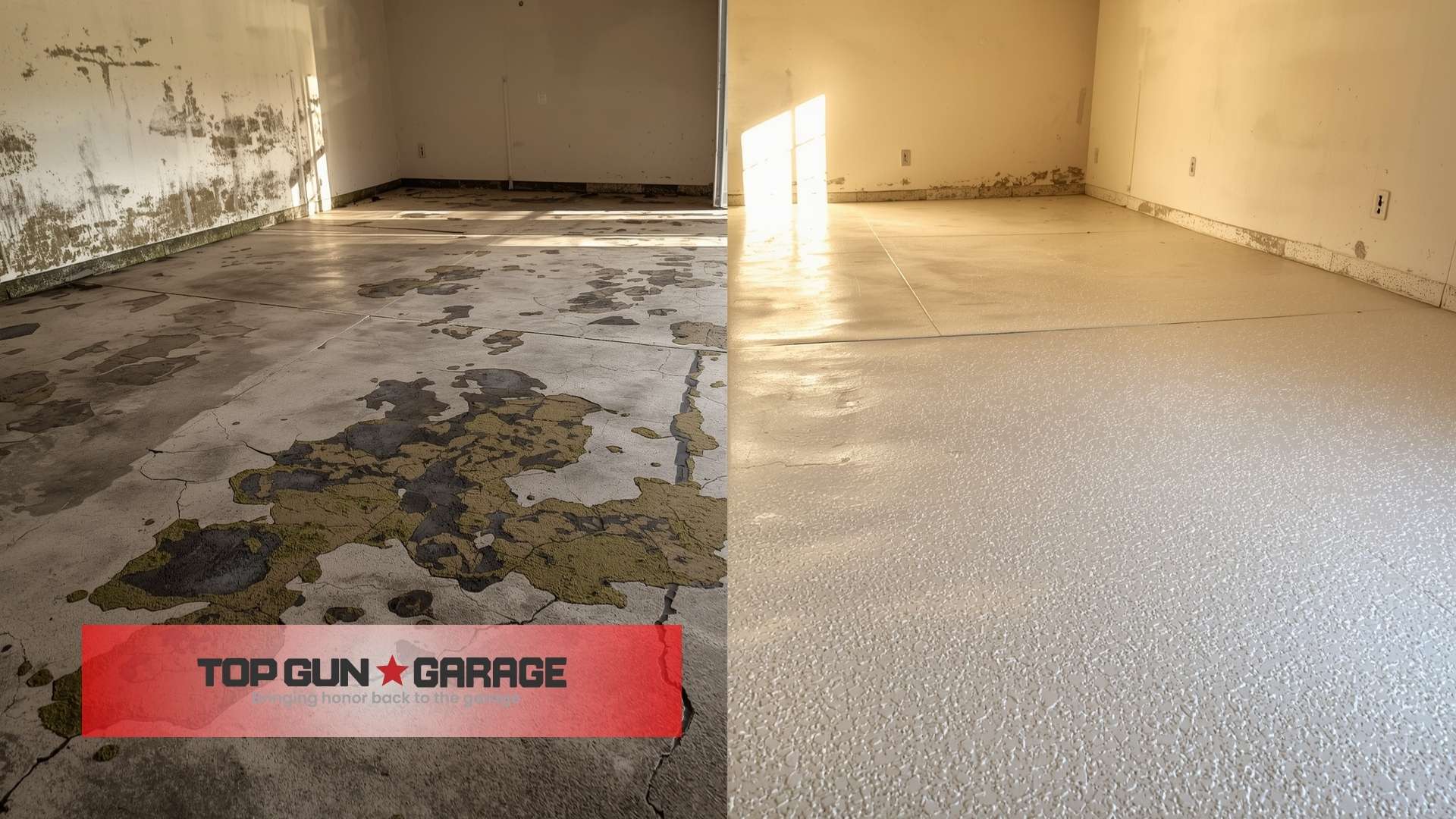
Visible discoloration. Black, green, or white patches on concrete surfaces indicate active mold growth. White crystalline deposits (efflorescence) suggest moisture movement through the slab that supports mold development.
Persistent dampness. Concrete that never fully dries or develops dark wet spots indicates excessive moisture vapor transmission. This moisture sustains mold colonies and must be addressed before coating.
Peeling paint or previous coatings. Failed coatings often result from moisture-driven mold growth beneath the surface. Proper remediation and moisture testing must precede any new coating application.
Pre-Installation Requirements for Mold-Prone Garages
Successful mold prevention through epoxy requires proper preparation. Skipping these steps leads to coating failure and continued mold problems.
Moisture Testing
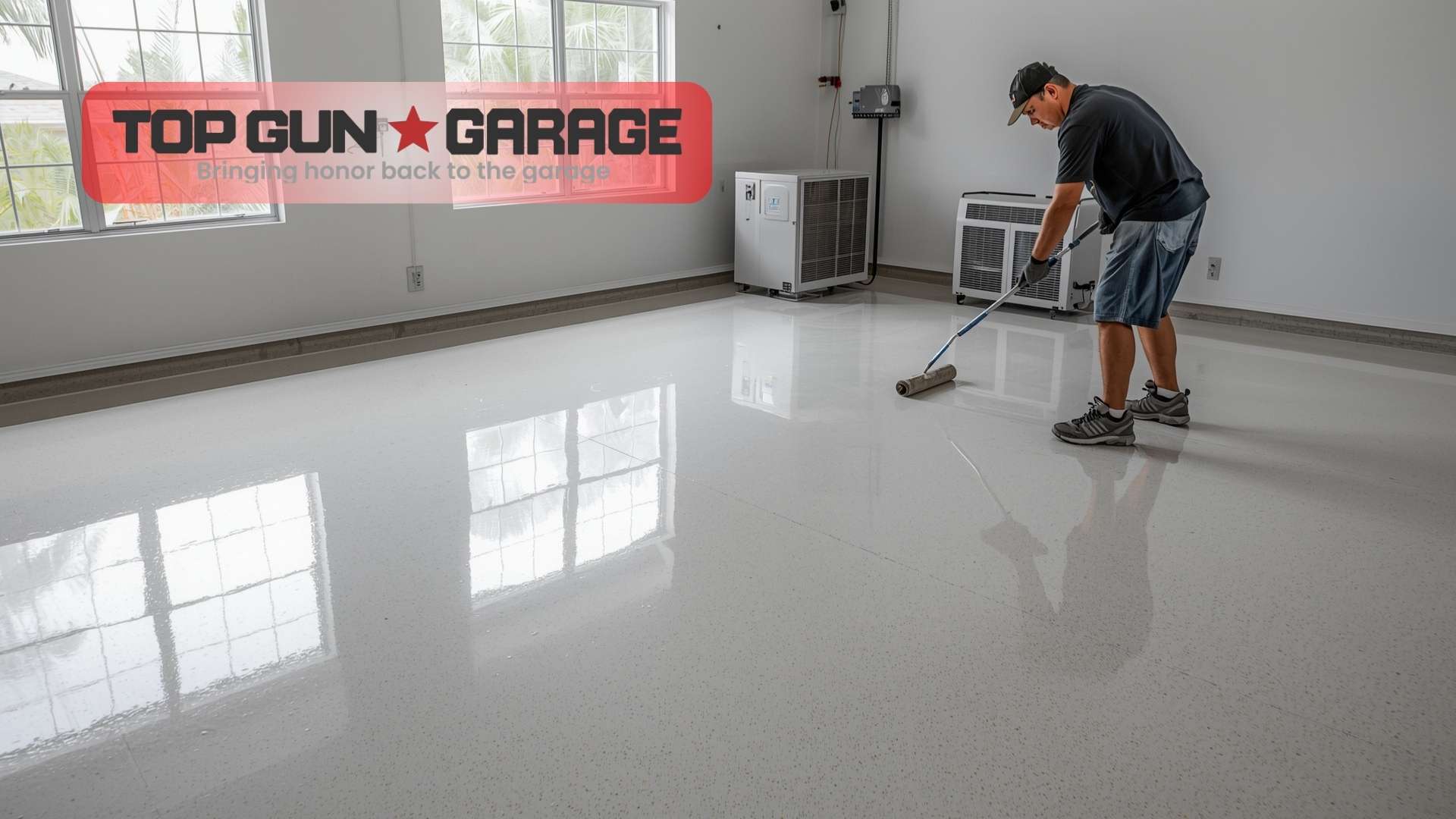
Professional installers perform calcium chloride testing (ASTM F1869) or relative humidity testing (ASTM F2170) before coating. These tests quantify moisture vapor transmission rates and determine whether standard primers will suffice or if specialized moisture mitigation systems are required. In Fort Myers, approximately 35% of residential garage slabs require enhanced moisture mitigation due to high groundwater tables and inadequate vapor barriers beneath the concrete.
Read more about floor moisture testing for epoxy installation.
Existing Mold Remediation
Active mold must be eliminated before coating. Professional remediation involves treating affected concrete with EPA-registered fungicides, allowing complete drying, and verifying elimination through testing. Simply grinding the surface spreads spores and does not address the underlying moisture conditions feeding the growth.
Concrete Surface Preparation
Diamond grinding or shot blasting opens concrete pores for primer penetration while removing surface contaminants including mold residue. This mechanical preparation creates the surface profile (CSP 2-3) required for proper epoxy adhesion. Proper preparation is the foundation of long-term mold prevention, as detailed in our concrete preparation guide.
Maintaining Your Epoxy Floor for Ongoing Mold Prevention
Epoxy flooring dramatically reduces mold risk but does not eliminate the need for basic maintenance. Regular cleaning removes organic debris before it can accumulate and provides early detection of any moisture intrusion.
Weekly Cleaning Protocol
Sweep or dust mop weekly to remove sand, pollen, and organic debris. Monthly damp mopping with a pH-neutral cleaner eliminates fine particles that sweeping misses. Avoid harsh chemicals that can degrade the topcoat and compromise moisture barrier integrity.
Prompt Spill Management
Clean up water intrusion, beverage spills, and tracked-in rainwater promptly. While epoxy prevents absorption, standing water in corners and along edges can support surface mold growth if left for extended periods. A simple squeegee push toward the garage door opening prevents accumulation.
Annual Inspection
Inspect the coating annually for chips, cracks, or worn areas that could allow moisture penetration. Address damage promptly with touch-up repairs to maintain the continuous moisture barrier. Professional recoating every 8-12 years restores optimal protection.
Complementary Mold Prevention Strategies
While epoxy flooring provides the foundation for mold prevention, additional measures enhance protection in Fort Myers’ challenging climate.
Improve ventilation. Install exhaust fans or keep garage doors partially open during humid months to reduce ambient moisture levels. Cross-ventilation helps dissipate humidity before it condenses on surfaces.
Use a dehumidifier. Portable dehumidifiers maintaining 45-50% relative humidity significantly reduce mold risk in enclosed garages. Energy-efficient models cost $30-$50 annually to operate.
Seal the garage door threshold. Water intrusion under garage doors contributes to moisture accumulation. Threshold seals and weatherstripping prevent rainwater entry during Southwest Florida’s frequent afternoon storms.
Address exterior drainage. Ensure landscaping slopes away from the garage foundation and gutters direct water at least 6 feet from the structure. Poor exterior drainage increases hydrostatic pressure beneath the slab, driving moisture into the garage.
Frequently Asked Questions
Can mold grow under epoxy flooring?
Mold cannot grow under properly installed epoxy with adequate moisture mitigation. Professional systems reduce moisture vapor transmission by 95-99%, eliminating the water mold requires for survival. However, mold can develop if the coating is applied over existing mold without remediation or if moisture mitigation is inadequate for the slab’s conditions.
Does epoxy flooring have antimicrobial properties?
Standard epoxy is not inherently antimicrobial, but some manufacturers offer formulations with embedded antimicrobial additives. These products provide an additional layer of protection by inhibiting microbial growth on the surface. However, the primary mold prevention mechanism remains the non-porous, moisture-blocking properties of the cured coating rather than antimicrobial chemistry.
How long does epoxy prevent mold compared to other floor coatings?
Quality epoxy systems maintain mold resistance for 15-20 years with proper maintenance. This exceeds concrete sealers (3-5 years), paint (1-2 years), and stains (5-7 years). The key difference is epoxy’s complete surface sealing versus the partial protection provided by penetrating treatments.
Will DIY epoxy kits prevent mold in my Fort Myers garage?
DIY water-based epoxy kits provide limited mold protection. These products are thinner (2-3 mils vs. 8-12 mils professional), contain water that creates micro-voids during curing, and rarely include moisture mitigation primers. In Fort Myers’ high-humidity environment, DIY applications typically fail within 2-3 years, often with mold development beneath the failed coating.
How much does mold-resistant epoxy flooring cost in Fort Myers?
Professional epoxy installation with proper moisture mitigation costs $6-$12 per square foot in Fort Myers. A standard two-car garage (400-500 square feet) runs $2,400-$6,000 depending on concrete condition and system selected. This investment eliminates recurring mold remediation costs that can exceed $1,000-$3,000 per occurrence.
Should I treat my garage floor for mold before epoxy installation?
Yes, if any visible mold or musty odors exist. Professional installers will assess mold conditions during the initial consultation. Active mold requires remediation with EPA-registered fungicides before coating. Applying epoxy over existing mold traps the problem beneath the surface and leads to coating failure as fungal activity continues.
Get Professional Mold-Resistant Flooring for Your Fort Myers Garage
Stop fighting mold in your garage. Professional epoxy flooring creates a permanent moisture barrier that eliminates the conditions mold needs to survive. Top Gun Garage specializes in moisture mitigation and epoxy systems engineered specifically for Southwest Florida’s challenging climate.
Our installation process includes comprehensive moisture testing, proper surface preparation, and premium coating systems that provide documented mold resistance for 15+ years. We back our work with warranties that reflect our confidence in long-term performance.
Request a free consultation for your Fort Myers epoxy garage floor project. We serve Fort Myers, Cape Coral, Naples, Bonita Springs, Estero, Marco Island, and all Lee and Collier County communities. Call today or complete our online form to schedule your moisture assessment.
 Skip to content