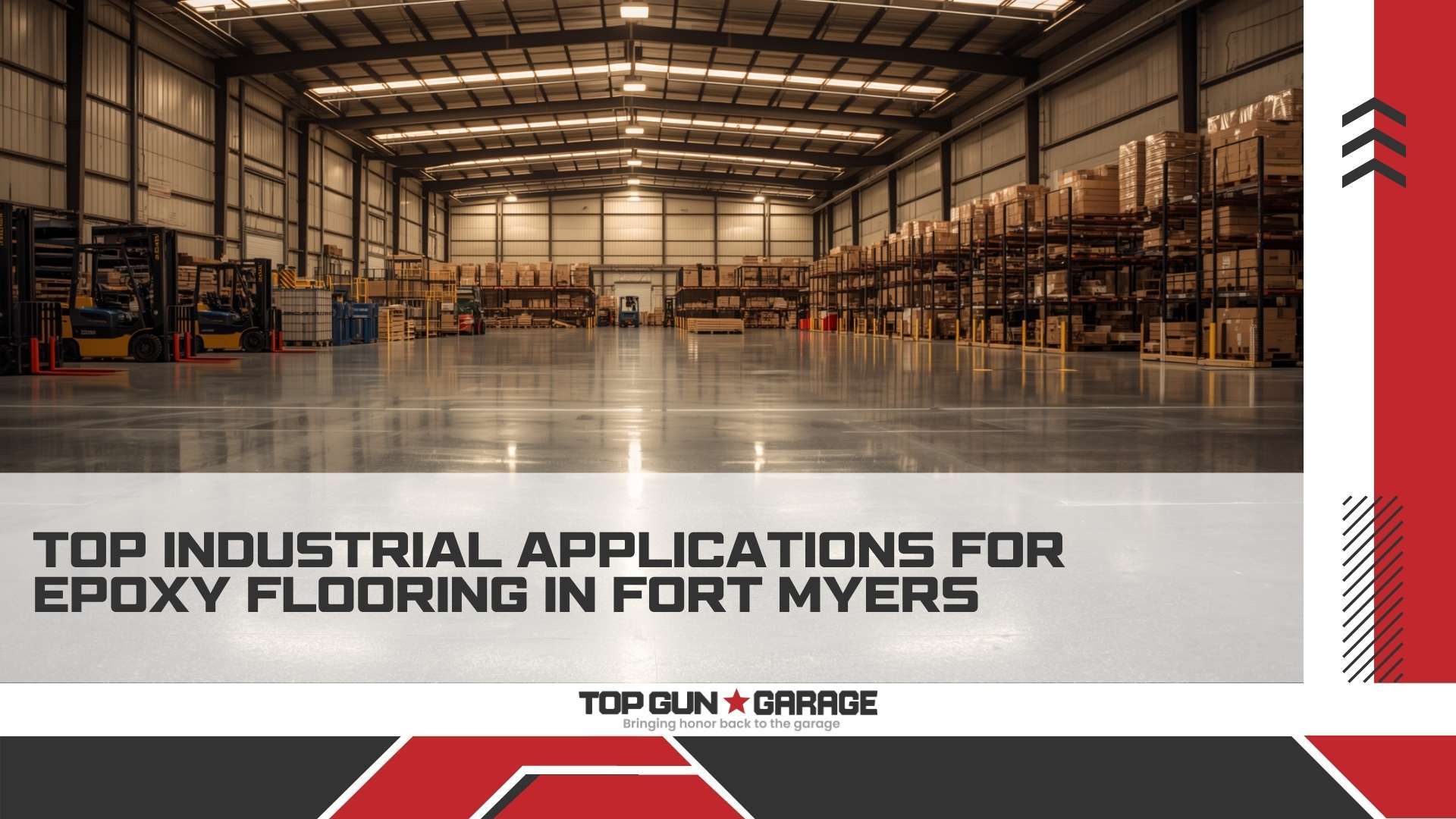
Epoxy flooring Fort Myers industrial applications span warehouses, manufacturing plants, food processing facilities, and automotive service centers throughout Lee and Collier Counties. These high-performance coating systems withstand forklift traffic exceeding 10,000 pounds, resist chemical spills from hydraulic fluids to citric acid, and maintain structural integrity in ambient temperatures reaching 95+ degrees. According to the International Concrete Repair Institute (ICRI), properly specified industrial epoxy systems deliver 15-25 years of service life under demanding conditions.
Southwest Florida’s industrial sector faces unique challenges. High humidity accelerates concrete moisture vapor transmission. Salt air corrodes unprotected surfaces. Hurricane season demands flooring that survives flooding and rapid cleanup. This guide examines the specific epoxy formulations, thickness requirements, and application protocols that perform in Fort Myers industrial environments.
Why Industrial Facilities Require Specialized Epoxy Systems
Standard garage-grade epoxy fails within months in industrial settings. The difference lies in formulation chemistry, film thickness, and application methodology. Industrial epoxy systems use 100% solids formulations that cure to 10-20 mils thickness, compared to 3-5 mils for residential products. This additional material provides the abrasion resistance and chemical barrier properties that heavy industry demands.
The American Concrete Institute (ACI) specifies minimum compressive strength of 3,000 PSI for industrial floor coatings. Premium industrial epoxies exceed 10,000 PSI compressive strength after full cure, according to manufacturer technical data sheets. This strength differential determines whether your floor survives five years or twenty-five years of service.
Warehouse and Distribution Center Applications
Fort Myers serves as a distribution hub for Southwest Florida, with warehouse square footage expanding 12% annually according to Lee County Economic Development reports. These facilities demand flooring that handles constant forklift traffic, pallet jack movement, and heavy racking loads concentrated on small footprints.
High-Traffic Zone Requirements
Forklift aisles experience the most severe wear patterns. Polyurethane-modified epoxy systems with aluminum oxide aggregate provide optimal abrasion resistance in these zones. The aggregate creates a hardened wear surface while maintaining the chemical resistance of the epoxy matrix. Expect 8-12 years of service in primary traffic lanes before recoating becomes necessary.
Storage areas see less traffic but support concentrated point loads from racking systems. Standard high-build epoxy performs well here, with thickness reduced to 8-12 mils to manage material costs. The key specification is tensile adhesion strength, which must exceed 300 PSI to prevent delamination under rack leg pressure.
Safety Line Marking and Zone Identification
OSHA regulations require clear demarcation of pedestrian walkways, forklift lanes, and hazard zones in warehouse environments. Industrial epoxy systems accommodate integral safety striping that bonds permanently to the floor surface. Unlike painted lines that wear within months, epoxy safety markings maintain visibility for 5-10 years under normal traffic conditions.
Standard warehouse color coding includes yellow for caution areas, white for traffic lanes, red for fire equipment zones, and green for safety equipment locations. Professional installers apply these markings as part of the floor system, ensuring consistent thickness and adhesion throughout.
Manufacturing Plant Floor Solutions
Manufacturing environments present the most demanding conditions for industrial flooring. Chemical exposure, thermal cycling, impact damage, and continuous machinery vibration stress floor coatings beyond typical warehouse applications. Fort Myers manufacturing facilities producing everything from marine components to medical devices require customized epoxy specifications.
Chemical Resistance Requirements
Different manufacturing processes expose floors to different chemical challenges. Novolac epoxy systems provide superior resistance to solvents and acids, making them the specification of choice for facilities handling aggressive chemicals. Standard bisphenol-A epoxies handle oils, fuels, and mild chemicals adequately but fail under prolonged solvent exposure.
The ASTM D543 standard defines chemical resistance testing protocols. Request manufacturer test data specific to the chemicals present in your facility. A coating rated excellent for sulfuric acid may fail completely against acetone. This specificity prevents costly failures and unplanned production shutdowns.
Epoxy Chemical Resistance by Formulation Type
Chemical Type
Standard Epoxy
Novolac Epoxy
Polyurethane
Hydraulic Oil
Excellent
Excellent
Excellent
Sulfuric Acid
Fair
Excellent
Poor
Acetone/MEK
Poor
Good
Fair
Caustic Soda
Good
Excellent
Good
Gasoline/Diesel
Excellent
Excellent
Excellent
Citric Acid
Good
Excellent
Good
Impact and Abrasion Resistance
Manufacturing facilities experience tool drops, component impacts, and constant abrasion from material handling. The Taber Abrasion Test (ASTM D4060) quantifies wear resistance in milligrams of material lost per 1,000 cycles. Industrial-grade epoxies lose less than 25mg under standard test conditions, compared to 100mg+ for consumer products.
Adding quartz or aluminum oxide broadcast to the coating system increases abrasion resistance by 40-60%. This modification also improves slip resistance, addressing OSHA workplace safety requirements. The tradeoff is increased surface roughness that makes cleaning more labor-intensive.
Food Processing and Commercial Kitchen Applications
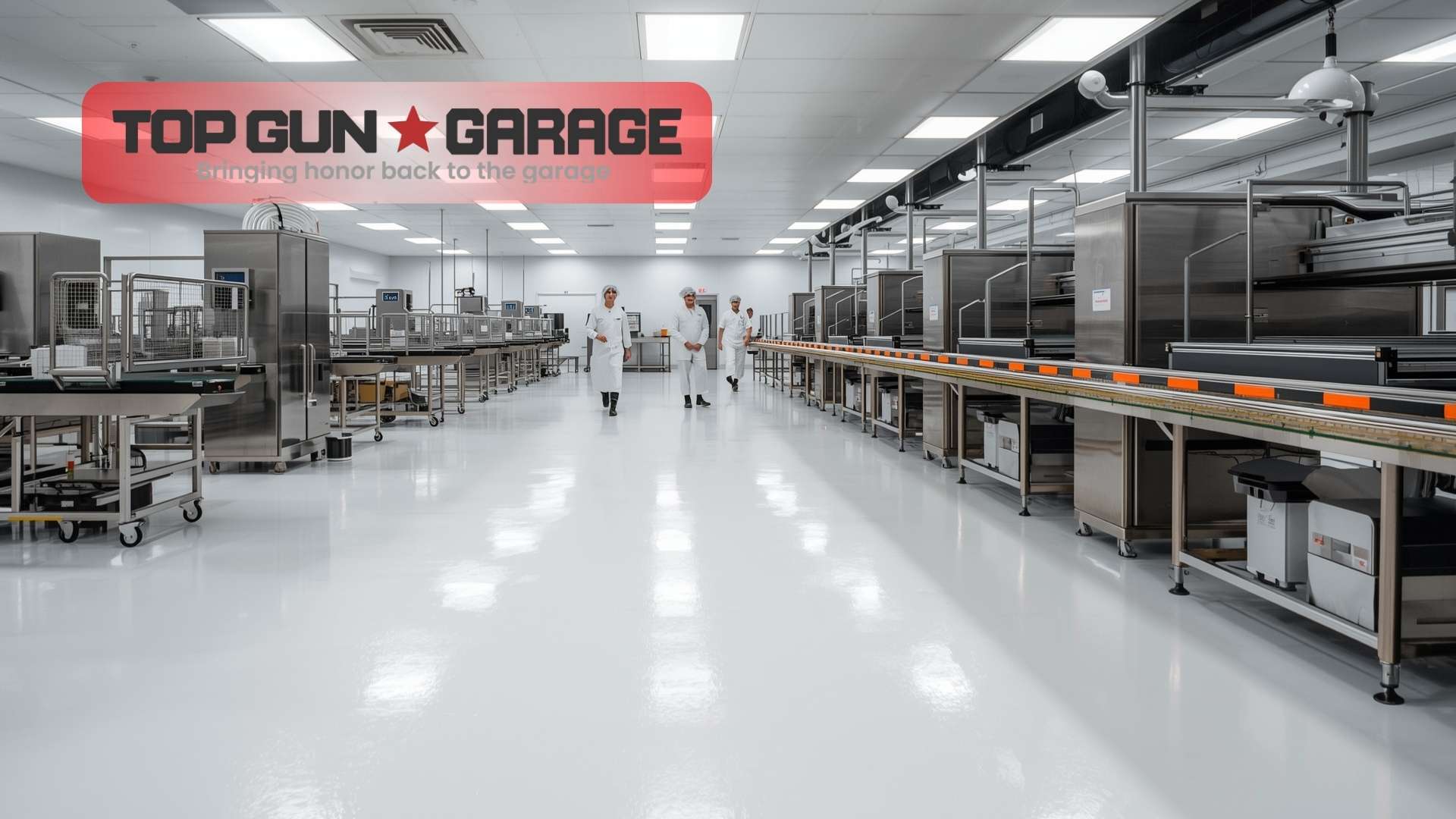
Southwest Florida’s food processing sector includes citrus operations, seafood processing, and commercial food manufacturing. These facilities face regulatory scrutiny from the FDA, USDA, and Florida Department of Agriculture. Floor coatings must meet USDA approval for direct food contact and resist the aggressive cleaning chemicals used in sanitation protocols.
USDA and FDA Compliance Requirements
USDA-approved epoxy systems use specific resin chemistries that do not leach compounds into food products. These formulations undergo rigorous testing for extractables and must pass FDA CFR Title 21 standards for food contact surfaces. Standard industrial epoxies, while durable, lack this regulatory approval and expose facility operators to compliance violations.
Seamless cove base installation is mandatory in food processing areas. This detail eliminates the joint between floor and wall where bacteria can harbor. Professional installers form cove bases from the same epoxy material as the floor, creating a monolithic surface that meets sanitation requirements.
Thermal Shock Resistance
Food processing areas experience rapid temperature changes during cleaning cycles. Steam cleaning at 180+ degrees followed by cold water rinses creates thermal shock that cracks rigid coatings. Flexible urethane-modified epoxy systems accommodate this thermal cycling without delamination or cracking.
Cold storage and freezer applications require specialized low-temperature epoxies that remain flexible below freezing. Standard epoxies become brittle at temperatures below 40 degrees Fahrenheit, leading to impact damage and moisture infiltration. Specify systems rated for your minimum operating temperature plus a 20-degree safety margin.
Automotive Service and Aviation Hangar Floors
Fort Myers supports a robust automotive service industry and general aviation operations at Page Field and Southwest Florida International Airport. Both sectors demand flooring that handles heavy rolling loads, resists petroleum products, and cleans easily for professional appearance.
Automotive Service Center Requirements
Automotive service bays experience concentrated loads from vehicle lifts, constant exposure to oils and fluids, and daily cleaning with degreasers. High-build epoxy systems with polyurethane topcoats provide the optimal combination of chemical resistance, abrasion resistance, and aesthetic appearance. Professional installations include hot tire pickup resistance to prevent coating damage from hot vehicle tires.
Pit and trench areas require containment coatings that prevent fluids from penetrating concrete. Secondary containment systems integrate with floor coatings to meet EPA stormwater regulations for automotive facilities. This compliance prevents costly environmental violations and cleanup expenses.
Aviation Hangar Specifications
Aircraft hangars demand flooring that handles extreme point loads from landing gear, resists aviation fuels and hydraulic fluids, and maintains a light-reflective surface for safety. Epoxy systems with specialized coatings for airplane hangars address these specific requirements with formulations tested against Jet-A fuel and Skydrol hydraulic fluid.
Light gray or white epoxy finishes improve hangar visibility by reflecting overhead lighting. This reflectivity reduces energy costs while improving working conditions for maintenance personnel. Anti-static formulations prevent electrostatic discharge that could damage sensitive avionics during maintenance operations.
Medical and Pharmaceutical Facility Floors
Healthcare and pharmaceutical manufacturing facilities impose the most stringent requirements on industrial flooring. Infection control, static dissipation, and chemical resistance combine with aesthetic demands for clean, professional environments. Fort Myers’ growing healthcare sector drives demand for these specialized installations.
Static Dissipative and Conductive Systems
Electronic medical equipment, pharmaceutical manufacturing, and laboratory environments require electrostatic discharge (ESD) protection. Conductive epoxy systems provide electrical resistance between 25,000 and 1,000,000 ohms, safely dissipating static charges before they damage sensitive equipment or ignite volatile compounds.
ESD flooring systems include copper grounding strips embedded in the coating and connected to building ground. This infrastructure requires professional installation by contractors trained in ESD standards. Testing with megohmmeter equipment confirms proper conductivity throughout the floor area.
Cleanroom and Controlled Environment Standards
ISO cleanroom classifications define particle contamination limits that floor coatings must not compromise. Self-leveling epoxy systems create monolithic surfaces without joints or texture that could harbor particles. Low-VOC formulations prevent off-gassing that would compromise air quality during and after installation.
Pharmaceutical facilities often require floors that withstand aggressive cleaning agents including bleach, hydrogen peroxide, and quaternary ammonium compounds. Standard epoxies may yellow or soften under repeated exposure to these sanitizers. Specify systems with documented resistance to your specific cleaning protocols.
Industrial Epoxy System Comparison
The following table compares epoxy systems by industrial application:
Application
Recommended System
Typical Cost/SF
Warehouse/Distribution
High-build epoxy + urethane
$4-$8
Manufacturing
Novolac epoxy mortar
$8-$15
Food Processing
USDA urethane cement
$12-$20
Automotive Service
Polyaspartic + flake
$6-$10
Aviation Hangar
100% solids epoxy
$5-$9
ESD/Cleanroom
Conductive self-leveling
$10-$18
Southwest Florida Climate Considerations for Industrial Epoxy
Fort Myers industrial facilities face environmental challenges that affect epoxy performance and installation timing. Understanding these factors prevents premature failures and ensures maximum coating life.
Concrete Moisture Management
Florida’s high water table and year-round humidity create persistent moisture vapor transmission through concrete slabs. The industry-standard calcium chloride test (ASTM F1869) should not exceed 3 lbs/1000 sq ft/24 hours for most epoxy applications. Relative humidity testing per ASTM F2170 provides additional data, with maximum readings of 75-80% depending on coating manufacturer specifications.
When moisture levels exceed acceptable limits, vapor barrier primers or moisture mitigation systems must be installed before the primary coating. These systems add $2-$4 per square foot but prevent catastrophic delamination that would require complete floor replacement.
Optimal Installation Timing
Southwest Florida’s dry season (November through April) provides optimal conditions for industrial epoxy installation. Lower humidity accelerates curing and reduces the risk of moisture-related defects. Summer installations remain possible but require climate-controlled conditions during application and cure periods.
Surface temperature must remain between 50-90 degrees Fahrenheit during application. Concrete slabs in unconditioned warehouses can exceed 100 degrees during summer months, accelerating pot life and reducing working time. Morning applications with forced-air cooling help manage these temperature challenges.
Hurricane Season and Flood Resistance
Industrial facilities in flood-prone areas benefit from epoxy’s water-resistant properties. Unlike carpet, VCT, or unsealed concrete, properly installed epoxy prevents water absorption and allows rapid cleanup after flooding events. The seamless surface eliminates joints where mold and bacteria could establish after water intrusion.
Post-hurricane recovery for epoxy floors involves pressure washing, sanitizing, and inspection for delamination. Most floods cause no permanent damage to quality epoxy systems. This resilience reduces business interruption costs and accelerates return to operations after weather events. Learn more about how epoxy floors perform during Florida flooding.
Industrial Epoxy Installation Process
Professional industrial epoxy installation follows a systematic process that ensures long-term performance. Each step addresses specific failure modes that compromise coating integrity.
Surface Preparation Methods
Industrial applications require aggressive surface preparation beyond what residential projects demand. Shot blasting creates the optimal concrete surface profile (CSP 3-5) for maximum adhesion. Diamond grinding addresses lighter preparation needs while scarifying removes existing coatings and heavily contaminated concrete.
Crack repair, joint filling, and concrete patching must be completed before coating application. Epoxy mortars fill spalls and damage, while polyurea joint fillers accommodate the movement that industrial concrete experiences. Proper concrete preparation determines 80% of coating performance according to industry estimates.
Multi-Coat Application Sequence
Industrial epoxy systems typically include primer, body coats, and topcoat in a multi-layer system. The primer penetrates concrete pores and creates a chemical bond foundation. Body coats build film thickness and provide chemical resistance. Topcoats add UV stability, abrasion resistance, and aesthetic properties.
Recoat windows between layers are critical. Each coat must cure sufficiently for the next layer to bond chemically, but not so long that surface contamination compromises adhesion. Professional applicators track ambient conditions and adjust timing to maintain optimal intercoat adhesion.
Frequently Asked Questions
How long does industrial epoxy flooring last in Fort Myers?
Properly specified and installed industrial epoxy systems last 15-25 years in Fort Myers facilities. Service life depends on traffic intensity, chemical exposure, maintenance practices, and coating system selection. High-traffic warehouse aisles may require topcoat renewal at 8-12 years, while lower-traffic areas remain serviceable for the full system life.
What is the cost of industrial epoxy flooring per square foot?
Industrial epoxy flooring costs $4-$20 per square foot depending on system complexity and application requirements. Basic warehouse coatings run $4-$8/SF. Manufacturing floors with chemical resistance requirements cost $8-$15/SF. Food processing and cleanroom applications range from $12-$20/SF including specialized primers and compliance certifications.
Can industrial epoxy be installed over existing coatings?
Overlay installation is possible when existing coatings are well-bonded and compatible with the new system. Professional installers perform adhesion testing to verify bond strength and chemical compatibility testing to prevent reactions between coating layers. Failed or incompatible existing coatings must be removed before new installation, adding $1-$3 per square foot to project costs.
How long does industrial epoxy installation take?
Installation timeline depends on facility size, system complexity, and existing floor conditions. A 10,000 square foot warehouse typically requires 3-5 days from preparation through final cure. Multi-coat systems with extended cure times between layers may extend to 7-10 days. Facilities can usually resume light traffic 24-48 hours after topcoat application, with full traffic after 7 days.
What maintenance does industrial epoxy require?
Industrial epoxy floors require regular sweeping and periodic wet mopping with pH-neutral cleaners. Chemical spills should be cleaned promptly to prevent staining. Annual inspection identifies wear patterns that may require touch-up before failure progresses. Avoid abrasive cleaning methods and harsh solvents that can damage the topcoat surface.
Is industrial epoxy flooring slippery when wet?
Smooth industrial epoxy can become slippery when wet with water or oil. Adding aluminum oxide, quartz, or polymer aggregate during application creates slip-resistant texture that meets OSHA requirements. The coefficient of friction (COF) should exceed 0.5 for wet conditions. Specify anti-slip additives during project planning rather than attempting to add them after installation.
Industrial Epoxy Solutions for Fort Myers Businesses
Top Gun Garage provides industrial-grade epoxy flooring solutions for warehouses, manufacturing facilities, and commercial properties throughout Southwest Florida. Our team evaluates your specific operational requirements, chemical exposures, and traffic patterns to recommend coating systems that deliver maximum service life.
We handle projects from 500 square foot service bays to 100,000+ square foot distribution centers. Our installation crews are trained in industrial application methods and safety protocols required for active facility work.
Request a free facility assessment and estimate for your Fort Myers commercial epoxy flooring project. We serve Fort Myers, Cape Coral, Naples, Bonita Springs, Estero, Lehigh Acres, and surrounding Lee and Collier County communities.
 Skip to content



 The American Concrete Institute (ACI) specifies minimum compressive strength of 3,000 PSI for industrial floor coatings. Premium industrial epoxies exceed 10,000 PSI compressive strength after full cure, according to manufacturer technical data sheets. This strength differential determines whether your floor survives five years or twenty-five years of service.

 When moisture levels exceed acceptable limits, vapor barrier primers or moisture mitigation systems must be installed before the primary coating. These systems add $2-$4 per square foot but prevent catastrophic delamination that would require complete floor replacement.