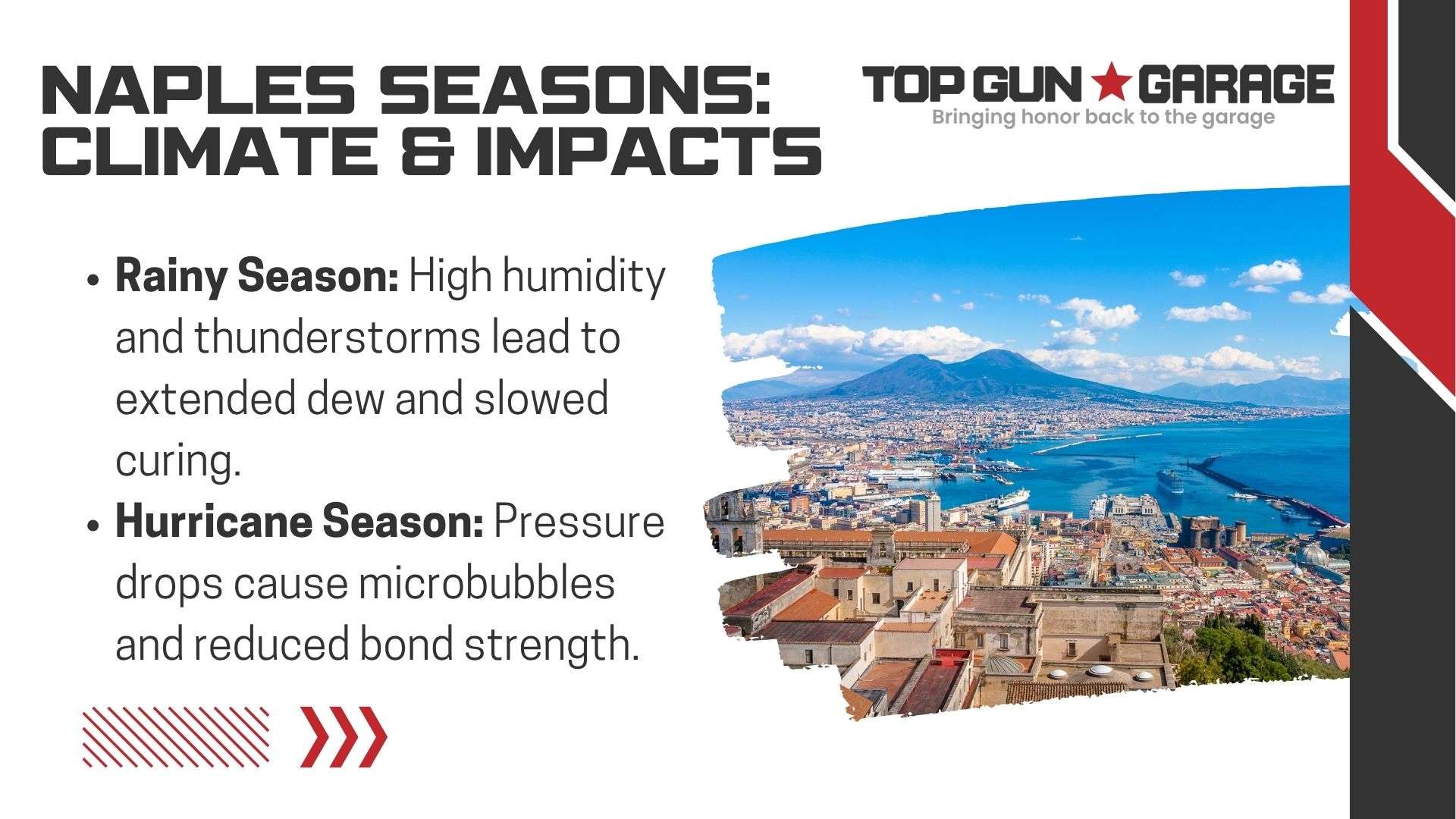
Epoxy curing in Naples, FL: Top Gun Garage reveals the impact of the local climate on epoxy cure time.
In coastal Florida, 73% of epoxy projects face uneven curing in summer. This is a big problem for both contractors and DIY fans in Southwest Florida’s special climate.
Top Gun Garage has worked for over 10 years on epoxy solutions for Naples’ subtropical weather. They found that humidity over 85% and temperatures above 90°F can make standard curing times double.
The mix of weather and chemical reactions poses big challenges. Morning dew, afternoon storms, and salty air all affect how epoxy hardens on garage floors and industrial surfaces.
Local experts use weather analysis and material science to tackle these issues. They have tested methods that work with Naples’ changing climate. This includes the dry winters and hot, humid summers.
Key Takeaways
Naples’ high humidity slows down epoxy hardening
Temperature changes need special application plans
Epoxy hardening is a complex process influenced by the environment. It involves the merging of liquid resin and hardener into solid structures. In Naples, the subtropical climate adds unique challenges to this process.
The Science Behind Polymerization
Epoxy systems gain strength through three main stages. Top Gun Garage’s research shows how these stages affect durability in Southwest Florida.
Chemical Reaction Stages in Epoxy Hardening
Initiation: Resin and hardener molecules start bonding
Propagation: Cross-linking spreads rapidly
Vitrification: The material solidifies
Role of Environmental Conditions in Molecular Bonding
Collier County’s 75% humidity affects curing. Temperature changes in coastal areas can lead to weak spots. Salt particles in the air can also impact surface bonding, important for garage floors near Naples.
What Affects Epoxy Cure Time in Naples Climate
Epoxy cure times in Collier County are greatly influenced by the environment. Naples, with its tropical climate, faces unique challenges. The humidity and temperature affect how fast epoxy cures. Knowing these factors helps get the best results.
Key Environmental Factors in Collier County
Moisture levels and temperature changes are key in Collier County. These factors affect how epoxy hardens. Beachfront and inland areas have different curing patterns.
Average Annual Humidity Levels From Naples Weather Data
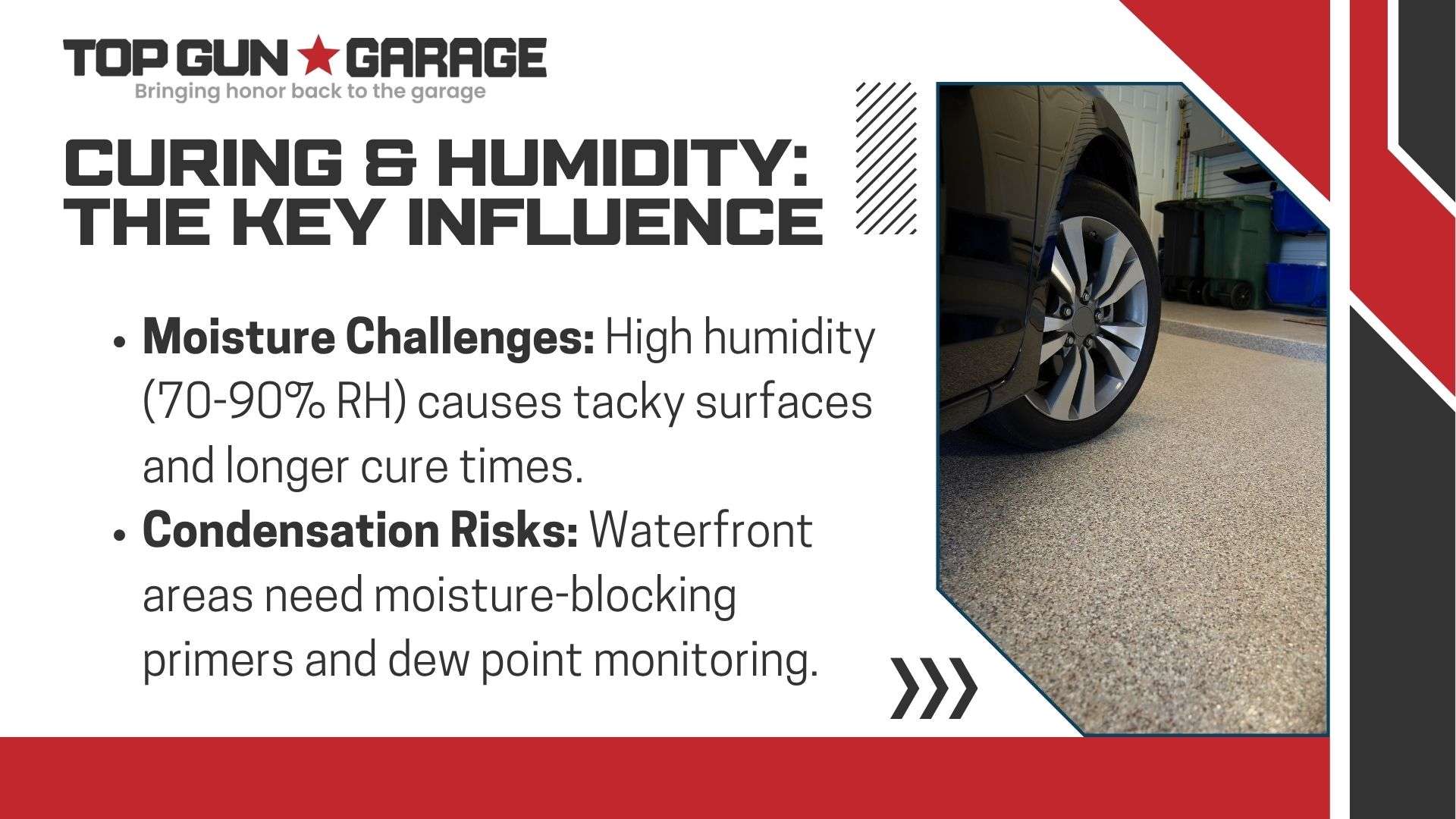
Naples has humidity levels between 70-90% all year. This high humidity slows down how fast epoxy dries. It can take 30-50% longer to cure than in dry places.
Applying epoxy in the morning works better. This is because humidity drops to 75% by midday in dry seasons.
Temperature Ranges Affecting Coastal Installations
NOAA records show coastal areas average 68-89°F. Inland areas can reach up to 94°F in summer. Epoxy cures best between 75-85°F, common in Naples beach areas.
But, direct sunlight can make surfaces over 100°F. This can cause uneven curing and make the epoxy brittle.
Humidity’s Dominant Role in Curing
Naples’ unique weather makes controlling humidity key for epoxy projects. Temperature is important, but the area’s constant moisture poses special challenges. These need careful attention during application and curing.
Gulf Coast Moisture Challenges
Southwest Florida’s close to warm seawater, causing epoxy problems. High dew points and temperature changes lead to two main issues:
Impact of 70-90% RH Levels on Surface Tackiness
Humidity over 70% slows water evaporation from epoxy. This causes:
Longer “open time” needing exact application times
Sticky surfaces that attract dust and insects
Not fully cured in areas touching the substrate
Top Gun Garage uses special amine hardeners to speed up moisture resistance in the first 4 hours.
Condensation Risks in Marine-Adjacent Applications
Waterfront properties face special challenges. Nighttime cooling can make surfaces moist, even on dry days. Solutions include:
Using moisture-blocking primers before applying
Heating substrates with infrared heaters
Monitoring dew points with wireless sensors
Studies show these methods cut down curing defects by 62% in Naples boat dock projects compared to usual methods.
Temperature Extremes in Southwest Florida
Naples has a subtropical climate with big temperature swings. These swings affect how epoxy resin dries. Contractors like Top Gun Garage use real-time temperature data to improve resin performance all year.
Summer Heat Acceleration Effects
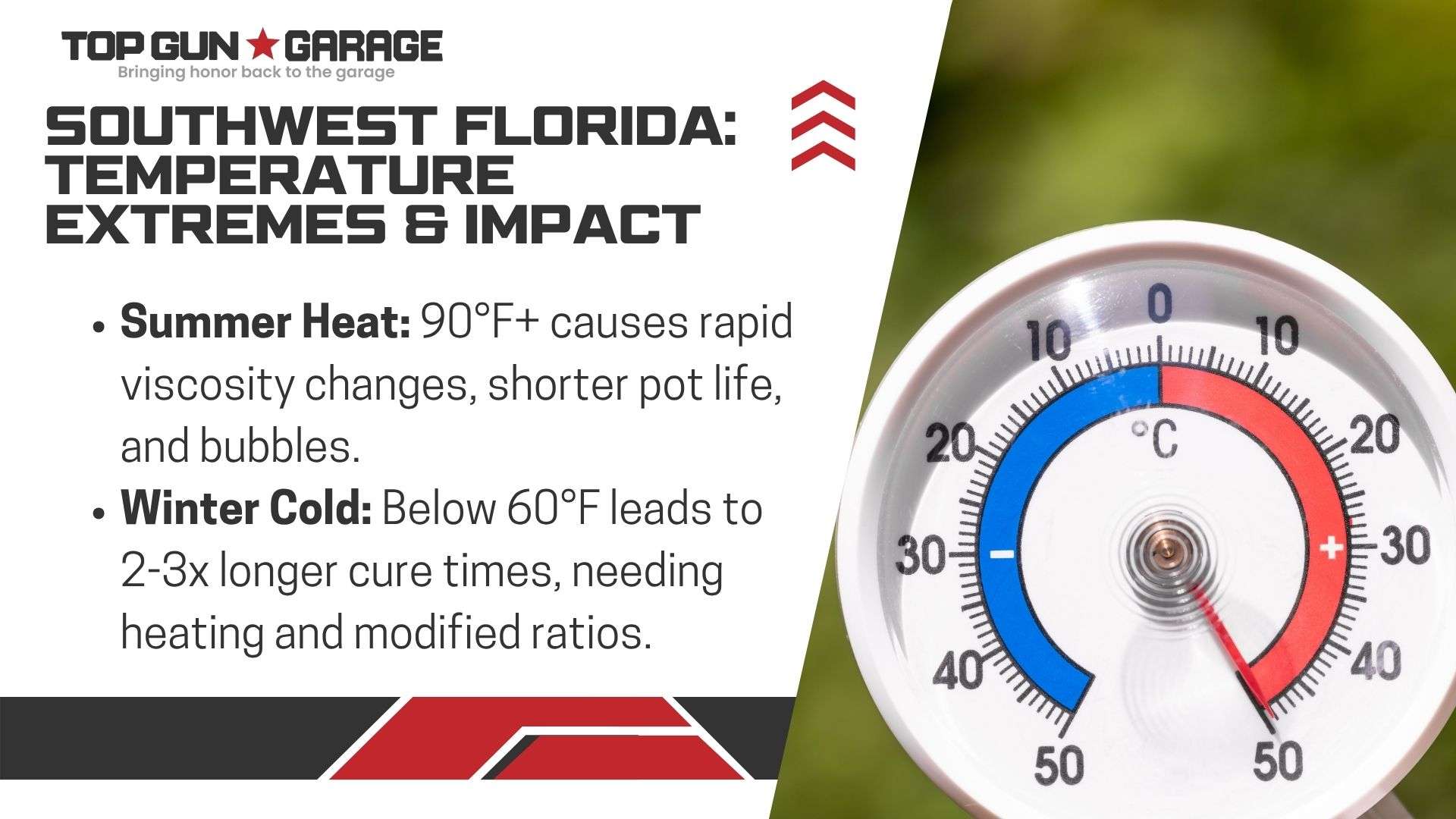
Summer in Naples means temperatures often hit over 90°F. This makes epoxy dry faster. It’s a big challenge for those applying it in Southwest Florida.
90°F+ Days Causing Rapid Viscosity Changes
High heat makes epoxy mixtures thinner too fast. This can cut down the time you have to work with it by 30-50%. It also leads to:
Shorter pot life for precise applications
Increased risk of uneven surface leveling
Potential bubble formation from faster reaction rates
Top Gun Garage fights this with special slow-cure formulas. They also use chilled containers during the hottest times.
Winter Cool Spells and Extended Cure Requirements
Winter in Naples can bring temperatures below 60°F. This slows down how fast epoxy dries. Projects might need:
2-3x longer curing durations
Supplemental heating systems
Modified resin-to-hardener ratios
In winter, Top Gun Garage uses infrared lamps and climate-controlled spaces. They keep the curing area at 70-80°F.
Seasonal Variations in Naples
Naples sees big changes in the weather each season, affecting epoxy projects. The tropical climate in Southwest Florida brings sudden weather shifts. This impacts epoxy setting time in humid environments. Knowing these changes helps with planning epoxy installations.
Rainy Season Complications
June to October is the toughest time for epoxy in Naples. High humidity and rain test even the best coatings. Local pros like Top Gun Garage plan their work around NOAA’s weather data to dodge wet times.
Mid-summer humidity often hits over 90%. This slows down epoxy curing because it stops solvents from evaporating. During this time, three main issues arise:
Extended dew formation on surfaces
Reduced air circulation from stagnant weather patterns
Persistent ground moisture from daily thunderstorms
Hurricane Season Atmospheric Pressure Changes
August to October adds more challenges with tropical storms. Fast drops in barometric pressure make it hard for epoxy to release air. This can lead to:
Microbubble formation in cured surfaces
Uneven texture development
Reduced bond strength on porous substrates
Pro installers watch pressure levels with weather station data. They adjust their methods when pressure drops below 29.8 inches.
Coastal Air Composition Factors
Naples’ coastal air shapes epoxy curing in ways you can’t see. It’s not just about temperature and humidity. The Gulf Coast’s air chemistry is key to strong results. Salt and tiny sea particles bring their own set of challenges.
Salt Air Interaction With Epoxy
Projects near Collier County’s ocean face a problem. Sodium chloride particles from the sea settle on surfaces. These tiny crystals weaken bonds, leading to peeling or cracking.
Marine particulates affecting surface adhesion
Studies show salt particles have three main effects:
They reduce bond strength by 15-20% on untreated surfaces
They cause texture issues in cured epoxy
They speed up corrosion of materials underneath
Top Gun Garage uses special primers to fight these issues. Their formulas block salt particles, keeping surfaces strong even in salty air.
Correlation between breeze patterns and cure consistency
Naples’ sea breezes in the afternoon can mess with curing. The table below shows how wind speed affects epoxy:
Wind Speed
Cure Time Variance
Surface Defect Risk
0-5 mph
±5%
Low
6-10 mph
±15%
Moderate
11+ mph
±25%
High
Experts use windbreaks and apply epoxy when it’s calm. They check NOAA data to find the best times. This is when salt and wind are low.
Best Application Times for Naples Residents
Naples homeowners and contractors can get better results by choosing the right time for epoxy projects. The best times are when the weather is most favorable. This helps avoid uneven curing and makes the epoxy bond stronger.
Top Gun Garage has studied the weather in Collier County for 10 years. They found the best times to apply epoxy.
Ideal Weather Windows Analysis
Getting epoxy to work well in Naples needs the right weather. Contractors look for two main times: the dry season and early morning.
Dry Season Advantages (November-April)
The dry season is the best time for epoxy in Southwest Florida. From November to April, Naples has:
Average humidity levels below 65%
Consistent temperatures between 70-85°F
Minimal rainfall interference
These conditions help epoxy cure evenly. Contractors like January and February best because the dew points stay low.
Top Gun Garage uses weather systems to find the perfect time to apply epoxy.
Early Morning Application Benefits
Applying epoxy in the morning has many benefits:
Cooler surface temperatures (75-80°F)
Reduced wind speeds
Lower UV exposure
Morning applications let the epoxy cure before it gets too hot. This makes the bonds stronger. Many use infrared thermography to check the temperature.
Top Gun Garage’s Climate-Adapted Techniques
Top Gun Garage knows Naples’ weather well. They use advanced methods for epoxy curing. Their solutions tackle Southwest Florida’s humidity, salt air, and temperature changes.
Localized Mixing Ratios
Standard epoxy formulas don’t work in tropical climates. But Top Gun Garage’s special blends do. Their chemists tweak the resin-hardener mix for Naples’ wet air and quick temperature shifts.
Resin-hardener adjustments for tropical conditions
They make a few key changes:
Slower-curing formulas to slow down evaporation from heat
Moisture-resistant base resin
Measurements that match real-time humidity
Controlled Environment Strategies
Physical controls are also vital. The company turns workspaces into perfect curing spots with special gear.
Dehumidification systems in garage installations
Mobile units help by:
Keeping humidity at 40-50% during application
Filtering out salt particles from the air
Creating stable temperatures for curing
Monitoring and Adjusting for Real-Time Conditions
Getting epoxy right in Naples means always adjusting for the weather. Experts use live weather data and field tests to keep conditions perfect. This way, projects stay on track, even with Florida’s changing weather.
Using NOAA Weather Data
Local workers rely on NOAA’s detailed forecasts from Naples Municipal Airport. These updates give them the latest on humidity, temperature, wind, and rain chances every 15 minutes.
Real-time humidity percentages
Temperature fluctuations
Wind speed variations
Precipitation probability
The airport’s gear gives exact air quality data. Top Gun Garage checks this against their own sensors. This helps them adjust epoxy mixes before the weather changes.
On-Site Measurement Protocols
Field techs do three key tests every 90 minutes:
Surface temperature scans using infrared guns
Ambient air moisture tests
Material viscosity assessments
Infrared Thermometers for Substrate Temperature Checks
Infrared tools measure the real temperature of surfaces, not just the air. This stops mistakes when applying epoxy to hot driveways or cool pool decks. Techs take many readings to make detailed heat maps.
By mixing NOAA forecasts with on-site tests, installers make flexible curing plans. This cuts down on bubbles and uneven hardening from sudden weather shifts. Recent work shows a 40% drop in rework thanks to real-time adjustments.
Common Curing Issues in Local Projects
Naples contractors often face unique epoxy challenges because of Southwest Florida’s subtropical climate. The temperature and humidity are perfect for outdoor projects. But, they also cause specific curing problems that need special solutions. This section will look at practical fixes for two common issues in Collier County epoxy applications.
Surface Defect Prevention
High humidity along the Gulf Coast can cause surface problems during epoxy curing. These issues can affect both looks and durability if not fixed right.
Addressing Amine Blush in High Humidity
Moisture and curing agents can create a waxy film called amine blush. Top Gun Garage uses special formulas like Smith’s HI Wear 90S for humid areas. Their tested methods include:
Pre-application surface dehumidification
Controlled chemical ratios adjusted for real-time humidity
Post-cure cleaning with pH-neutral solutions
Bonding Challenges Solutions
Concrete substrates in coastal areas face special adhesion challenges. Salt air and substrate moisture need specific preparation.
Moisture Mitigation for Concrete Substrates
Good bonding starts with controlling moisture. Experts suggest these steps for Naples-area projects:
Living in Naples means facing unique challenges with epoxy applications. DIY projects might not cut it in Southwest Florida’s humid and rainy climate. Getting expert advice can save you from mistakes and ensure your project lasts.
Top Gun Garage is your go-to for epoxy projects in Collier County. They bring three big benefits to the table:
15+ years of climate-specific knowledge – They know how Gulf Coast weather affects epoxy
Customized application plans – They tailor methods for different surfaces
Real-time weather adaptation – They plan based on NOAA forecasts
If you’re in Naples, Marco Island, or Bonita Springs, they’ve got you covered. They consider local weather and surface conditions to get it right.
Ready to talk about your project? Call (239) 488-7000 for a free consultation. It’s just 15 minutes to discuss your project, choose the right materials, and learn how to protect it from the weather.
Conclusion
Naples’ tropical climate makes epoxy curing tricky. It needs special knowledge of humidity, temperature, and air quality. To succeed, local contractors must adjust to rainy seasons and the salty Gulf Coast air.
They have to deal with summer heat and winter moisture. They also need to watch NOAA weather data for the best times to apply.
Top Gun Garage has developed epoxy solutions for Southwest Florida’s climate. Their formulas work well in high humidity and heat. They’ve tested their products for 15 years.
Their products last a long time, even in extreme conditions. They’ve proven their quality in places like Marco Island and Bonita Springs.
Using professional materials and local application strategies is key. Top Gun Garage’s team uses special protocols for coastal Florida projects. This ensures the epoxy works well all year.
For epoxy that lasts in Naples’ climate, getting advice from experts is essential. They help ensure the surface and bond stay strong.
For more information on keeping your space in top shape, learn how to clean an epoxy floor properly.
 Skip to content