Avoid concrete conditions that prevent successful epoxy application in Naples, FL. Top Gun Garage provides expert guidance. (156 characters)
In Southwest Florida, nearly 60% of epoxy coating failures happen because of bad surface prep and weather. Naples’ humidity is usually around 75% all year. This makes flooring jobs in Naples very challenging, needing special fixes.
Top Gun Garage finds three big problems: moisture, salt air, and temperature changes. The Collier County Building Department says concrete moisture must be under 4.5% for coatings to stick well. But, many surfaces are too wet during rainy times.
Peeling and bubbled surfaces usually come from three main causes: alkaline salts, bad grinding, and wrong primer choice. Coastal areas get worse faster because of sea water and strong sun.
Key Takeaways
- Southwest Florida’s humidity creates unique challenges for epoxy adhesion
- Concrete moisture content must meet strict local standards before application
- Surface preparation errors account for most premature coating failures
- Salt air contamination requires specialized cleaning protocols
- Professional moisture testing prevents costly rework
Specialized contractors use moisture meters and pH test kits to check slabs. They mix mechanical scarification with chemical treatments when needed. This way, they fix problems before they ruin flooring.
Understanding Epoxy Flooring Challenges in Naples
Naples’ coastal environment is tough on epoxy flooring. The area sees 82% humidity all year. Salt from the Gulf also affects the air, making it hard for flooring to last.
- Saltwater corrosion: Salt particles in the air settle into concrete, making it hard for epoxy to stick
- Moisture saturation: High humidity slows down how fast epoxy dries, leading to bubbles and uneven surfaces
- Thermal expansion: Temperature changes cause concrete to expand and contract, stressing the epoxy bond
Many mistakes happen because people don’t understand these challenges. Contractors might not use moisture barriers or grind surfaces properly. Homeowners often schedule installations when it’s raining, making things worse.
To fix these issues, a good epoxy troubleshooting guide is needed. Here’s what professionals suggest:
- Do calcium chloride tests to check moisture levels
- Use diamond grinders to get the right surface depth
- Apply special primers for salty environments
These steps help fight the moisture and salt from the Gulf. By tackling Naples’ climate challenges early, floors can last for decades.
What Concrete Conditions Prevent Successful Epoxy Application
Before applying epoxy, it’s important to check the concrete in Naples. Moisture is the main reason for failed applications. Making the right checks and adjusting for the climate in Southwest Florida is key for lasting results.
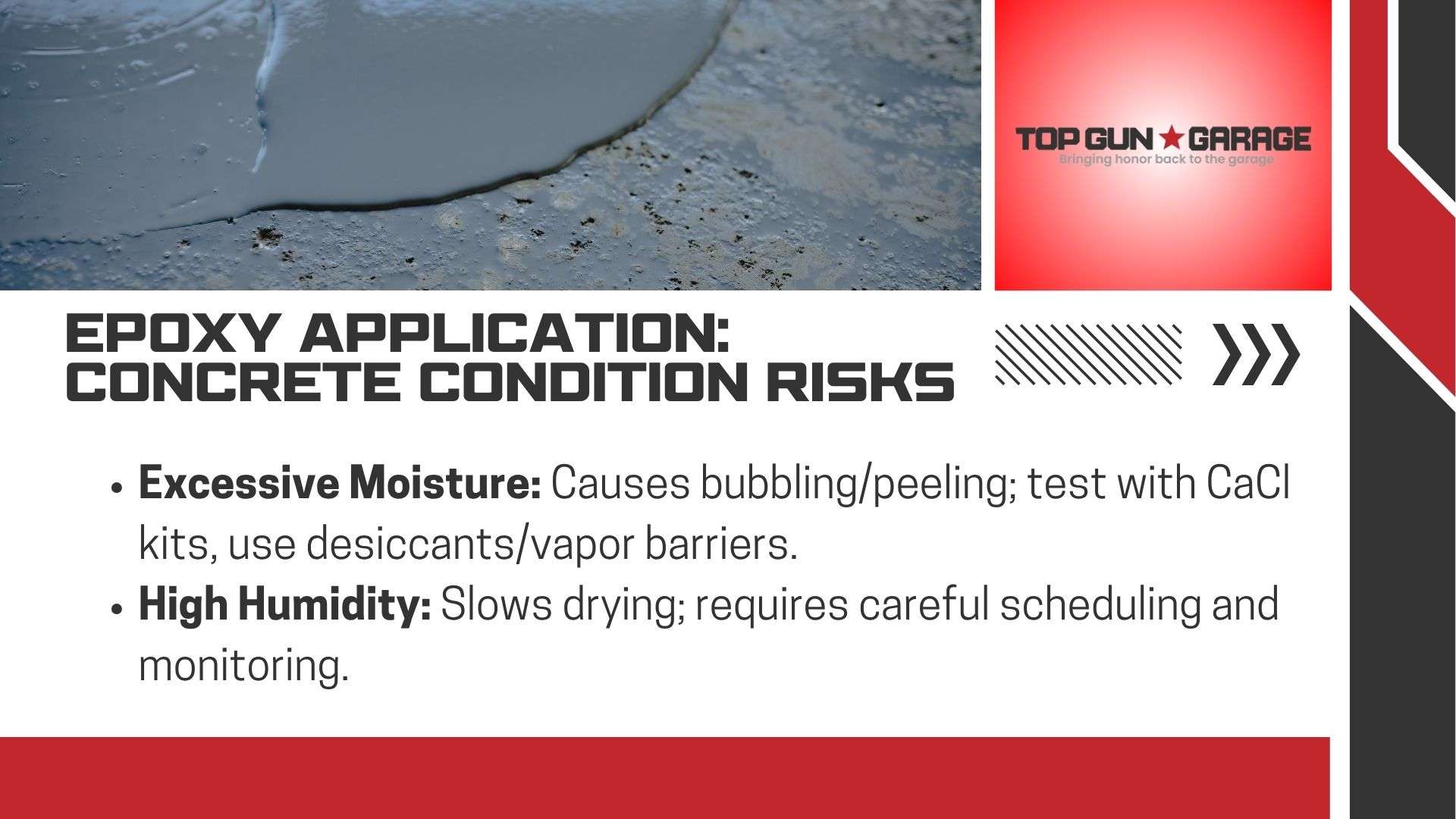
Excessive Moisture Content in Concrete Slabs
Too much moisture makes epoxy coatings bubble and peel. The Southwest Florida Building Code says moisture can’t be more than 3 pounds per 1,000 square feet in 24 hours. If it’s more, the epoxy won’t stick and needs to be fixed right away.
Testing Moisture Levels With Calcium Chloride Kits
Experts use special tests to check moisture levels. A recent test in Naples showed levels were 16% higher than allowed.
Top Gun Garage fixes this by:
- Using industrial desiccant systems to absorb moisture
- Extending the time for concrete to dry
- Putting in vapor barriers when needed
Naples Humidity Considerations From Coastal Climate
The Gulf Coast has very high humidity all year, making concrete dry slowly. Morning dew and rain in the afternoon make it hard to schedule epoxy work. Good installers watch:
- Weather patterns for the next 72 hours
- Indoor humidity levels during application
- Psychrometer readings in real-time
These steps help avoid epoxy peeling and keep with SWFL building codes. Managing moisture is essential for durable garage floor coatings.
Surface Contaminants That Compromise Epoxy Bonding
Even the strongest epoxy coatings fail when applied over hidden contaminants. Naples’ unique coastal environment and high vehicle traffic create two primary adversaries: petroleum-based residues and mineral buildup. Proper identification and removal of these substances form the foundation of durable epoxy flooring.

Oil and Grease Stains From Vehicle Traffic
Auto shops and residential garages in Collier County battle persistent oil leaks that seep deep into concrete pores. Traditional degreasers often leave behind invisible residue that prevents proper epoxy adhesion. Top Gun Garage uses a 4-step contamination removal process compliant with local EPA regulations:
- Application of pH-neutral alkaline cleaners
- Mechanical scrubbing with diamond-embedded pads
- Pressure washing at 3,500 PSI
- Final treatment with elastomeric fillers
Efflorescence and Mineral Deposits
Saltwater intrusion and hard water evaporation leave behind crystalline deposits that undermine epoxy bonds. These white powdery substances indicate moisture movement through concrete slabs. Effective solutions include:
- Acid etching with diluted muriatic acid
- Application of penetrating sealers
- Moisture vapor barrier installation
Recent case studies show 92% reduction in epoxy failures when combining mechanical removal with chemical neutralization. Professional contractors now use moisture meters and surface profile gauges to verify contaminant removal before application.
Temperature Extremes and Epoxy Application Windows
Naples’ climate poses unique challenges for epoxy flooring. The best temperature for applying epoxy is between 65°F and 85°F. But, local conditions often go beyond these limits.
Seasonal changes can affect how epoxy reacts. This can impact both the quality of the application and how long it lasts.

Summer Heat Acceleration Challenges
Summer in Naples can reach up to 95°F. This high heat makes epoxy cure too fast. It’s hard for workers to get a smooth finish.
Thermal expansion in concrete can also cause cracks. This happens when materials cool and contract unevenly.
Installers use climate-controlled trailers to fight these issues. These trailers keep the materials at the right temperature. They also slow down how fast the epoxy hardens.
Special additives in the epoxy help too. They help prevent it from hardening too quickly during the summer.
Winter Temperature Drops Below 50°F
Cold weather in winter is another challenge. When it’s below 50°F, epoxy gets thicker and loses strength. Concrete can get colder than the air, leading to moisture under the coating.
- Extended curing times leading to dust contamination
- Increased viscosity causing uneven spreading
- Potential for brittle finishes in low humidity
Experienced contractors use infrared heaters to warm concrete. They keep an eye on the temperature. This ensures the surface stays warm enough during installation.
Curing Time Requirements for New Concrete
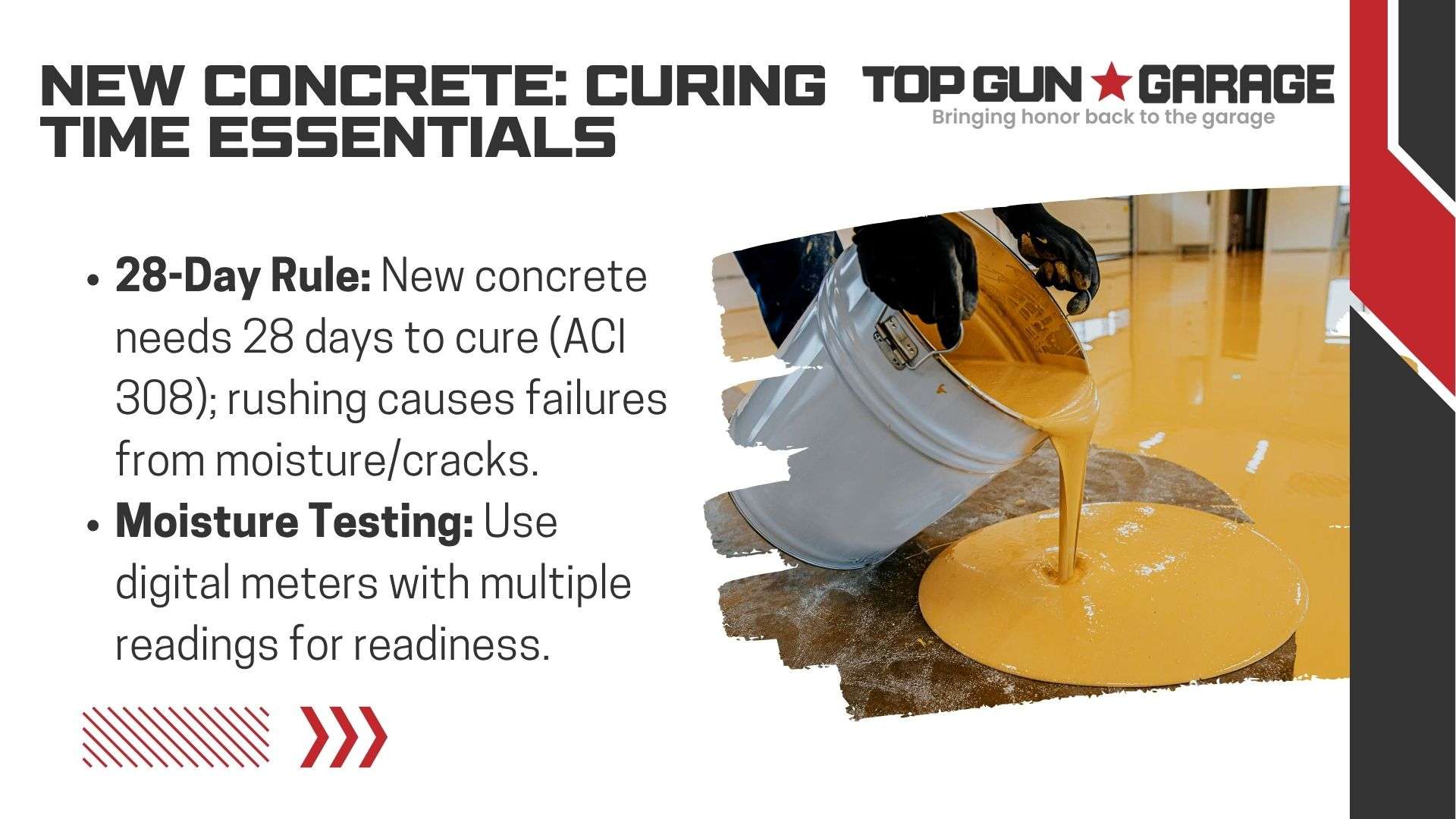
Proper concrete curing is more than just waiting. It’s a science that ensures epoxy flooring success. Fresh concrete needs 28 days to fully cure, as the ACI 308 industry standards state. Many Naples contractors underestimate this time, leading to premature coating failures and costly repairs.
Here’s why the 28-day window matters:
- Moisture retention in uncured slabs creates vapor pressure
- Chemical reactions continue altering concrete pH levels
- Shrinkage cracks develop as concrete dries unevenly
Top Gun Garage technicians use digital moisture meters to check slab readiness before applying epoxy. These tools measure moisture content without damaging the slab. Our team takes three separate moisture readings across different zones for accuracy.
New construction projects often face tight schedules. But, rushing concrete curing guarantees problems. Epoxy applied too early can develop bubbles, delamination, or chalky discoloration within months. For garage floors in Florida’s humid climate, proper curing is essential for lasting results.
Existing Floor Damage and Structural Defects
Naples property owners often face hidden challenges when epoxy meets compromised concrete. Structural defects in foundation slabs need immediate attention before coating applications. Ignoring them risks premature system failure and costly repairs.
Crack Propagation in Foundation Slabs
Active cracks in concrete behave like living organisms, expanding and contracting with environmental changes. Polyurethane crack injection repairs create flexible seals that move with the substrate. This prevents moisture intrusion that could undermine epoxy adhesion.
Top Gun Garage’s 7-point structural assessment identifies three critical factors:
- Crack width progression over 30 days
- Subsurface void detection
- Rebar corrosion risk
Spalling Concrete From Saltwater Exposure
Coastal properties face unique challenges as salt crystals penetrate concrete pores. When these deposits hydrate, they create internal pressures that literally explode the surface layer. FEMA flood zone repair protocols mandate specific remediation steps before epoxy application:
Effective spalling treatment involves:
- Pressure washing with calcium chloride neutralizers
- Patching using marine-grade polymers
- Applying penetrating sealers before epoxy primer
For expert evaluation of structural defects in Naples foundations,
contact Top Gun Garage at (239) 488-7000. Their certified technicians use ground-penetrating radar to map subsurface damage invisible to the naked eye.
Improper Surface Preparation Techniques
Getting the surface right is key for lasting epoxy flooring. Even top-notch epoxy can fail without proper prep. Contractors in Naples, with their coastal challenges, must pay extra attention to details.
Inadequate Grinding and Profiling
Diamond grinding is the best way to prep surfaces for epoxy. The International Concrete Repair Institute (ICRI) says a CSP 3 profile is best. But, mistakes happen:
- Using old grinding discs that smooth instead of texture
- Not grinding edges near walls and corners
- Not making sure the surface depth is even
Top Gun Garage uses special laser tools to check the surface. They make sure every inch is ready for epoxy.
Residual Dust and Debris Concerns
Small dust particles can ruin epoxy adhesion. Cleaning needs more than just sweeping:
- Industrial vacuums with HEPA filters
- Chemical cleaners for surface tacking
- Compressed air for hard spots
The company’s vacuum process gets rid of almost no dust. This careful cleaning stops problems like fish eyes and pinholes in Naples’ damp air.
Environmental Factors During Installation
Naples’ coastal climate poses unique challenges for epoxy flooring projects. Humidity and sunlight patterns affect how materials bond to concrete. Knowing these factors ensures a durable, long-lasting finish.
High Humidity Days in Naples
Humidity in Naples often goes over 90%, hitting highs in summer. National Weather Service Gulf Coast advisories warn that this can cut epoxy’s working time by 40%. Moisture trapped under the coating can lead to bubbling or peeling over time.
Top Gun Garage fights this with humidity-controlled application tents. These tents have HEPA filtration to keep air quality high during installation. This method stops condensation and lets crews work well in coastal weather.
Direct Sunlight Exposure During Curing
UV rays speed up epoxy curing unevenly when applied in direct sunlight. This causes weak spots because the surface hardens faster than the material beneath. Morning installations are often best, as afternoon sun increases heat and glare.
Professional teams use shading systems to control surface temperatures. They also check infrared thermometers to keep the substrate between 65–85°F. This prevents early curing and ensures proper bonding.
To get the best results, schedule epoxy projects in Naples’ drier spring or fall. Always check humidity forecasts and plan curing phases around peak sunlight hours. These tips help keep the surface in good condition for years.
Professional Epoxy Troubleshooting Guide
When epoxy flooring fails early, pros use advanced methods to find hidden problems. They mix modern tech with proven standards to spot issues early. Here are three key ways experts in Naples check epoxy floors for lasting results.
Non-Destructive Moisture Testing Methods
Moisture in concrete is a big worry for epoxy sticking. Contractors test with calcium chloride and humidity probes. They also use infrared to find hidden moisture without harming the floor.
Nuclear density tests check slab strength. They find weak spots from bad compaction or saltwater. If moisture is over 4%, they use vapor barriers or dehumidifiers.
Surface Profile Depth Analysis
The texture of the concrete affects how well epoxy sticks. Experts measure this with tape or laser tools. A good surface has a CSP of 3-5, which helps epoxy bond well.
Grinding should be done at 45-degree angles for best results. CSP values under 2 can cause peeling. Values over 6 might need extra coats. Regular checks during prep help avoid costly mistakes.
Adhesion Strength Verification
ASTM D7234 rules guide pull-off tests. Technicians attach metal to cured epoxy and measure how much force it takes to separate. Most floors need 250-300 psi to stick well. Less than 200 psi means trouble.
If tests fail, they act fast. They might re-profile, add primer, or use special epoxy. Keeping records of tests shows quality to everyone involved.
Maintaining Epoxy Flooring in Coastal Climates
Coastal areas need special care for epoxy floors because of saltwater and sunlight. Naples homeowners face unique challenges. The right protection can make floors last longer and keep them looking good.
Saltwater Corrosion Prevention
Salt can cut epoxy floor life by 30% in coastal areas, studies show. Top Gun Garage offers marine-grade polyaspartic topcoats. These coatings stop salt and let moisture out.
Three key steps for salt-prone areas:
- Rinse floors weekly with pH-neutral cleaners
- Inspect for micro-cracks near garage entries
- Reapply anti-corrosion sealants annually
UV Protection Strategies
Florida’s sun can damage epoxy floors in 18-24 months. Top Gun Garage’s topcoats reflect 98% of UV rays. They keep colors bright and use ceramic microspheres to scatter light.
Important UV protection steps include:
- Installing UV-blocking window films
- Using matte finishes to minimize glare
- Scheduling professional recoating every 3-5 years
By using these strategies, epoxy floors can handle Naples’ tough coastal climate. They stay slip-resistant and look great.
Trusted Epoxy Solutions From Top Gun Garage
Top Gun Garage is known for top-notch epoxy solutions in Naples. They have 15 years of experience and have worked on big projects like Naples Municipal Airport. Their work stands up to Florida’s weather, keeping concrete strong.
- NACE-certified technicians trained in corrosion prevention
- FDEP-compliant materials meeting environmental standards
- Advanced moisture mitigation systems for coastal slabs
- Custom UV-resistant topcoats for sun protection
Over 4,814 verified reviews show they deliver great results. They use special tools to check for moisture before applying epoxy. This helps them tackle Naples’ concrete problems effectively.
Want to improve your space? Top Gun Garage offers free site checks and quick quotes.
Call (239) 555-0178 or visit their North Naples showroom. Talk to their certified flooring experts about your project.
Conclusion
Getting epoxy flooring right in Naples means tackling the area’s special challenges. It’s all about keeping an eye on moisture, making sure the surface is clean, and controlling the temperature when applying. Removing dirt and oils is key to avoiding problems later on.
New concrete needs to dry completely before you can put a coat on it. Old floors might need fixes for cracks or damage. Keeping humidity low and protecting against UV rays is vital for areas near the sea and under strong sunlight. Experts use special tools to check if the surface is ready, ensuring the flooring lasts.
Top Gun Garage offers epoxy flooring that’s made for Florida’s weather. Their team follows a detailed process to prepare the surface and watch the environment during the job. They give a Lifetime Satisfaction Guarantee, thanks to 25 years of experience in Naples. For the best epoxy flooring, call their Naples team at (239) 488-7000.