



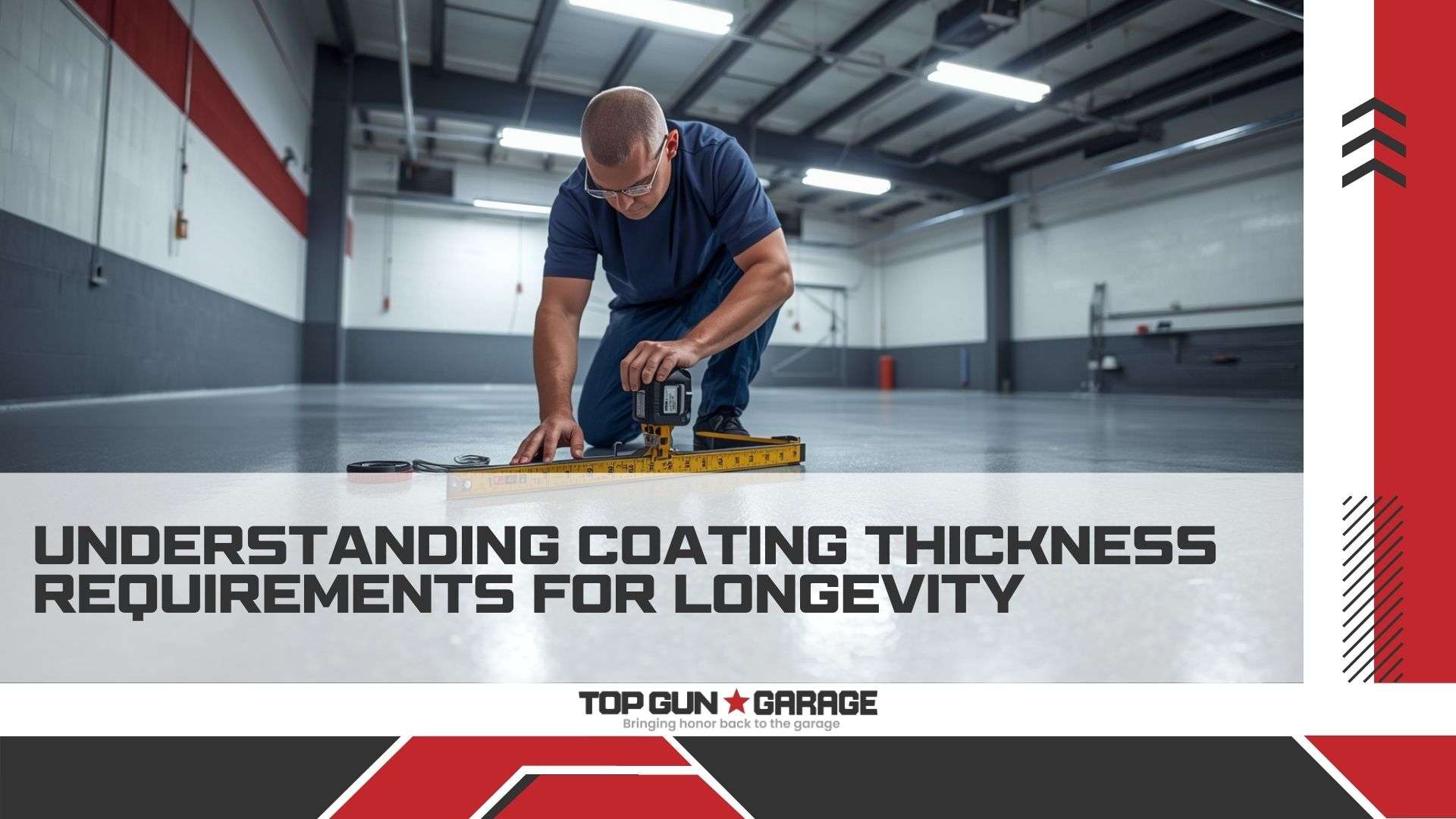
Understanding coating thickness requirements is fundamental to achieving durable, long-lasting flooring solutions that can withstand years of heavy use. Whether you’re installing epoxy coatings in a residential garage or applying industrial-grade polyurethane systems in a commercial facility, the thickness of your coating directly impacts its performance, longevity, and ability to protect the underlying substrate.
Professional flooring contractors know that proper coating thickness isn’t just about applying more material – it’s about achieving the optimal balance between protection, durability, and cost-effectiveness. Too thin, and your coating may fail prematurely, leading to costly repairs and disappointed customers. Too thick, and you risk issues like poor adhesion, extended cure times, and unnecessary material costs that can impact project profitability.
The science behind coating thickness requirements involves understanding how different materials perform under various conditions. Factors such as substrate porosity, environmental conditions, intended use, and the specific chemistry of the coating system all play crucial roles in determining the ideal application thickness. Modern coating technologies have evolved to provide specific guidelines for different applications, but successful implementation requires both technical knowledge and practical experience.
Industry standards have developed over decades of research and real-world testing, providing contractors with reliable benchmarks for coating thickness standards across different flooring systems. These standards aren’t arbitrary numbers – they represent the minimum thickness required to achieve specified performance characteristics while maintaining long-term durability. Understanding these requirements helps contractors deliver consistent results and build lasting relationships with clients who depend on their expertise.
At Top Gun Garage, we’ve seen firsthand how proper attention to coating thickness requirements can make the difference between a flooring system that lasts decades and one that requires premature replacement. Our experience has taught us that investing time in understanding and implementing proper thickness standards ultimately saves money and builds reputation in the competitive flooring industry.
Key Takeaways
Minimum thickness requirements vary significantly based on coating type, with epoxy systems typically requiring 5-10 mils for decorative applications and 15-30 mils for heavy-duty industrial use.
Substrate preparation quality directly impacts the effective thickness needed, as properly prepared surfaces allow for better adhesion and more efficient coating performance.
Environmental factors including temperature, humidity, and chemical exposure influence both application thickness and long-term performance requirements.
Measurement accuracy is critical, requiring proper wet film thickness gauges during application and dry film thickness testing after cure to ensure compliance with specifications.
Cost optimization comes from applying the correct thickness rather than over-applying, as excess material doesn’t proportionally improve performance but significantly increases project costs.
Quality control protocols should include systematic thickness monitoring throughout the application process to identify and correct variations before they become permanent issues.
Industry standards provide reliable baselines, but site-specific conditions may require adjustments to achieve optimal performance in challenging environments.
Documentation requirements for coating thickness become increasingly important for warranty compliance and future maintenance planning.
Understanding Coating Thickness Fundamentals
Coating thickness fundamentals begin with recognizing that different flooring systems have evolved to meet specific performance requirements through carefully engineered thickness specifications. The relationship between thickness and performance isn’t linear – there are optimal ranges where coatings perform best, and deviations in either direction can compromise the system’s integrity and longevity.
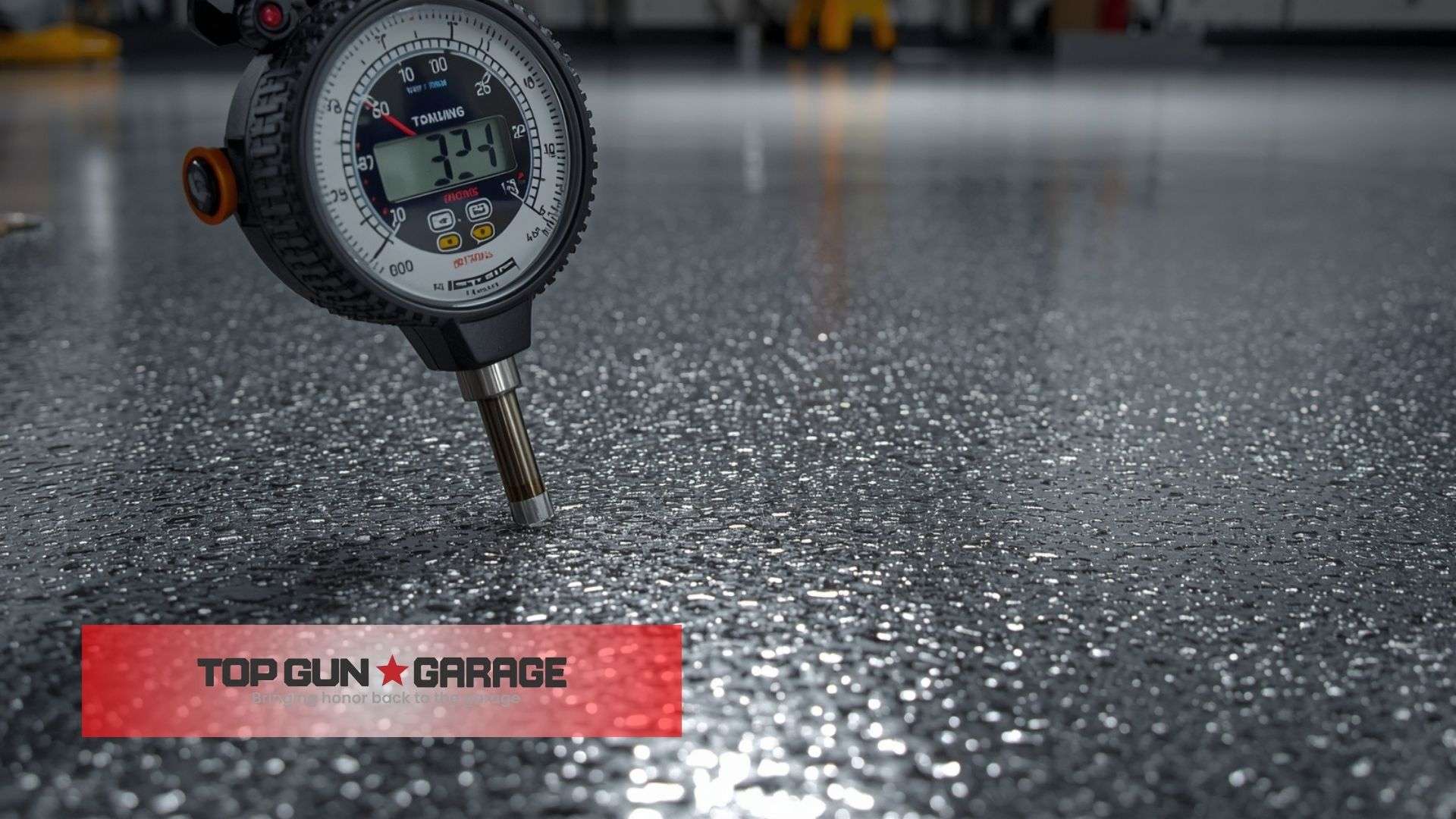
The measurement of coating thickness involves understanding both wet film thickness (WFT) and dry film thickness (DFT). Wet film thickness represents the coating as applied, while dry film thickness represents the final cured coating after solvents have evaporated and chemical reactions have completed. The relationship between these measurements varies based on the coating’s solids content, with higher-solids coatings showing less shrinkage during cure.
Professional contractors must consider substrate porosity when calculating required application thickness. Porous substrates like concrete can absorb significant amounts of coating material, effectively reducing the final film thickness. This absorption varies based on concrete density, age, and surface preparation methods. Understanding these variables helps contractors adjust their application rates to achieve consistent final thickness across different substrate conditions.
Temperature and humidity during application significantly impact how coatings flow and level, affecting the final thickness distribution. Higher temperatures typically reduce viscosity, allowing coatings to flow more easily but potentially leading to thinner areas if application rates aren’t adjusted accordingly. Humidity affects cure rates and can influence how coatings self-level during the working time window.
Industry Standards and Specifications
Coating thickness standards have been developed by various industry organizations to ensure consistent performance across different applications and environments. The National Association of Corrosion Engineers (NACE), ASTM International, and the Society for Protective Coatings (SSPC) have established comprehensive guidelines that form the foundation for professional coating applications in the flooring industry.
ASTM D4138 provides standardized methods for measuring coating thickness on metallic substrates, while ASTM D6132 addresses thickness measurement on non-metallic substrates like concrete. These standards specify not only measurement techniques but also acceptance criteria for thickness variations across a coated surface. Understanding these standards helps contractors establish quality control procedures that meet industry expectations.
Different coating chemistries require different minimum thickness levels to achieve their designed performance characteristics. Epoxy coatings typically require minimum dry film thicknesses of 5-7 mils for light-duty decorative applications, 10-15 mils for moderate traffic areas, and 20-30 mils for heavy industrial environments. Polyurethane topcoats generally perform optimally at 2-4 mils, providing UV protection and chemical resistance without excessive thickness that could lead to adhesion issues.
International standards such as ISO 2808 provide additional guidance for thickness measurement techniques and quality control procedures. These standards recognize that coating performance depends not just on average thickness but also on thickness uniformity across the coated surface. Significant variations in thickness can create weak points that become failure initiation sites under service conditions.
Specialty applications may require thickness specifications that exceed standard guidelines. Chemical processing facilities, pharmaceutical manufacturing areas, and food processing environments often specify enhanced thickness requirements to ensure adequate protection against aggressive cleaning chemicals and sanitizing procedures. Understanding these enhanced requirements helps contractors properly scope and price specialized projects.
Application Techniques for Optimal Thickness
Achieving consistent coating thickness requires systematic application techniques that account for material properties, environmental conditions, and substrate characteristics. Professional contractors develop standardized procedures that ensure repeatable results across different projects and crew members. These procedures typically begin with proper material preparation, including thorough mixing and temperature conditioning to achieve optimal flow characteristics.
Roller application techniques significantly impact thickness consistency, with factors such as roller nap length, rolling speed, and application pressure all affecting final film thickness. Short-nap rollers typically produce thinner, more uniform coatings suitable for smooth surfaces, while longer naps are necessary for textured substrates where additional material is needed to achieve consistent coverage. Maintaining consistent pressure and rolling speed helps prevent the thickness variations that can compromise coating performance.
Spray application offers advantages for large areas but requires careful attention to overlap patterns, spray gun settings, and application speed to achieve uniform thickness. The relationship between spray pattern width, gun distance, and travel speed must be optimized for each specific coating material. Environmental factors such as wind and temperature gradients can significantly impact spray application thickness, requiring real-time adjustments to maintain consistency.
Squeegee application methods, commonly used for self-leveling epoxy systems, rely on proper material flow characteristics and substrate preparation to achieve uniform thickness. The squeegee technique requires understanding how different notch sizes and application speeds affect final thickness. Back-rolling after squeegee application helps eliminate thickness variations and ensures proper material distribution, particularly important for achieving consistent performance across large areas.
Quality control during application involves systematic thickness monitoring using wet film thickness gauges at predetermined intervals across the coated surface. This real-time monitoring allows for immediate corrections when thickness variations are detected. Establishing a grid pattern for thickness measurements ensures comprehensive coverage and helps identify any systematic issues with application technique or equipment setup.
Factors Affecting Coating Performance
Environmental conditions during application and cure significantly impact how coating thickness affects long-term performance. Temperature variations influence coating viscosity, flow characteristics, and cure rates, all of which can affect final thickness distribution. High temperatures may cause premature skinning or rapid solvent loss, leading to application difficulties and potential thickness variations. Low temperatures can increase viscosity to levels that make uniform application challenging.
Substrate moisture content plays a crucial role in coating adhesion and effective thickness requirements. Moisture in concrete substrates can cause coating delamination, effectively reducing the protective thickness to zero in affected areas. Proper moisture testing and mitigation strategies ensure that applied thickness translates into effective protection. Vapor transmission rates through concrete can continue to affect coating performance long after installation, making proper moisture management essential for achieving design life expectations.
Chemical exposure conditions in the service environment directly influence minimum thickness requirements for adequate protection. Aggressive chemicals require thicker coatings to provide sufficient barrier protection and accommodate potential thickness loss due to chemical attack. Understanding the specific chemicals that will contact the coating helps contractors specify appropriate thickness levels and select compatible coating systems.
Mechanical wear patterns in different areas of a facility require consideration when establishing thickness requirements. High-traffic lanes, turning areas for forklifts, and locations where heavy objects are frequently placed may require enhanced thickness to compensate for accelerated wear rates. Strategic thickness variation based on anticipated use patterns can optimize both performance and material costs.
Thermal cycling in the service environment affects coating stress levels and can influence thickness requirements. Repeated expansion and contraction cycles place stress on coating systems, and adequate thickness helps distribute these stresses to prevent cracking or delamination. Understanding the thermal environment helps contractors specify appropriate thickness levels and select coating systems with compatible thermal expansion characteristics.
Measurement and Quality Control
Accurate thickness measurement requires understanding the capabilities and limitations of different measurement technologies. Magnetic pull-off gauges work well on steel substrates but require careful calibration and proper technique to ensure accurate readings. Electronic thickness gauges offer improved accuracy and data recording capabilities but require regular calibration and proper operator training to achieve reliable results.
Wet film thickness measurement during application provides the opportunity for real-time corrections but requires understanding how different coating systems shrink during cure. High-solids coatings typically show minimal shrinkage, while solvent-based systems may lose 40-60% of their wet film thickness during cure. Establishing the relationship between wet and dry film thickness for specific coating systems helps contractors achieve target dry film thickness consistently.
Statistical quality control methods help contractors establish meaningful acceptance criteria for thickness measurements. Understanding normal variation in application processes allows for realistic specifications that ensure adequate performance without requiring unrealistic precision. Control charts and statistical process control techniques help identify when application processes are drifting outside acceptable limits.
Documentation requirements for thickness measurements have become increasingly important for warranty compliance and quality assurance programs. Digital thickness gauges with data logging capabilities streamline the documentation process while providing objective evidence of compliance with specifications. Proper documentation also supports troubleshooting efforts if performance issues arise during service life.
Third-party verification of coating thickness may be required for critical applications or warranty compliance. Understanding the requirements and procedures for independent thickness verification helps contractors prepare for these inspections and ensure compliance with project specifications. Proper preparation includes calibration verification, measurement grid establishment, and documentation procedures that meet industry standards.
At Top Gun Garage, we’ve found that investing in quality measurement equipment and training pays dividends in customer satisfaction and reduced warranty claims. Our systematic approach to thickness measurement and documentation has helped us build a reputation for consistent, high-quality installations that meet or exceed industry standards.
Frequently Asked Questions
What is the minimum coating thickness for residential garage floors?
Residential garage floors typically require a minimum dry film thickness of 7-10 mils for epoxy coatings to provide adequate protection against automotive chemicals, hot tire pickup, and normal wear. This thickness ensures proper hide and durability for typical residential use patterns.
How do you measure coating thickness on concrete substrates?
Coating thickness on concrete is measured using non-destructive electronic gauges specifically designed for non-metallic substrates, or through destructive testing methods such as cross-sectional cuts examined under magnification. Electronic gauges require calibration on uncoated concrete of similar texture and density.
What happens if coating thickness is below specification?
Insufficient coating thickness can result in poor hide, reduced chemical resistance, accelerated wear, and premature coating failure. Areas with inadequate thickness may require additional coating application or complete removal and reapplication depending on the severity of the deficiency.
Can coating thickness be too thick?
Yes, excessive coating thickness can cause problems including poor adhesion, extended cure times, increased stress cracking, and unnecessary material costs. Most coating systems have maximum recommended thickness limits that should not be exceeded without manufacturer approval.
How does substrate preparation affect required coating thickness?
Properly prepared substrates with appropriate surface profile allow for better coating adhesion and more efficient material usage. Poor surface preparation may require additional thickness to compensate for reduced adhesion and potential substrate contamination.
What tools are needed for accurate thickness measurement?
Accurate thickness measurement requires wet film thickness gauges during application and dry film thickness gauges after cure. Digital gauges with data logging capabilities provide improved accuracy and documentation compared to mechanical gauges.
How do environmental conditions affect coating thickness requirements?
Temperature and humidity during application affect coating flow and cure characteristics, potentially requiring thickness adjustments. Service environment conditions such as chemical exposure and thermal cycling may require enhanced thickness for adequate protection.
What are the industry standards for coating thickness variation?
Industry standards typically allow thickness variations of ±25% from the specified thickness, with no single reading below 80% of the specified minimum. These tolerances recognize normal variation in application processes while ensuring adequate protection.
Conclusion
Understanding coating thickness requirements represents a fundamental skill that separates professional flooring contractors from those who simply apply materials without proper consideration for long-term performance. The investment in proper thickness measurement equipment, training, and quality control procedures pays dividends through reduced warranty claims, improved customer satisfaction, and enhanced reputation in the marketplace.
Success in achieving optimal coating thickness requires balancing multiple factors including material properties, environmental conditions, substrate characteristics, and service requirements. This balance can only be achieved through experience, education, and commitment to following established industry standards while adapting to site-specific conditions that may require modifications to standard procedures.
The evolution of coating technology continues to provide new opportunities for improved performance and efficiency, but the fundamental principles of proper thickness control remain constant. Contractors who master these principles position themselves for success in an increasingly competitive market where customers expect both immediate visual appeal and long-lasting durability from their flooring investments.
Quality control procedures that ensure consistent coating thickness not only protect individual projects but also contribute to the overall advancement of the flooring industry by demonstrating the value of professional installation practices. As coating systems become more sophisticated and performance requirements more demanding, the importance of proper thickness control will only continue to grow in significance for professional contractors committed to delivering exceptional results.