



Key Takeaways
- Improper installation techniques are a leading cause of coating flaws.
- South Florida’s humidity and UV exposure accelerate wear on poorly applied layers.
- Professional installers ensure correct product mixing and curing for longevity.
- Epoxy remains a budget-friendly option when installed with precision.
- Local experts like Top Gun Garage tailor solutions to regional climate challenges.
Understanding Epoxy Coatings and Their Benefits
Epoxy coatings combine resin and hardener components to form a protective, glossy surface through a chemical reaction. When mixed correctly, these two-part systems create a bond stronger than many traditional floor materials. The curing process transforms the liquid mixture into a solid, seamless layer resistant to stains, impacts, and heavy foot traffic.Definition and Basic Composition
Epoxy resin acts as the base material, while the hardener triggers polymerization during curing. Precise ratios ensure optimal durability—deviations lead to sticky residues or brittle surfaces. Professional installers follow manufacturer guidelines to avoid these pitfalls.| Feature | Home Flooring | Commercial Flooring |
|---|---|---|
| Durability | Resists scratches from furniture | Handles forklifts & pallet jacks |
| Cost Efficiency | Lasts 10+ years with minimal upkeep | Reduces long-term repair expenses |
| Aesthetic Flexibility | Customizable colors & patterns | Non-slip options for safety compliance |
Importance in Home and Commercial Flooring
In homes, epoxy floors provide stain-resistant surfaces ideal for garages and kitchens. Businesses benefit from slip-resistant coatings that withstand daily wear. Both settings gain cost-effective solutions compared to tile or concrete polishing. Mislabeled “epoxy paint” products often lack proper resin content, leading to peeling. Trusted companies use industrial-grade materials and climate-controlled application techniques. This ensures consistent curing and prevents premature yellowing or cloudiness.Proper Surface Preparation and Installation
 Successful epoxy flooring begins long before the resin mixture touches the ground. Surface preparation determines whether coatings bond securely or develop flaws over time. Without proper profiling, even premium materials fail prematurely.
Prepping Concrete for Optimal Adhesion
Mechanical grinding removes contaminants and opens pores in concrete slabs. This creates a textured profile, allowing epoxy resin to grip tightly. Acid etching chemically cleans surfaces but requires thorough rinsing to prevent residue buildup.| Preparation Method | Purpose | Professional Tools Used |
|---|---|---|
| Diamond Grinding | Removes old coatings & levels surface | Planetary grinders |
| Shot Blasting | Creates uniform roughness | Blast machines |
| Moisture Testing | Detects vapor emission levels | Calcium chloride kits |
The Role of Environmental Conditions in Application
Temperature and humidity affect curing times. Ideal conditions range between 60-85°F with 50-70% humidity. Cold slows chemical reactions, while heat accelerates curing unevenly. Top technicians monitor weather forecasts and adjust schedules accordingly. They apply thin, even layers using specialized rollers to prevent pooling. Proper ventilation ensures fumes dissipate without affecting the coating’s finish.Environmental Impacts on Epoxy Floors
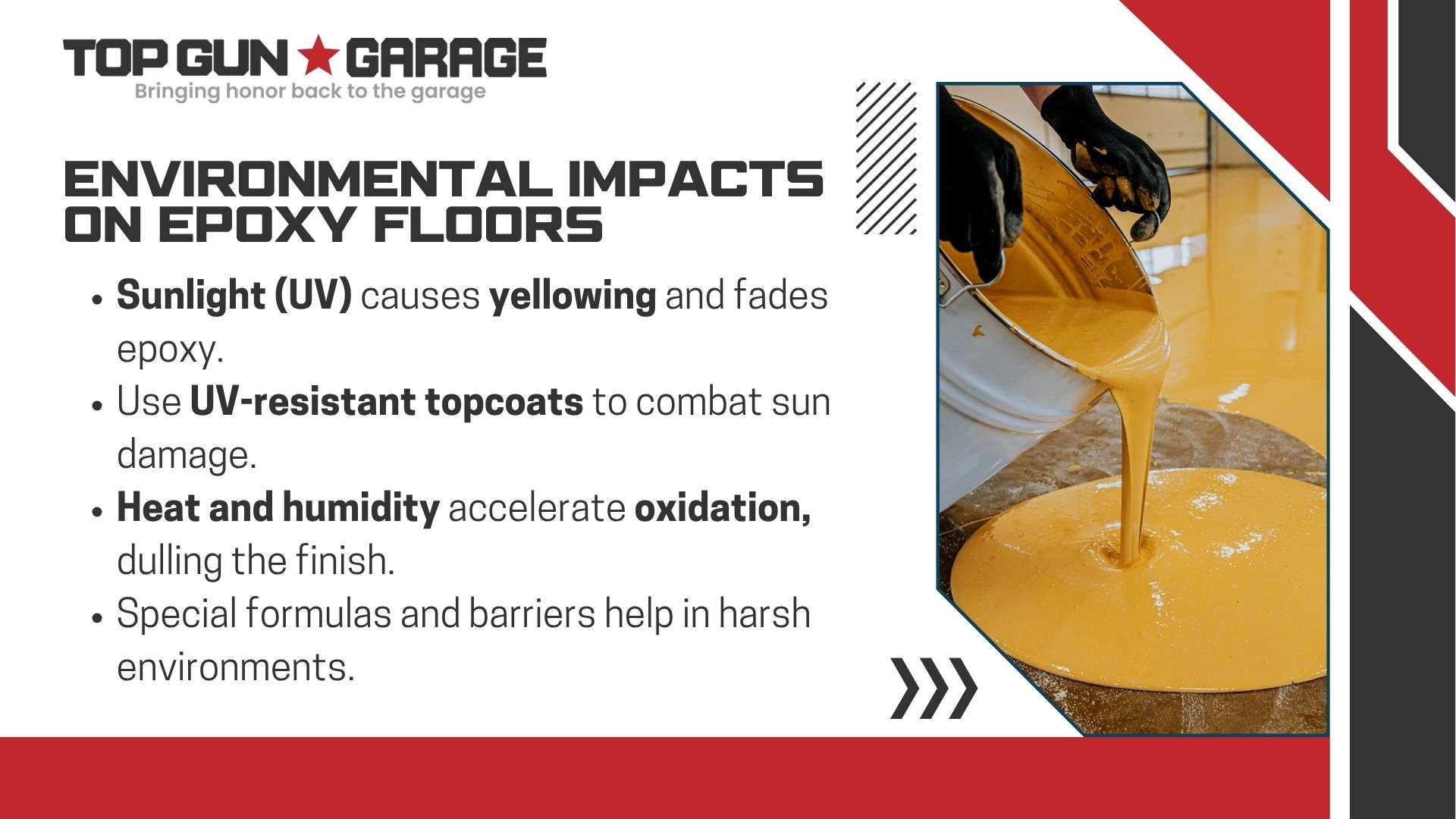 Florida’s climate presents unique challenges for flooring materials. While epoxy surfaces resist many forms of wear, environmental stressors gradually alter their appearance through chemical interactions.
UV Light and Photodegradation
Sunlight triggers a reaction in epoxy resin called photodegradation. Ultraviolet rays break down molecular bonds, causing yellowing even in properly cured surfaces. Coastal properties with large windows or outdoor applications see faster color shifts.| Environmental Factor | Effect on Epoxy | Mitigation Strategy |
|---|---|---|
| Direct Sunlight | Fades pigments, yellows resin | UV-resistant topcoats |
| High Humidity | Traps moisture under coating | Vapor barriers |
| Heat Above 90°F | Softens surface, accelerates oxidation | Climate-controlled spaces |
Heat and Moisture Interactions
South Florida’s humidity amplifies temperature-related damage. Warm air holds more water vapor, which penetrates microscopic gaps in the resin. This combination speeds up oxidation – a chemical reaction where oxygen alters the coating’s structure. Over time, oxidation dulls the glossy finish and weakens stain resistance. Professional installers use additives to slow this process, but regular maintenance remains essential. Choosing epoxy formulations rated for high-heat zones extends service life in challenging environments.What Causes Epoxy Discoloration in Naples Homes
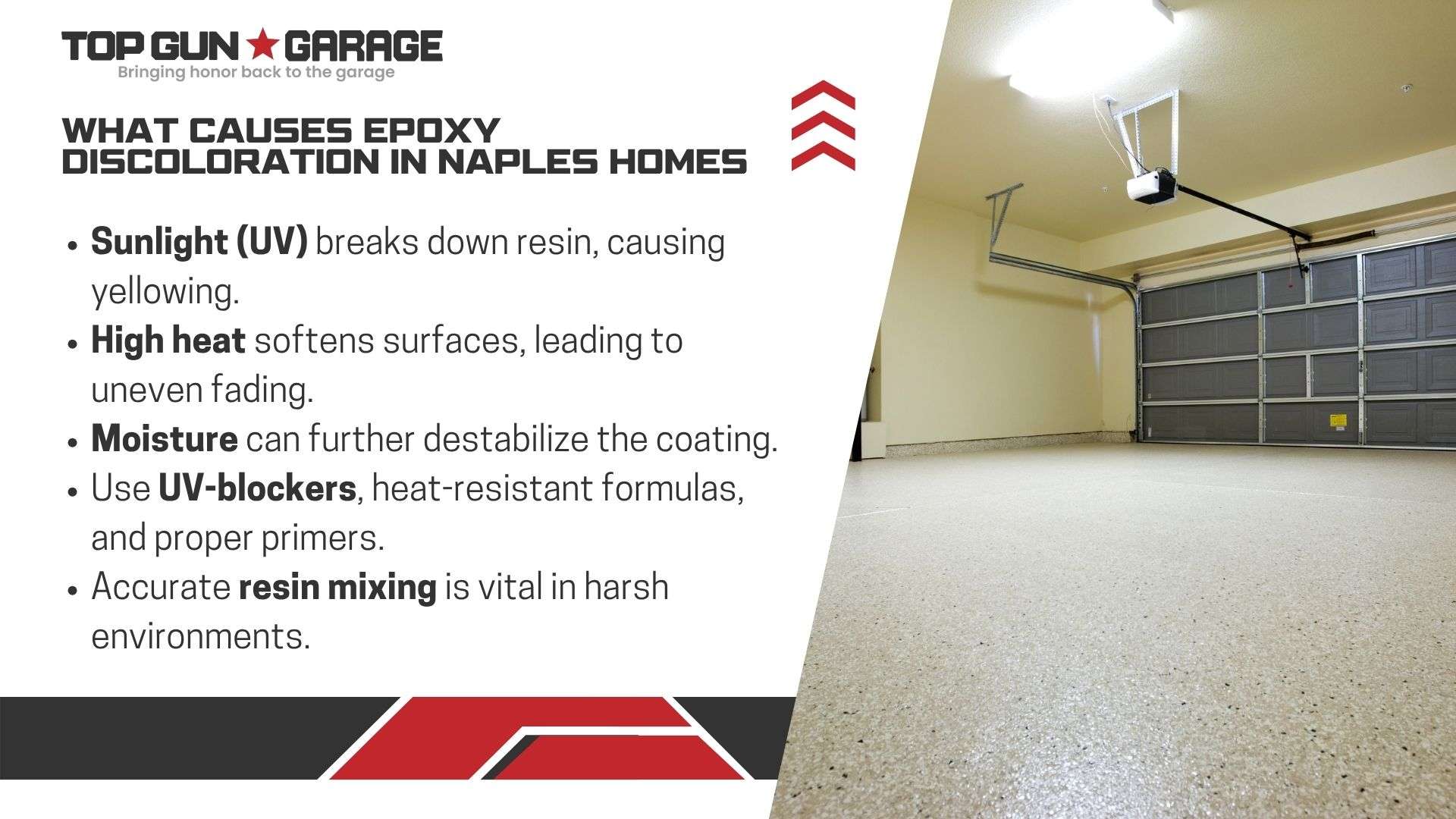 Southwest Florida’s coastal environment plays a significant role in the longevity of resin-based floor coatings. Intense sunlight and persistent heat create a perfect storm for surface degradation, particularly in spaces like garages or sunrooms.
Direct Sunlight, Heat, and Weather Conditions
Ultraviolet radiation breaks down chemical bonds in the resin over time. This process, called photodegradation, transforms clear layers into yellowish hues. Coastal properties receive 20% more UV exposure than inland areas, accelerating color shifts. High temperatures amplify this effect. When thermometers climb above 90°F, the hardened surface softens slightly. Heat waves allow oxygen molecules to penetrate deeper into the material, causing uneven fading. Moisture from afternoon thunderstorms then interacts with these microscopic gaps, further destabilizing the coating’s structure.| Environmental Factor | Impact on Flooring | Preventive Measure |
|---|---|---|
| Daily UV Exposure | Breaks down resin polymers | UV-blocking topcoats |
| Prolonged Heat | Softens protective layers | Heat-resistant formulations |
| Humidity Spikes | Triggers oxidation | Moisture-resistant primers |
Chemical and Physical Reactions Leading to Yellowing
 The vibrant shine of epoxy floors can fade due to hidden chemical processes. Over time, oxygen and environmental stressors alter the material’s structure, creating visible changes. Understanding these reactions helps homeowners address issues before they worsen.
Oxidation and Degradation of Epoxy Resin
Oxygen molecules interact with epoxy resin through oxidation. This reaction breaks down polymer chains, forming free radicals that weaken the coating. Sunlight accelerates this process, causing pigments to fade and resin to develop a yellowish tint. Moisture amplifies oxidation by creating microscopic gaps in the surface. Water seeps into these spaces, reacting with uncured hardener or trapped air pockets. The result is uneven discoloration that spreads across high-traffic areas.Impact of Incorrect Mixing Ratios and Hardener Use
Epoxy relies on precise resin-to-hardener ratios for proper curing. Deviations create chemical imbalances, leaving sticky residues or brittle layers. Excess hardener speeds up curing but increases sensitivity to heat and light.| Reaction Type | Primary Cause | Effect on Flooring |
|---|---|---|
| Oxidation | Air exposure + UV light | Yellowing, reduced gloss |
| Improper Mixing | Incorrect ratios | Uneven curing, premature wear |
| Chemical Exposure | Cleaners or spills | Surface etching, color shifts |
Prevention, Maintenance, and Repair Solutions
Maintaining the pristine look of durable surfaces requires proactive measures. For resin-based systems, proper installation and routine care make all the difference. Local experts like Top Gun Garage recommend combining smart preparation with consistent upkeep to preserve vibrant finishes.Proper Application Practices and Moisture Testing
Thorough surface preparation stops issues before they start. Moisture testing identifies hidden problems in concrete slabs, ensuring coatings bond correctly. Professionals use acid etching or diamond grinding to create ideal adhesion surfaces.| Factor | DIY Approach | Professional Method |
|---|---|---|
| Moisture Testing | Basic humidity sensors | Calcium chloride kits |
| Primer Application | Single-layer brush strokes | Multi-coat spray systems |
| Mixing Ratios | Manual measurement | Calibrated dispensers |
Regular Upkeep and Professional Intervention
Weekly sweeping removes abrasive particles that scratch surfaces. Neutral pH cleaners prevent chemical reactions that dull colors. For outdoor areas, UV-resistant topcoats should be reapplied every 2-3 years. Minor yellowing can often be corrected with polishing before permanent damage occurs. Persistent discoloration signals deeper issues requiring expert assessment. Trusted companies use industrial-grade products to restore original luster without full replacement. Homeowners should schedule annual inspections to catch early warning signs. Professionals check for micro-cracks, adhesion loss, and oxidation patterns. This proactive approach extends floor life while maintaining aesthetic appeal.Conclusion
Maintaining the beauty of resin-based floors requires understanding key factors that affect their longevity. Environmental stressors like UV light and high temperatures accelerate oxidation, while improper mixing ratios create vulnerable layers prone to yellowing. Professional surface preparation and climate-aware application techniques remain critical defenses against these challenges. Regular maintenance preserves gloss and prevents irreversible color shifts. Simple actions like using pH-neutral cleaners and reapplying UV-resistant topcoats every few years extend service life. For Naples residents, partnering with skilled technicians ensures materials withstand local humidity and sunlight intensity. Top Gun Garage’s Naples team combines precise resin-hardener ratios with moisture-resistant primers to combat discoloration at its source. Their expertise addresses both chemical reactions and physical wear patterns, delivering floors that retain vibrancy for years. Homeowners noticing dullness or uneven tones should act quickly. Early professional evaluation often avoids costly replacements. Call (239) 488-7000 for tailored solutions that protect your investment against Southwest Florida’s unique environmental demands.FAQ
How does sunlight affect epoxy flooring color stability?
Prolonged UV exposure breaks down chemical bonds in epoxy resin, accelerating oxidation. This reaction leads to gradual yellowing, especially in areas with direct sunlight. Top Gun Garage recommends UV-resistant additives or polyurethane topcoats for enhanced protection.
Can humidity levels during installation impact long-term discoloration?
High moisture content in concrete substrates or ambient air during application traps vapor beneath the coating. Over time, this moisture migrates upward, causing cloudiness or uneven color shifts. Proper moisture testing with tools like Tramex meters ensures optimal conditions.
Do household chemicals contribute to epoxy yellowing?
Harsh cleaners containing ammonia, bleach, or acidic compounds degrade the polymer matrix. This chemical degradation weakens the coating’s integrity, making it prone to staining and discoloration. pH-neutral cleaners like Simple Green extend floor lifespan.
Why do improperly mixed epoxy layers develop uneven tones?
Incorrect resin-to-hardener ratios create incomplete curing, leaving sticky residues that attract dirt. Off-ratio mixtures also reduce crosslinking density, resulting in premature gloss loss and patchy discoloration. Dual-component metering systems ensure precise mixing.
Can temperature fluctuations worsen epoxy floor yellowing?
Thermal cycling expands and contracts the coating, stressing its molecular structure. Repeated exposure to high heat from garage machinery or coastal climates accelerates oxidative breakdown. Insulated garage doors or reflective coatings mitigate thermal damage.
How often should epoxy floors receive maintenance to prevent yellowing?
Annual inspections for wear patterns, combined with quarterly cleaning using manufacturer-approved products, maintain color integrity. For severe UV exposure zones, recoating with aliphatic polyurethane every 3-5 years prevents irreversible yellowing.