 Skip to content



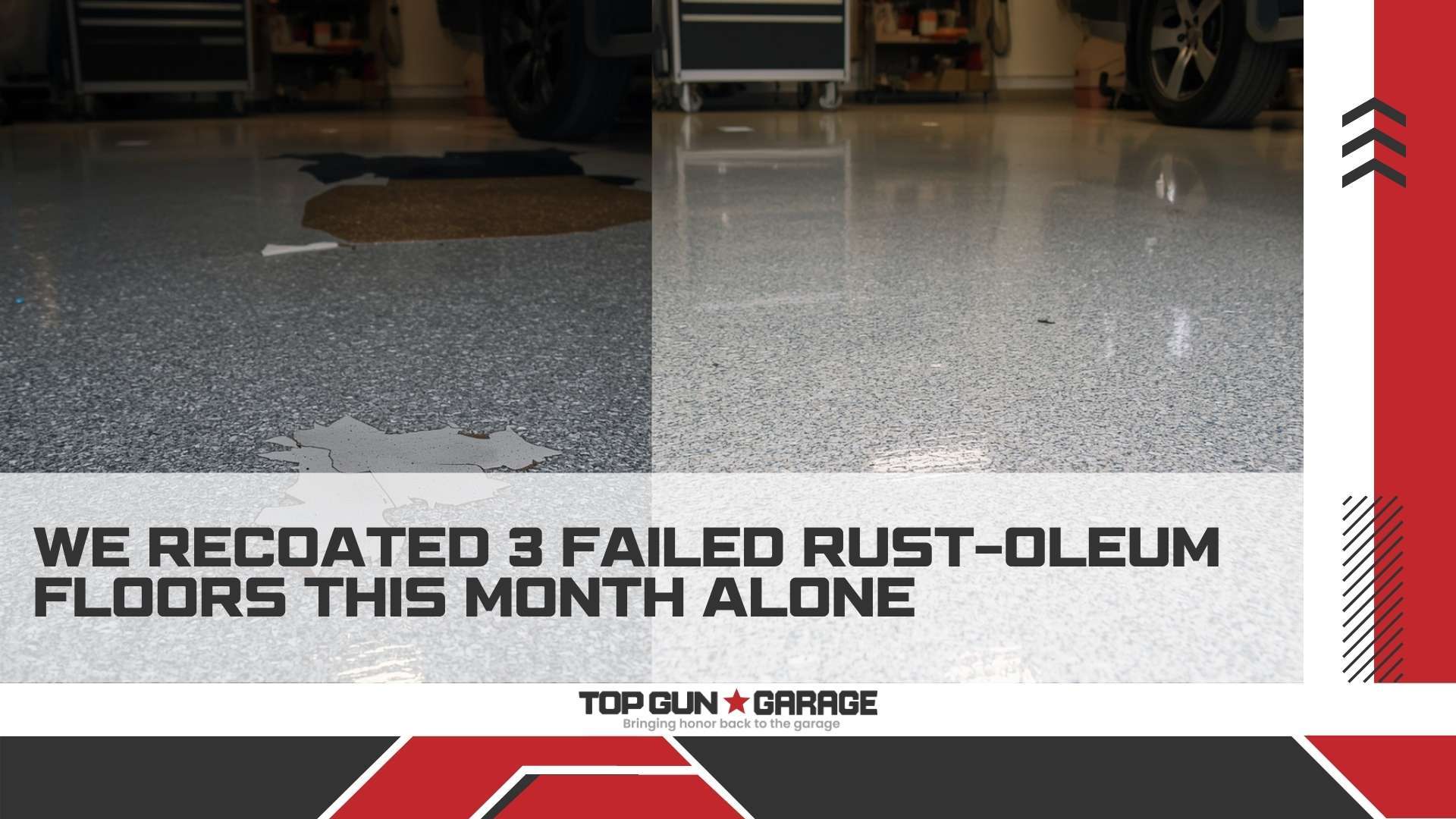
This month, Top Gun Garage completed three emergency recoating projects for Southwest Florida homeowners whose Rust-Oleum garage floor coatings failed within 12-18 months of DIY installation. The pattern repeats consistently enthusiastic homeowners invest weekend labor and $200-400 in Rust-Oleum Epoxy Shield or similar box store kits, only to face peeling, hot tire pickup, and delamination before their second year. These failures aren’t coincidental or the result of homeowner error; they stem from fundamental differences between Rust-Oleum garage floor products and professional coating systems designed for demanding climates like Naples, Bonita Springs, and Fort Myers.
The cost of failure extends beyond disappointment—complete removal of failed DIY coatings adds $800-1,500 to professional installation expenses that homeowners could have avoided with proper initial investment. Rust-Oleum garage floor vs professional installation represents more than a price comparison; it’s the difference between 18-month failures requiring expensive do-overs and 15-year systems that protect concrete and enhance property value. This article examines why we’re recoating multiple failed Rust-Oleum floors monthly, the specific failure patterns we encounter, and what Southwest Florida homeowners need to know before attempting DIY garage floor projects.
Overview
This comprehensive analysis reveals the critical differences between DIY box store garage floor kits and professional installations that determine success or failure in Southwest Florida’s demanding climate. You’ll discover the three specific Rust-Oleum failures we addressed this month, understand the technical reasons DIY coatings can’t match professional systems, learn about thickness and preparation differences, examine moisture-related failures, explore the true cost comparison including failure expenses, and receive guidance on salvaging failed DIY projects. These insights help homeowners make informed decisions that prevent costly mistakes and ensure long-lasting garage floor performance.
Key Takeaways
-
Rust-Oleum garage floor coatings average 18-24 month lifespan in Florida versus 10-15 years for professional systems
-
DIY kit thickness of 2-5 mils provides inadequate protection compared to professional 15-30 mil applications
-
Box store acid etching fails to create proper surface profile required for Florida’s high moisture environment
-
Three common failure patterns include edge delamination, hot tire pickup, and moisture-related bubbling
-
Total DIY costs including failure removal often exceed original professional installation pricing
-
Professional contractors provide moisture testing, diamond grinding, and vapor barriers absent from DIY kits
-
Failed Rust-Oleum floors require complete removal before professional recoating can succeed
Case Study: Three Failed Rust-Oleum Garage Floors in January
The first January recoat involved a Bonita Springs homeowner whose 14-month-old Rust-Oleum EpoxyShield coating had peeled away from 40% of the garage floor surface, particularly around entrance areas and where vehicle tires parked regularly. Upon inspection, we discovered the homeowner had followed the kit instructions precisely, including acid etching the concrete and waiting the recommended cure time between coats. However, the thin coating couldn’t withstand Florida’s moisture vapor transmission rates, and inadequate surface preparation allowed moisture pressure to lift the coating from beneath.
Our second project came from Fort Myers, where a homeowner had applied Rust-Oleum’s professional-grade solvent-based system just 18 months earlier. The coating exhibited severe hot tire pickup marks throughout the main parking areas, with dark rubber deposits embedded in the softened epoxy that remained tacky even after curing. The homeowner reported the floor “never fully hardened” despite following temperature guidelines, a common problem when thin DIY coatings can’t achieve the cross-linking density of professional systems.
The third failure occurred in Naples, where a 16-month-old Rust-Oleum coating had developed extensive bubbling and blistering across 60% of the floor surface. Moisture testing revealed vapor emission rates exceeding 5 pounds per 1,000 square feet per 24 hours—well above the tolerance of DIY epoxy formulations. The homeowner had no idea moisture testing was necessary, as box store kits don’t include testing equipment or mention vapor transmission issues in their simplified instructions.
Thickness Comparison: 2 Mils vs 20 Mils
Rust-Oleum and similar DIY garage floor kits apply at approximately 2-5 mils (0.002-0.005 inches) thickness, providing minimal protection against abrasion, chemicals, and thermal stress. This razor-thin coating barely fills the natural texture of concrete, leaving aggregate peaks exposed and creating an uneven surface that wears through quickly under vehicle traffic. Professional installations apply 15-30 mils of coating—three to six times thicker than DIY products—creating a substantial protective layer that encapsulates concrete completely and withstands years of demanding use.
The thickness difference affects more than durability; it determines whether coatings can resist hot tire pickup, handle impact from dropped tools, and maintain appearance under chemical exposure. Thin DIY coatings lack the thermal mass to resist softening when hot tires park on Southwest Florida garage floors, explaining why tire marks appear so frequently on Rust-Oleum installations. Professional thickness provides thermal stability that prevents surface softening, maintains hardness throughout the coating’s service life, and delivers the glossy, showroom appearance homeowners expect.
Additionally, professional systems include multiple layers—primer coat, base coat, decorative broadcast, and topcoat—each serving specific functions for adhesion, aesthetics, and protection. DIY kits typically provide a single two-part epoxy with optional decorative chips, lacking the engineered layer system that professional installations employ for maximum performance and longevity.
Surface Preparation: Acid Etching vs Diamond Grinding
Rust-Oleum garage floor kits include acid etching solutions for surface preparation, a method that barely scratches the concrete surface and fails to create the deep profile needed for proper coating adhesion in high-moisture environments. Acid etching removes surface laitance but doesn’t open concrete pores adequately, leaving a relatively smooth surface that provides minimal mechanical bond for the coating. This preparation method works marginally in dry climates with low moisture conditions but fails consistently in Southwest Florida where vapor transmission demands superior mechanical adhesion.
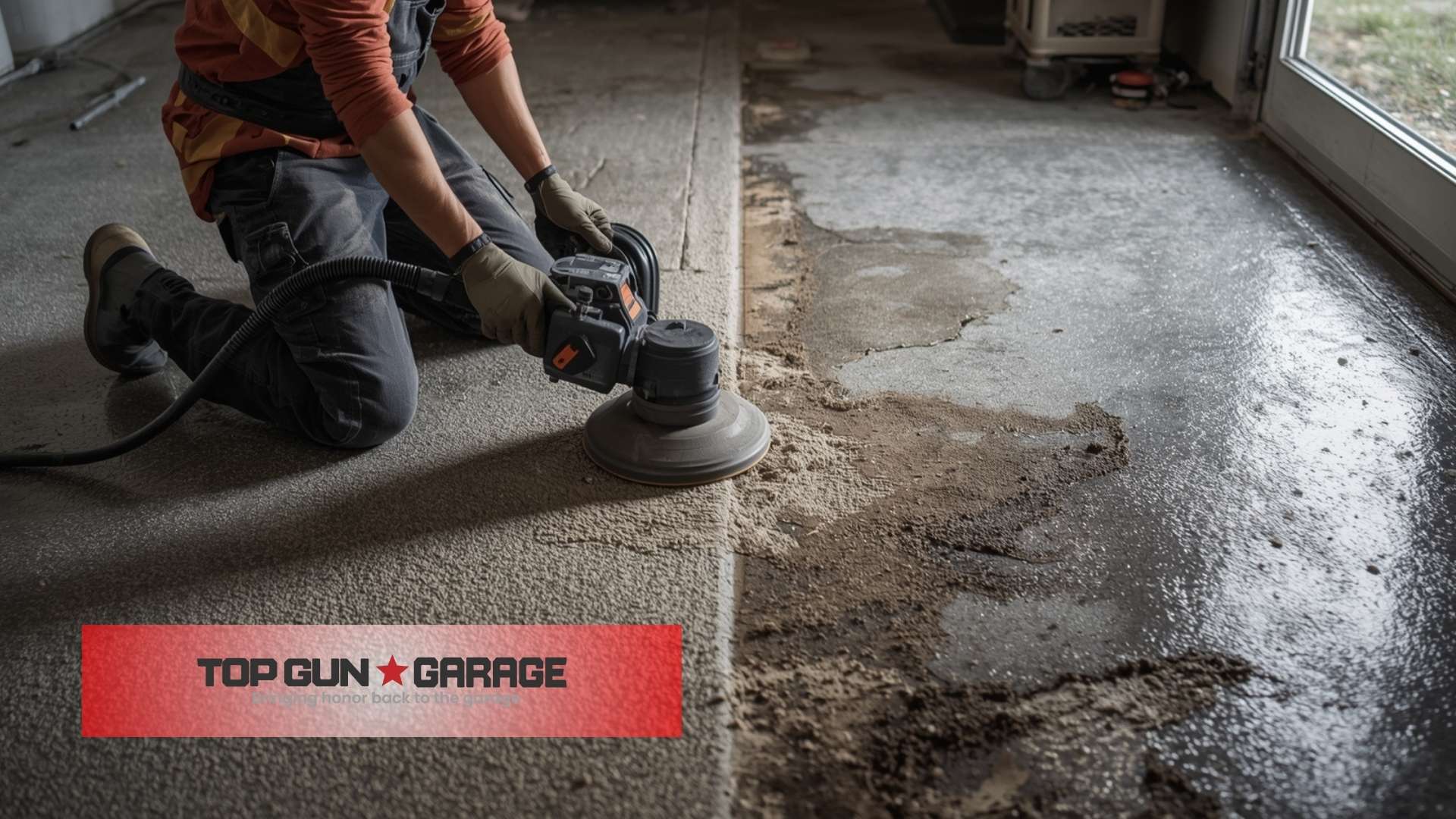
Professional contractors use diamond grinding equipment that removes 1/16 to 1/8 inch of concrete surface, creating a CSP-2 to CSP-4 profile (Concrete Surface Profile) with exposed aggregate and open pores that provide exceptional mechanical bond. This aggressive preparation removes all surface contaminants, oils, and existing sealers that acid etching leaves behind—substances that cause adhesion failure regardless of coating quality. Diamond grinding also reveals underlying concrete defects like cracks, spalling, and delaminated areas that require repair before coating application.
The preparation difference alone explains why DIY coatings fail while professional installations succeed in identical conditions. Proper surface profile creates thousands of microscopic anchors where coating chemically and mechanically bonds to concrete, resisting the upward moisture pressure that causes DIY coating delamination. Homeowners attempting DIY projects lack access to professional grinding equipment and the expertise to evaluate proper surface profile, virtually guaranteeing inadequate preparation.
Moisture Testing and Vapor Barriers
None of the three failed Rust-Oleum garage floors we recoated this month had undergone moisture testing before installation, because DIY kits don’t mention moisture evaluation or provide testing equipment. Southwest Florida concrete slabs commonly emit 3-7 pounds of moisture vapor per 1,000 square feet per 24 hours—rates that exceed standard epoxy tolerance and require specialized vapor barriers for successful coating. Professional contractors perform calcium chloride or RH probe testing before every installation, identifying high moisture conditions and implementing appropriate mitigation strategies.
When moisture vapor transmission exceeds coating tolerance, pressure builds beneath the floor coating until adhesion fails and the coating delaminates, bubbles, or peels away from the concrete. This process accelerates in Florida’s climate where high humidity, warm temperatures, and seasonal rain create ideal conditions for elevated vapor transmission. Rust-Oleum and similar DIY products lack the moisture tolerance to handle Florida conditions, explaining why failures occur so predictably within 12-24 months.
Professional installations address moisture issues through multiple strategies including specialized moisture barriers, moisture-tolerant primers, and coating systems engineered for high vapor transmission environments. These solutions add $300-800 to project costs but prevent the total failures that plague DIY installations, making them essential investments rather than optional upgrades for Southwest Florida applications.
The True Cost of DIY Failure
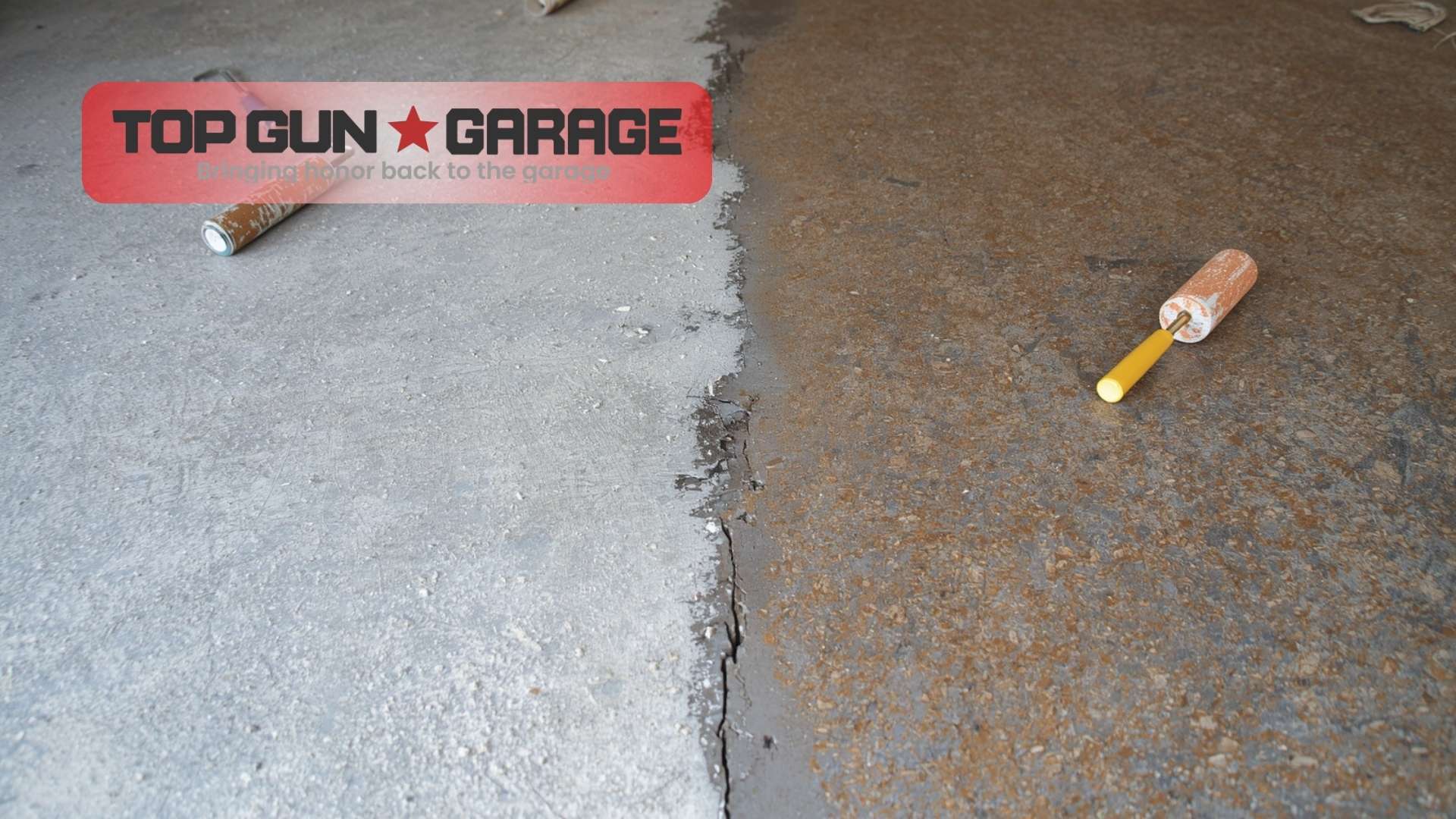
Homeowners choosing Rust-Oleum garage floor kits initially invest $200-400 for materials plus 12-20 hours of labor for preparation, application, and cleanup. This apparent savings compared to $2,500-5,000 professional installations seems significant until failure occurs and homeowners face additional expenses. Failed coating removal adds $800-1,500 to professional installation costs, as contractors must grind away the failed DIY coating, remove any residual epoxy, and achieve proper surface profile before installing new coatings.
The three recoating projects we completed this month cost homeowners $4,200-6,800 total including original DIY kit expenses, wasted labor, removal costs, and professional installation. Each homeowner would have saved $1,700-2,400 by selecting professional installation initially, while avoiding months of frustration with deteriorating floors and the disruption of a second installation project. Additionally, failed garage floors detract from home value and create negative impressions during the 12-24 months between DIY installation and professional recoating.
Beyond direct costs, homeowners lose the 10-15 year service life that professional installations deliver, instead getting 12-18 months from DIY attempts before starting over. When calculated on a cost-per-year basis, failed DIY projects cost $2,000-4,000 annually compared to $200-500 per year for professional installations making box store kits the most expensive option despite lower upfront pricing.
Why Professional Installation Succeeds Where DIY Fails
Professional garage floor contractors bring specialized equipment, engineered coating systems, and installation expertise that DIY homeowners cannot replicate regardless of effort or preparation. Industrial diamond grinders create proper surface profiles, commercial-grade moisture testing equipment identifies vapor issues, and professional mixing systems ensure proper coating ratios that DIY methods can’t achieve. These tools and techniques represent investments of $20,000-50,000 that professional contractors amortize across hundreds of installations.
Coating chemistry differs dramatically between Rust-Oleum garage floor products and professional systems, with industrial formulations offering superior adhesion, flexibility, chemical resistance, and moisture tolerance unavailable in consumer-grade products. Professional systems include specialized primers for difficult substrates, polyurea or polyaspartic topcoats with UV stability, and engineered decorative layers that maintain appearance for 10-15 years. DIY kits use simplified formulations designed for ease of application rather than maximum performance, accepting compromised longevity as the trade-off for consumer-friendly installation.
Installation timing and environmental control separate professional success from DIY failure in Southwest Florida’s challenging climate. Professional contractors monitor temperature and humidity continuously, adjust coating formulations for conditions, and reschedule when weather threatens proper curing. Homeowners applying DIY kits rarely have this expertise or flexibility, often applying coatings in suboptimal conditions that guarantee failure.
Common Rust-Oleum Failure Patterns
Edge delamination represents the most common Rust-Oleum garage floor failure pattern we encounter, with coating peeling away from perimeter areas where moisture infiltration and inadequate preparation combine to cause adhesion loss. The thin DIY coating lacks sufficient thickness to bridge minor surface irregularities and maintain adhesion when moisture pressure builds from beneath. We see this failure in 70% of DIY coating removals, typically beginning 8-14 months after installation and progressively spreading inward until large sections detach.
Hot tire pickup affects nearly every Rust-Oleum installation in Southwest Florida, creating dark rubber marks that homeowners initially attribute to dirty tires before realizing the coating itself has softened and bonded with tire rubber. The 2-5 mil thickness can’t provide the thermal mass needed to resist softening when tires heated to 150-180°F park on garage floors. This failure pattern worsens progressively, with coating becoming increasingly tacky and collecting more debris until the floor appears permanently stained and dirty.
Moisture-related bubbling and blistering occurs when vapor transmission exceeds coating tolerance, creating pressure pockets that lift the thin DIY coating away from concrete. These bubbles start small—often dismissed as minor imperfections—but grow and multiply as moisture continues migrating through the concrete slab. Eventually, bubbled areas rupture or peel away, creating rough patches that collect dirt and develop into larger delamination zones.
Professional Recoating Process
Removing failed Rust-Oleum coatings requires diamond grinding to eliminate all epoxy residue and achieve clean, properly profiled concrete for new coating installation. We grind 1/8 to 3/16 inch below the failed coating, ensuring complete removal and creating the CSP-3 to CSP-4 profile that professional systems require. This aggressive preparation takes 3-5 hours for standard two-car garages and generates substantial dust despite vacuum containment systems.
After removal and surface preparation, we perform comprehensive moisture testing using calcium chloride tests that reveal vapor emission rates the original DIY installation never evaluated. Nearly 80% of failed DIY floors we recoat require moisture mitigation strategies including specialized primers or vapor barriers to prevent repeat failures. We also repair cracks, spalling, and surface defects that the thin DIY coating merely covered rather than resolving.
Professional recoating includes multi-layer systems with moisture-blocking primers, high-build base coats, decorative broadcasts, and UV-stable topcoats engineered for Florida’s climate. Total system thickness of 15-30 mils provides the protection, durability, and appearance that DIY products cannot deliver. We back these installations with 10-15 year warranties covering materials and labor—assurance impossible with DIY attempts.
When DIY Makes Sense (Rarely)
DIY garage floor coating succeeds only under very specific circumstances that rarely exist in Southwest Florida: concrete less than 5 years old with low moisture emission, climate-controlled garages with stable temperatures and humidity, minimal vehicle traffic, and realistic expectations for 2-3 year lifespan rather than permanent solutions. Even meeting these criteria doesn’t guarantee success, as proper surface preparation remains difficult without professional equipment.
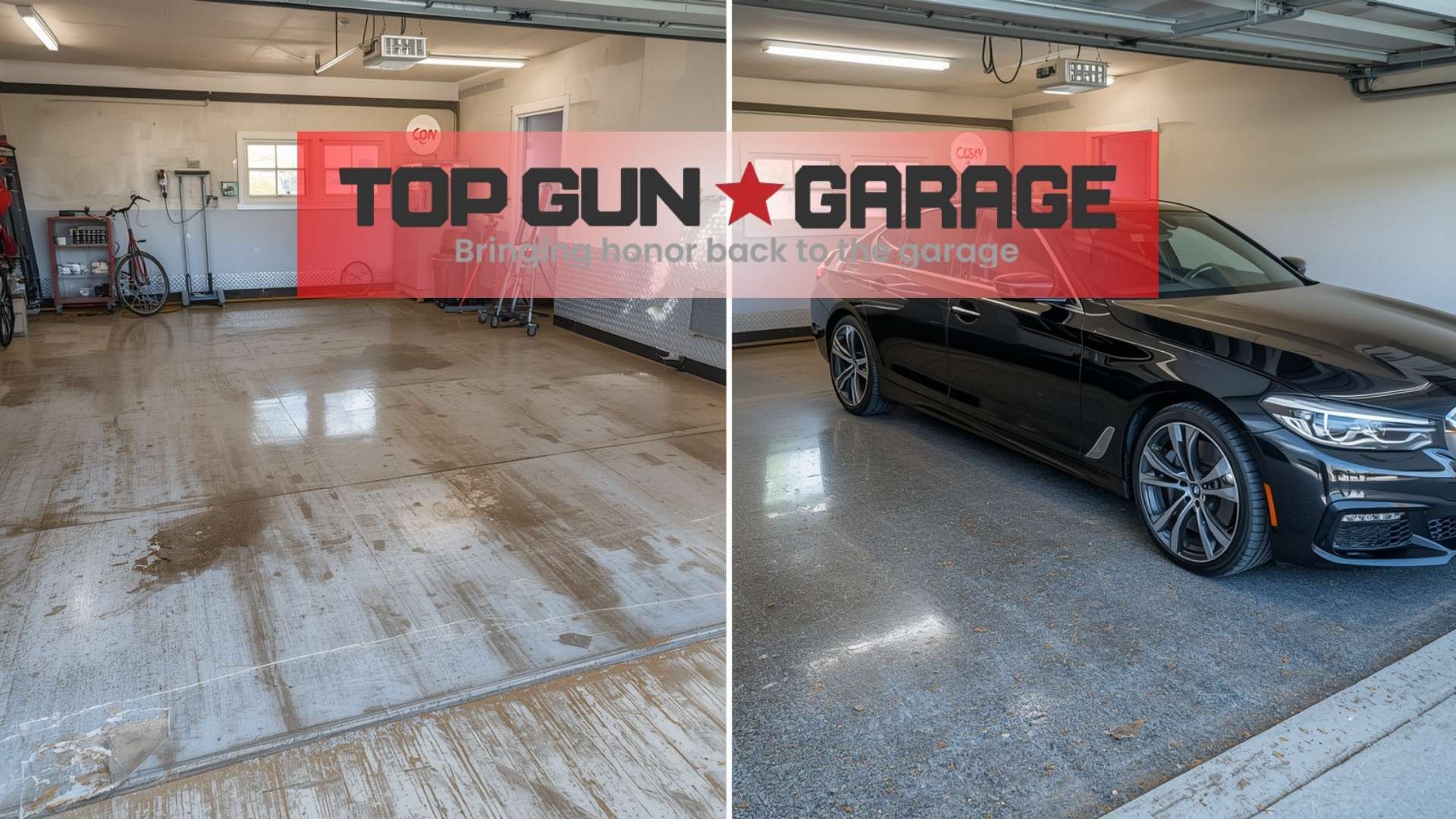
Homeowners with new construction homes in dry climates, dedicated workshop spaces with light traffic, or those seeking temporary protection for 1-2 years might achieve acceptable results from quality DIY kits. However, Southwest Florida’s coastal humidity, temperature extremes, and moisture conditions make successful DIY coating unlikely regardless of homeowner skill or effort. The three failures we recoated this month all came from conscientious homeowners who followed instructions carefully—yet still experienced complete coating failure.
For homeowners determined to attempt DIY installation despite the risks, we recommend thorough research into concrete preparation, renting professional grinding equipment rather than relying on acid etching, and performing moisture testing before coating application. Even with these precautions, DIY success rates in Southwest Florida remain under 30% based on failure patterns we observe.
Choosing Professional Installation
Professional garage floor installation delivers predictable, long-lasting results backed by comprehensive warranties and installed by trained technicians using specialized equipment. The cost premium over DIY—typically $2,000-4,000 for standard garages—represents genuine value when considering the 10-15 year service life, superior appearance, and freedom from maintenance hassles that professional systems provide.
Top Gun Garage specializes in Southwest Florida installations, understanding the moisture management, surface preparation, and coating systems required for our demanding climate. We’ve recoated dozens of failed DIY installations and consistently deliver 15-year systems that eliminate the frustration, expense, and disappointment of box store failures. Our installations include comprehensive preparation, moisture testing, industrial-grade coatings, and warranties that protect your investment.
Frequently Asked Questions
How long do Rust-Oleum garage floors typically last? Rust-Oleum and similar DIY garage floor kits last 12-24 months in Southwest Florida before showing significant failure including peeling, hot tire pickup, or bubbling. Professional installations deliver 10-15 years under identical conditions due to superior materials, thickness, and preparation methods.
Can failed Rust-Oleum coating be recoated without removal? No, failed DIY coatings must be completely removed before professional recoating succeeds. Coating over failed epoxy traps moisture, contaminants, and inadequate surface profile, causing new coating to fail within months. Complete removal and proper preparation ensure professional coating longevity.
Why does Rust-Oleum epoxy stay soft and tacky? Thin DIY coatings lack thermal mass to resist softening from hot tires and temperature fluctuations. Inadequate mixing, improper cure conditions, or moisture contamination also prevent proper hardening. Professional thickness and chemistry provide hardness that DIY formulations cannot achieve.
How much does removing failed DIY coating cost? Professional removal of failed DIY garage floor coating costs $800-1,500 for standard two-car garages, involving diamond grinding to eliminate all epoxy residue and achieve proper surface profile. This added expense typically makes total DIY costs exceed original professional installation pricing.
What causes bubbling in Rust-Oleum garage floors? Moisture vapor transmission exceeding coating tolerance causes pressure buildup beneath thin DIY coatings, creating bubbles and blisters. Southwest Florida concrete commonly emits 3-7 pounds vapor per 1,000 square feet daily—rates DIY products cannot handle without specialized moisture barriers.
Do Rust-Oleum garage floor kits work in Florida? Rarely. Florida’s high humidity, moisture vapor transmission, and temperature extremes exceed DIY coating capabilities. The 70% failure rate we observe stems from inadequate thickness, improper preparation methods, and formulations not engineered for coastal climate conditions.
How thick should professional garage floor coating be? Professional installations apply 15-30 mils (0.015-0.030 inches) total system thickness including primer, base coat, decorative layer, and topcoat. This provides three to six times more protection than 2-5 mil DIY kits, delivering durability and longevity impossible with thin coatings.
Can I fix peeling Rust-Oleum coating myself? Spot repairs rarely succeed because underlying issues causing original failure persist. Patched areas typically peel again within months. Complete removal and professional recoating represent the only reliable solution for failed DIY garage floor coatings.
What preparation do professional installers use? Professional contractors use diamond grinding equipment creating CSP-2 to CSP-4 concrete surface profiles, moisture testing to evaluate vapor transmission, crack repair addressing structural issues, and specialized primers providing superior adhesion. DIY acid etching cannot replicate these critical preparation steps.
Is professional garage floor coating worth the cost? Absolutely. Professional installations cost $2,500-5,000 for standard garages with 10-15 year lifespan ($200-500 annually), while failed DIY attempts cost $200-400 initially plus $800-1,500 removal and professional recoating ($2,000-4,000 total for 12-18 months service). Professional value exceeds DIY by substantial margins.
Conclusion
The three failed Rust-Oleum garage floors we recoated this month represent a predictable pattern we encounter repeatedly enthusiastic homeowners attempting DIY installations that fail within 12-24 months due to inadequate thickness, improper preparation, and formulations unsuited for Southwest Florida conditions. While box store kits promise easy installation and cost savings, the reality involves high failure rates, expensive removal, and total costs exceeding professional installation. Understanding the fundamental differences between Rust-Oleum garage floor products and professional systems helps homeowners make informed decisions that prevent frustration, wasted money, and disappointing results. Professional installation delivers the durability, appearance, and longevity that garage floors require in our demanding climate, backed by warranties and expertise DIY approaches cannot provide.
Top Gun Garage specializes in professional installations and recoating failed DIY projects throughout Southwest Florida. Our comprehensive preparation, industrial-grade coatings, and 15-year warranties eliminate the disappointments of box store kits. Contact us today for a consultation and discover why Naples, Bonita Springs, and Fort Myers homeowners choose professional quality over DIY gambles.