 Skip to content





The landscape of work has fundamentally shifted, with millions of professionals now operating businesses from the comfort of their homes. This transformation has created unique challenges for homeowners who must balance residential comfort with professional functionality. One of the most critical yet often overlooked aspects of creating an effective home-based business environment is selecting the right flooring solutions that can withstand increased foot traffic, maintain professional aesthetics, and provide long-term durability.
Home-based businesses span a diverse range of industries, from consulting and freelance services to e-commerce operations and creative studios. Each type of business brings its own set of flooring requirements and challenges. A graphic designer working primarily at a computer has different needs than a fitness instructor conducting virtual classes or a craftsperson creating handmade products. Understanding these varied demands is essential when choosing flooring solutions for home-based businesses that will serve both immediate needs and long-term growth.
The flooring in a home office or business space must perform multiple functions simultaneously. It needs to create a professional atmosphere for video calls and client meetings while remaining comfortable for extended periods of standing or walking. The surface must be durable enough to handle office chairs rolling across it repeatedly, resistant to spills and stains from coffee or other beverages, and easy to maintain between busy work schedules. Additionally, the flooring should contribute to a productive work environment by minimizing noise, providing adequate support, and maintaining consistent appearance over time.
Modern flooring technology has evolved to meet these complex demands, offering solutions that were previously unavailable to residential users. Smart flooring options now incorporate features like enhanced durability coatings, antimicrobial treatments, sound-dampening properties, and even integrated heating systems. These innovations allow home-based business owners to create spaces that rival traditional commercial offices while maintaining the comfort and personalization of a residential environment.
The investment in quality flooring for a home-based business extends beyond immediate functionality. Professional-grade flooring can increase property value, reduce long-term maintenance costs, and create a more impressive environment for clients or customers who visit the space. When considering the total cost of ownership, including installation, maintenance, and eventual replacement, choosing the right flooring solution becomes a strategic business decision that impacts both daily operations and future financial returns.
Key Takeaways
Durability is paramount: Home-based businesses require flooring that can withstand significantly more wear than typical residential use, including constant foot traffic, rolling office chairs, and potential equipment placement.
Professional appearance matters: The flooring choice directly impacts the professional image projected during video conferences, client meetings, and business photography, making aesthetic considerations crucial for business success.
Maintenance efficiency saves time and money: Busy entrepreneurs need flooring solutions that require minimal upkeep, resist stains and scratches, and can be quickly cleaned between client appointments or during brief work breaks.
Noise control enhances productivity: Proper flooring selection can significantly reduce noise transmission, creating a more focused work environment and preventing disruption to other household members or neighbors.
Comfort impacts performance: Flooring that provides adequate support and cushioning can reduce fatigue during long work sessions, potentially improving productivity and reducing health issues associated with prolonged standing.
Flexibility supports business growth: Smart flooring choices accommodate changing business needs, from rearranging furniture to accommodating new equipment or expanding operations into adjacent rooms.
Climate control integration: Modern flooring solutions can work with heating and cooling systems to maintain optimal working temperatures while controlling energy costs in dedicated business spaces.
Technology compatibility: Contemporary flooring options can accommodate cable management needs, provide anti-static properties for sensitive electronics, and support the infrastructure requirements of modern home-based businesses.
Understanding Home-Based Business Flooring Requirements
The foundation of any successful home-based business space begins with understanding the unique demands that commercial activities place on residential flooring. Unlike traditional home environments where foot traffic patterns are predictable and relatively light, business operations create concentrated wear patterns, increased spill risks, and the need for surfaces that can maintain their appearance under scrutiny from clients, customers, or video conference participants.
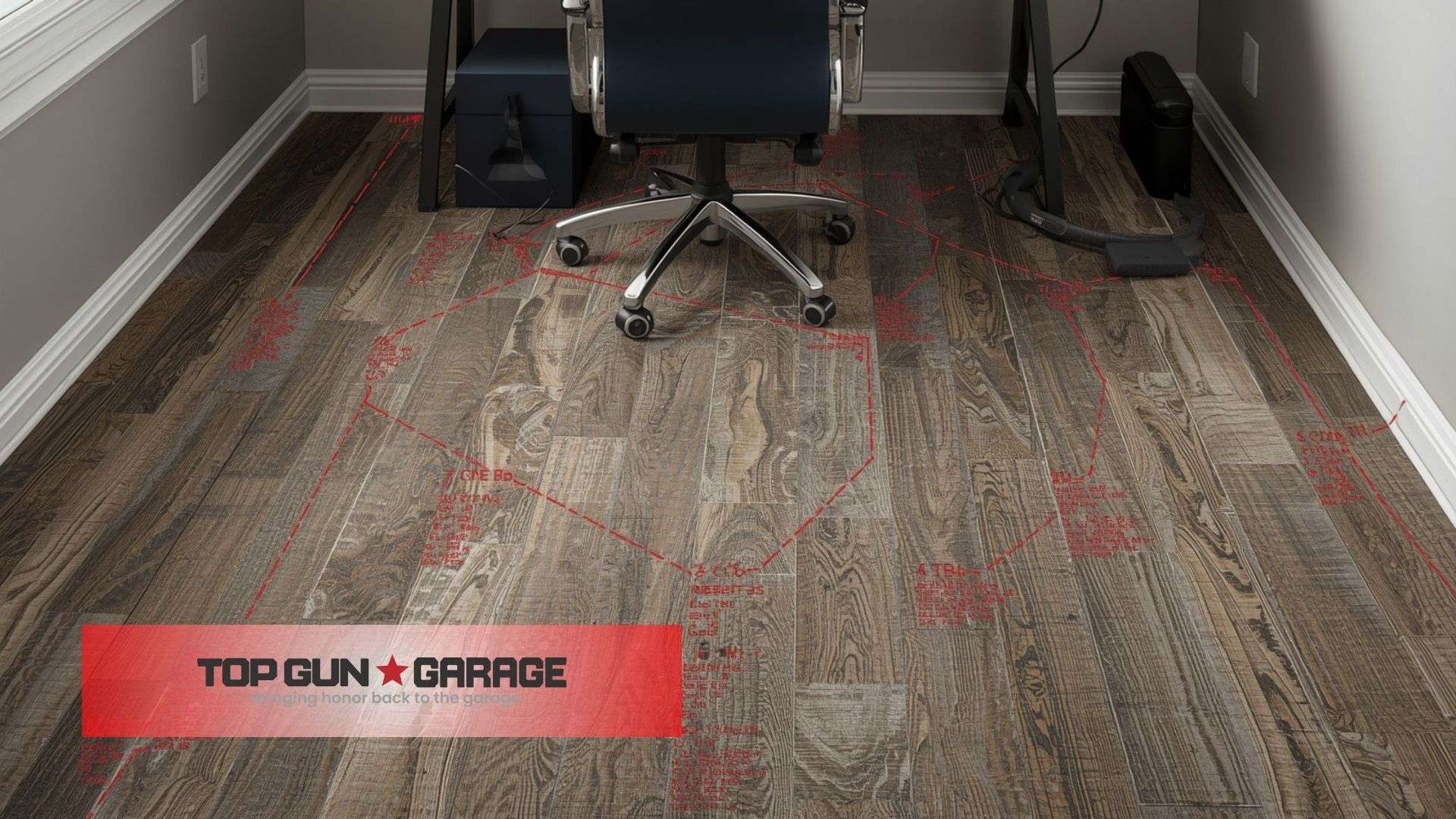
Traffic patterns in home-based business spaces differ significantly from typical residential use. While a living room might see moderate foot traffic spread throughout the day, a home office experiences concentrated movement in specific areas – around the desk, near filing cabinets, and along pathways to frequently used equipment. This concentrated wear can quickly degrade standard residential flooring, leading to visible paths, worn spots, and an unprofessional appearance that can negatively impact business credibility.
The multi-functional nature of home-based business spaces adds another layer of complexity to flooring selection. Many entrepreneurs need their spaces to transition seamlessly from professional work areas during business hours to family spaces during evenings and weekends. This dual-purpose requirement demands flooring solutions that can maintain professional aesthetics while providing the comfort and warmth expected in residential environments.
Equipment considerations play a crucial role in flooring selection for home-based businesses. Office chairs with casters, standing desks, printers, and specialized equipment all place unique stresses on flooring surfaces. The constant rolling of office chairs can create indentations in soft flooring materials, while heavy equipment can cause permanent damage if the flooring lacks adequate support structure. Understanding these equipment-related stresses is essential for choosing appropriate flooring solutions that will maintain integrity over time.
Luxury Vinyl Plank: The Versatile Professional Choice
Luxury vinyl plank (LVP) flooring has emerged as one of the most popular flooring solutions for home-based businesses, offering an exceptional combination of durability, aesthetics, and practical benefits. This engineered flooring option provides the authentic appearance of hardwood, stone, or tile while delivering superior performance characteristics that make it ideal for commercial use within residential settings.
The construction of luxury vinyl plank flooring incorporates multiple layers designed to address specific performance requirements. The wear layer, typically ranging from 12 to 40 mils in thickness, provides protection against scratches, stains, and daily wear. This protective surface is particularly important in business environments where office chairs, foot traffic, and equipment movement create constant stress on the flooring. The photographic layer beneath reproduces natural materials with remarkable accuracy, allowing business owners to achieve sophisticated aesthetics without the maintenance challenges of genuine wood or stone.
Installation flexibility makes luxury vinyl plank an attractive option for home-based business owners who may need to complete renovations quickly or work within existing structural constraints. Many LVP products feature click-lock installation systems that allow for floating floor installation without adhesives or nails. This installation method not only reduces labor costs and installation time but also allows for easy removal or replacement if business needs change or the space requires reconfiguration.
The water resistance properties of luxury vinyl plank provide significant advantages for home-based businesses. Spilled beverages, tracked-in moisture, and cleaning activities pose no threat to properly installed LVP flooring. This resistance to moisture damage eliminates concerns about warping, cupping, or staining that can affect other flooring materials, ensuring that the professional appearance of the space remains consistent regardless of daily activities or occasional accidents.
Sound dampening capabilities of luxury vinyl plank contribute to creating more productive work environments. Many LVP products include attached underlayment or can be installed over specialized acoustic underlayments that reduce impact noise and sound transmission. This feature is particularly valuable for home-based businesses where noise control is important for maintaining professional phone calls, video conferences, or simply creating a focused work atmosphere without disturbing other household members.
When considering whether to tackle flooring installation independently or work with professionals, many business owners find that understanding the advantages of professional installation helps ensure their investment delivers optimal results for their business needs.
Engineered Hardwood: Timeless Elegance with Modern Performance
Engineered hardwood flooring represents the evolution of traditional wood flooring, offering the timeless beauty and prestige of solid hardwood while incorporating technological advances that make it more suitable for the demands of home-based business environments. This flooring solution appeals to business owners who want to project an image of established success and traditional quality while benefiting from improved stability and performance characteristics.
The construction of engineered hardwood addresses many of the limitations that make solid hardwood challenging for business use. The multi-layer construction, featuring a genuine hardwood veneer over a stable core of plywood or high-density fiberboard, provides dimensional stability that resists the expansion and contraction that can cause gaps or buckling in solid wood floors. This stability is particularly important in business spaces where consistent appearance is crucial for maintaining professional credibility.
Modern engineered hardwood products incorporate advanced finishing technologies that significantly enhance durability and maintenance characteristics. Aluminum oxide finishes, multiple polyurethane coats, and UV-cured surface treatments create protective barriers that resist scratches, scuffs, and stains far better than traditional wood finishes. These enhanced finishes allow engineered hardwood to maintain its appearance under the increased wear patterns typical of business use while requiring minimal maintenance intervention.
The variety of wood species, stain colors, and plank sizes available in engineered hardwood allows business owners to create customized environments that reflect their brand identity and professional image. From classic oak and maple to exotic species like Brazilian cherry or bamboo, the options enable precise matching to existing décor or creation of distinctive spaces that make memorable impressions on clients and customers.
Installation options for engineered hardwood include both nail-down and floating floor methods, providing flexibility for different subfloor conditions and installation timelines. The ability to install engineered hardwood over concrete slabs, radiant heating systems, or existing flooring expands the possibilities for home-based business renovations without requiring extensive structural modifications.
Refinishing capabilities of engineered hardwood provide long-term value for business investments. While the number of refinishing cycles is limited by the thickness of the hardwood veneer, most quality engineered products can be refinished one to three times over their lifespan. This capability allows business owners to refresh their spaces, repair accumulated wear, or change stain colors to match evolving business needs or design preferences.
Polished Concrete: Industrial Chic Meets Practical Performance
Polished concrete flooring has gained significant popularity among home-based business owners seeking a contemporary, industrial aesthetic combined with exceptional durability and low maintenance requirements. This flooring solution appeals particularly to creative professionals, tech entrepreneurs, and businesses that want to project an image of innovation and modern thinking while benefiting from one of the most durable flooring options available.
The creation of polished concrete involves a multi-step process that transforms ordinary concrete into a sophisticated flooring surface. Diamond grinding and polishing techniques progressively refine the concrete surface, creating increasingly smooth and lustrous finishes that can range from subtle matte appearances to high-gloss mirror-like surfaces. The level of polish can be customized to match the desired aesthetic and functional requirements of the specific business environment.
Durability characteristics of polished concrete make it virtually indestructible under normal business use conditions. The hardened surface resists scratches, impacts, and abrasion while maintaining its appearance indefinitely with proper care. Heavy equipment, rolling loads, and high foot traffic pose no threat to properly installed and finished polished concrete, making it an ideal choice for businesses that require robust flooring performance.
Maintenance requirements for polished concrete are minimal compared to most other flooring options, making it particularly attractive for busy entrepreneurs who cannot dedicate significant time to floor care. Regular dust mopping and occasional damp cleaning with neutral pH cleaners are typically sufficient to maintain the appearance and performance of polished concrete floors. The non-porous surface resists stains and does not harbor bacteria, allergens, or odors, contributing to healthier indoor air quality.
Design versatility of polished concrete extends beyond basic gray surfaces to include colored concrete, decorative aggregates, and custom scoring patterns that can create unique and memorable business environments. Integral colors, acid stains, and dyes can produce a wide range of hues and effects, while exposed aggregates add texture and visual interest. Custom scoring can create geometric patterns, define spaces, or incorporate business logos and branding elements directly into the flooring.
Energy efficiency benefits of polished concrete contribute to reduced operating costs for home-based businesses. The thermal mass properties of concrete help moderate indoor temperatures, reducing heating and cooling costs. The reflective surface of polished concrete can improve lighting efficiency by reducing the need for artificial illumination, particularly important in spaces where good lighting is crucial for productivity and professional video conferencing.
Environmental considerations make polished concrete an attractive choice for environmentally conscious business owners. Utilizing existing concrete slabs eliminates the need for additional materials and reduces waste, while the long lifespan and minimal maintenance requirements contribute to reduced environmental impact over time. Many polished concrete installations can incorporate recycled materials and contribute to green building certification programs.
Carpet Tiles: Modular Comfort and Professional Functionality
Carpet tiles represent a sophisticated flooring solution that combines the comfort and acoustic benefits of traditional carpeting with the flexibility and durability required for professional business environments. This modular approach to soft flooring offers unique advantages for home-based businesses that need to balance comfort, noise control, and professional appearance while maintaining the ability to adapt their spaces as business needs evolve.
The modular nature of carpet tiles provides unparalleled flexibility for home-based business owners who may need to reconfigure their spaces, replace damaged sections, or accommodate changing equipment layouts. Individual tiles can be easily removed and replaced without affecting surrounding areas, allowing for targeted maintenance and updates that minimize business disruption and reduce long-term costs. This modularity also enables creative design possibilities, including custom patterns, color combinations, and branded installations that can reinforce business identity.
Commercial-grade carpet tiles are engineered to withstand significantly more wear than residential carpeting, making them suitable for the increased traffic and concentrated use patterns typical of business environments. Advanced fiber technologies, including solution-dyed nylon and recycled content fibers, provide superior stain resistance, colorfastness, and durability while maintaining the soft texture and comfort that make carpet attractive for extended work periods.
Acoustic performance of carpet tiles addresses one of the most important considerations for home-based businesses operating in shared residential spaces. The sound-absorbing properties of carpet significantly reduce impact noise, footfall sounds, and airborne noise transmission, creating quieter work environments that support concentration and professional communication. This acoustic control is particularly valuable for businesses that conduct frequent phone calls, video conferences, or require focused concentration for detailed work.
Installation advantages of carpet tiles include the ability to work around existing furniture and equipment, eliminating the need to completely clear spaces during installation. The adhesive-free installation options available with many carpet tile systems allow for easy removal and reinstallation, making them ideal for rental properties or spaces where permanent modifications are not desired. Professional installation ensures proper alignment, seaming, and performance, though many carpet tile systems are designed for straightforward installation by experienced contractors.
Maintenance protocols for commercial carpet tiles are designed to accommodate busy business schedules while maintaining professional appearance standards. Regular vacuuming, prompt attention to spills, and periodic professional cleaning help maintain the appearance and extend the lifespan of carpet tile installations. The ability to remove and clean individual tiles provides options for addressing localized soiling or damage without affecting the entire floor covering.
Design options in carpet tiles have expanded dramatically, offering everything from traditional solid colors and subtle textures to bold patterns, wood-look designs, and custom graphics. This variety allows business owners to create environments that reflect their brand personality while maintaining professional standards. The ability to combine different styles and colors within a single installation enables zone definition, wayfinding, and visual interest that can enhance the functionality and appeal of business spaces.
Professional Installation and Long-Term Success
The success of any flooring investment for a home-based business depends significantly on proper installation, ongoing maintenance, and strategic planning for long-term performance. Professional installation ensures that chosen flooring solutions deliver their intended benefits while avoiding common pitfalls that can compromise durability, appearance, or functionality. At Top Gun Garage, we understand the unique requirements of home-based businesses and provide specialized installation services that address both residential comfort and commercial performance needs.
Subfloor preparation represents one of the most critical aspects of successful flooring installation, particularly for home-based businesses where consistent performance is essential. Proper moisture testing, leveling, and structural assessment ensure that new flooring installations will perform as expected over their intended lifespan. Inadequate subfloor preparation can lead to premature failure, warranty voidance, and costly replacement projects that disrupt business operations.
Professional installers bring specialized knowledge of product-specific requirements, manufacturer specifications, and local building codes that ensure installations meet all necessary standards. This expertise is particularly valuable when installing flooring in spaces that may be subject to commercial building requirements or when integrating flooring with other building systems such as radiant heating, structured cabling, or specialized ventilation systems.
Quality control during installation involves attention to details that may not be apparent to untrained observers but can significantly impact long-term performance. Proper expansion gaps, correct adhesive application, appropriate acclimation periods, and precise cutting and fitting all contribute to installations that maintain their appearance and functionality throughout their intended lifespan. Professional installers also provide valuable guidance on transition strips, baseboards, and other finishing details that contribute to polished, professional appearances.
Warranty protection for flooring installations typically requires professional installation to remain valid, making the choice of qualified contractors essential for protecting flooring investments. Professional installers understand warranty requirements and ensure that all installation procedures comply with manufacturer specifications, preserving warranty coverage and providing recourse in the unlikely event of product defects or performance issues.
Post-installation support from professional flooring contractors includes guidance on proper maintenance procedures, recommendations for cleaning products and equipment, and ongoing service for any issues that may arise. This support is particularly valuable for busy business owners who need reliable information and service to maintain their flooring investments without dedicating excessive time to research and troubleshooting.
Long-term planning considerations include understanding the expected lifespan of different flooring options, planning for eventual replacement or refinishing, and considering how flooring choices may impact future business growth or space modifications. Professional contractors can provide valuable insights into these long-term considerations, helping business owners make informed decisions that support both immediate needs and future flexibility.
Frequently Asked Questions
What type of flooring is best for a home office with heavy computer equipment? For home offices with heavy computer equipment, luxury vinyl plank or polished concrete offer the best combination of durability and load-bearing capacity. These materials can support substantial weight without indentation or damage, while providing stable surfaces that won’t shift under equipment loads. Engineered hardwood with proper subfloor support can also work well, though additional protection may be needed under particularly heavy items.
How do I choose flooring that looks professional on video calls? For professional video appearances, consider flooring with subtle patterns or neutral colors that won’t distract from your presentation. Engineered hardwood, luxury vinyl plank with wood-look designs, or commercial carpet tiles in solid colors work well. Avoid highly reflective surfaces that might cause glare or busy patterns that can appear distorted on camera.
Can I install business-grade flooring myself to save money? While some flooring types are designed for DIY installation, business applications often benefit from professional installation to ensure optimal performance and maintain warranty coverage. The demands of business use require precise installation techniques and proper subfloor preparation that professional contractors can guarantee.
What flooring options work best for businesses that receive clients at home? Client-facing businesses should prioritize flooring that creates impressive first impressions while maintaining easy maintenance. Engineered hardwood, high-end luxury vinyl plank, or polished concrete can all create sophisticated environments that convey professionalism and success while standing up to increased foot traffic from visitors.
How important is noise control when selecting flooring for a home-based business? Noise control is crucial for maintaining professional communication and avoiding disruption to household members. Carpet tiles offer the best sound absorption, while luxury vinyl plank with acoustic underlayment provides good noise control with easier maintenance. Hard surfaces like polished concrete may require area rugs or other sound-dampening measures.
What’s the expected lifespan of different flooring options in business use? Polished concrete can last 20+ years with minimal maintenance, engineered hardwood typically lasts 15-25 years with potential refinishing, luxury vinyl plank performs well for 10-20 years, and commercial carpet tiles usually require replacement every 5-10 years depending on traffic levels and maintenance.
How do I maintain professional-looking floors with a busy work schedule? Choose low-maintenance options like luxury vinyl plank or polished concrete that require only regular sweeping and occasional mopping. Establish daily cleaning routines, address spills immediately, and schedule periodic professional cleaning to maintain appearance without consuming valuable work time.
Should I consider radiant heating under my business flooring? Radiant heating can enhance comfort during long work sessions and provide energy-efficient climate control. Luxury vinyl plank, engineered hardwood, and polished concrete all work well with radiant systems, though proper installation techniques are essential to prevent damage and ensure optimal performance.
Conclusion
Selecting the right flooring solutions for home-based businesses requires careful consideration of multiple factors that extend beyond simple aesthetic preferences. The unique demands of commercial activities within residential spaces create requirements for durability, professional appearance, maintenance efficiency, and long-term performance that standard residential flooring may not adequately address. Modern flooring technologies offer sophisticated solutions that can meet these complex requirements while providing the comfort and flexibility that make home-based businesses attractive alternatives to traditional commercial spaces.
The investment in quality flooring for a home-based business represents a strategic decision that impacts daily productivity, professional image, and long-term operational costs. Whether choosing the versatility of luxury vinyl plank, the timeless appeal of engineered hardwood, the durability of polished concrete, or the comfort of commercial carpet tiles, the key lies in matching flooring characteristics to specific business requirements and usage patterns. Professional installation and ongoing maintenance ensure that these investments deliver their intended benefits throughout their expected lifespan.
As the trend toward home-based businesses continues to grow, the importance of creating professional, functional, and comfortable work environments becomes increasingly apparent. Quality flooring serves as the foundation for these environments, literally and figuratively supporting the success of modern entrepreneurs who have chosen to build their businesses from home. By understanding the available options and working with experienced professionals, business owners can create spaces that rival traditional commercial offices while maintaining the personal touches and flexibility that make home-based operations so appealing.
The future of work continues to evolve, and smart flooring choices position home-based businesses for continued success regardless of how their needs may change over time. Investing in quality flooring solutions today creates a solid foundation for business growth, professional credibility, and long-term operational efficiency that supports entrepreneurial success in an increasingly competitive marketplace.