Epoxy garage flooring in Miami creates a seamless, waterproof barrier that shields your concrete from hurricane season moisture, flooding, and the relentless humidity that destroys unprotected garage floors. The answer is straightforward: a professionally installed polyaspartic or epoxy coating system with proper moisture mitigation prevents water infiltration, resists mold growth, and maintains structural integrity through every storm season.
According to the National Hurricane Center, Miami experiences an average of 62 inches of rainfall annually, with 70% falling during the June-November hurricane season. Uncoated concrete absorbs this moisture like a sponge, leading to spalling, efflorescence, and coating failures that cost homeowners thousands in repairs.
This guide covers exactly how professional-grade floor coatings protect your Miami garage from hurricane moisture, what coating systems perform best in South Florida conditions, and the critical preparation steps that determine whether your floor survives the next storm.
Why Miami Garages Face Unique Moisture Challenges
Miami’s tropical monsoon climate creates three simultaneous moisture threats that attack garage floors year-round: hydrostatic pressure from below, flooding from storms, and atmospheric humidity that never drops below 60%.
Hydrostatic Pressure and Rising Groundwater
Miami-Dade County sits on porous limestone bedrock with a water table often just 3-6 feet below the surface. During heavy rainfall, groundwater rises and pushes moisture vapor through concrete slabs at rates exceeding 8 lbs per 1,000 square feet over 24 hours. Research from the Portland Cement Association indicates that moisture vapor transmission rates above 3 lbs/1,000 sq ft/24 hrs cause coating delamination without proper mitigation.
Hurricane Flooding and Storm Surge
FEMA flood maps classify significant portions of Miami-Dade in Zone AE, requiring flood insurance. During Hurricane Irma in 2017, storm surge reached 4-6 feet in coastal areas, flooding thousands of garages. Standing water saturates concrete for days, and without a proper coating system, this moisture becomes trapped beneath the slab indefinitely.
Year-Round Humidity Exposure
Miami’s average relative humidity hovers between 74-77% throughout the year. The American Concrete Institute (ACI) recommends maintaining concrete moisture content below 75% relative humidity before applying coatings. In Miami, this means standard coatings fail without climate-controlled installation conditions or moisture-tolerant formulations.
How Professional Epoxy Coatings Protect Against Hurricane Moisture
A properly installed floor coating system creates multiple defense layers against moisture intrusion. Professional installations in Miami typically include moisture mitigation primers, high-build epoxy or polyurea base coats, and UV-stable polyaspartic topcoats that form an impermeable surface.
Coating System Comparison for Miami Moisture Conditions
Coating Type
Moisture Tolerance
Cure Time
UV Stability
Lifespan
DIY Epoxy Kits
Poor (<3 lbs MVT)
72+ hours
Low (yellows)
1-3 years
100% Solids Epoxy
Moderate (5-8 lbs)
24-48 hours
Moderate
10-15 years
Polyurea/Polyaspartic
Excellent (10+ lbs)
4-6 hours
Excellent
15-20+ years
Hybrid System (Polyurea Base + Polyaspartic Top)
Superior (15+ lbs)
Same day return
Excellent
20+ years
Moisture Mitigation Primer Systems
Professional Miami installations begin with moisture testing using calcium chloride tests (ASTM F1869) or relative humidity probes (ASTM F2170). When moisture vapor transmission exceeds acceptable limits, contractors apply penetrating moisture mitigation primers that chemically bond with concrete and block vapor transmission from below.
These primers penetrate 2-4 inches into the concrete substrate, creating a permanent vapor barrier rated for MVT levels up to 25 lbs per 1,000 square feet. Without this step, even premium coatings will bubble, peel, or delaminate within months of Miami’s first summer storm.
Seamless Waterproof Surface Protection
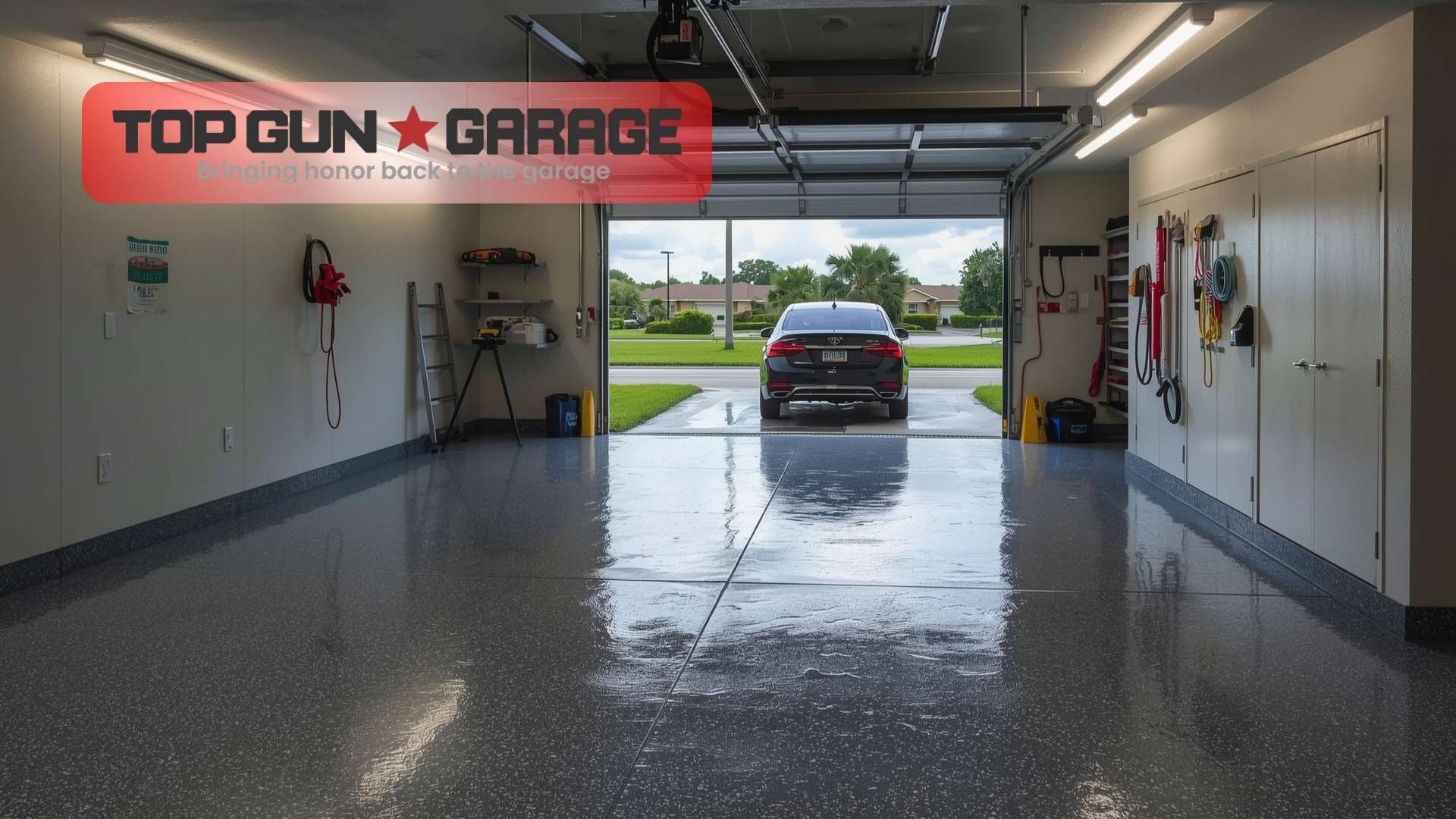
Unlike tile, paint, or interlocking systems, professional epoxy and polyaspartic coatings create a monolithic, jointless surface with zero water entry points. Applied at 10-20 mils thickness, these coatings shed standing water completely rather than allowing absorption.
After hurricane flooding, a coated garage floor can be pressure washed and returned to service within hours. Uncoated concrete remains saturated for weeks, creating ideal conditions for mold growth that the CDC identifies as a significant post-hurricane health hazard.
Critical Preparation Steps for Miami Garage Floor Coatings
Surface preparation determines 90% of coating success in high-moisture environments. Professional contractors in Miami follow a specific sequence designed for tropical conditions.
Concrete Moisture and Condition Testing
Before any preparation begins, professionals test for:
Moisture vapor transmission rate using calcium chloride tests (results in lbs/1,000 sq ft/24 hrs)
Internal relative humidity using in-situ probes at 40% slab depth
Surface pH levels to detect alkalinity that interferes with coating adhesion
Existing sealers or contaminants that require removal before coating
Diamond Grinding for Proper Surface Profile
The International Concrete Repair Institute (ICRI) specifies surface profile requirements for coating adhesion. For polyaspartic systems in Miami, contractors achieve CSP 2-3 profiles through diamond grinding with planetary grinders. This creates the microscopic texture necessary for mechanical bonding while removing laitance, the weak surface layer that causes peeling.
Diamond grinding also opens concrete pores, allowing moisture mitigation primers to penetrate deeply. Shot blasting, the alternative preparation method, can crack Miami’s older concrete slabs and is generally avoided except for extremely thick commercial applications.
Crack and Joint Repair
Miami concrete develops cracks from thermal cycling, settling, and the natural shrinkage that occurs as slabs cure. Professional contractors fill cracks with flexible polyurea joint fillers that move with the concrete rather than rigid materials that re-crack. Control joints receive semi-rigid fillers that allow the coating to bridge the joint seamlessly.
Best Time to Install Epoxy Garage Flooring in Miami
Timing matters significantly for Miami floor coating installations. The optimal installation window runs from late November through early May, when humidity drops to 65-70% and afternoon thunderstorms become less frequent.
Winter installation advantages:
Lower humidity improves coating cure and adhesion
Reduced moisture vapor transmission through concrete
Floor is protected before hurricane season begins
Garage can be cleared during mild weather
Summer installations remain possible with polyaspartic systems, which cure properly in high humidity conditions where traditional epoxies fail. However, contractors must work early morning before humidity peaks and may require multiple days for optimal results.
Cost of Professional Epoxy Garage Flooring in Miami
Professional garage floor coating in Miami ranges from $6-$12 per square foot for a complete system including moisture mitigation, depending on concrete condition, coating type, and decorative options selected.
Miami Garage Floor Coating Cost Breakdown
Component
Cost Range
2-Car Garage (400 sq ft)
Surface Preparation (grinding, crack repair)
$1.50-$2.50/sq ft
$600-$1,000
Moisture Mitigation Primer
$1.00-$2.00/sq ft
$400-$800
Polyurea Base Coat
$2.00-$3.50/sq ft
$800-$1,400
Decorative Flake Broadcast
$0.75-$1.50/sq ft
$300-$600
Polyaspartic Clear Topcoat
$1.50-$2.50/sq ft
$600-$1,000
Total Professional Installation
$6.75-$12.00/sq ft
$2,700-$4,800
Compare this investment against the cost of concrete replacement ($8-$15 per square foot including demolition), water damage repairs averaging $3,000-$7,000, or mold remediation starting at $500 and reaching $30,000 for severe infestations. Professional coatings pay for themselves within a single hurricane season of protection.
Maintaining Your Coated Garage Floor After Storms
Proper post-storm maintenance ensures your coating continues protecting against moisture for decades. Professional polyaspartic systems require minimal care but benefit from immediate attention after flooding events.
Post-hurricane maintenance checklist:
Remove standing water immediately with a squeegee, wet vacuum, or pump
Rinse with clean water to remove salt, debris, and contaminants
Clean with pH-neutral cleaner formulated for coated floors
Inspect for damage including chips, scratches, or lifted edges
Allow complete drying before parking vehicles (typically 24-48 hours after flooding)
Avoid petroleum-based cleaners, harsh acids, or abrasive tools that can damage the polyaspartic topcoat. For regular maintenance, dust mopping weekly and damp mopping monthly keeps the floor looking new indefinitely.
Why DIY Epoxy Kits Fail in Miami’s Climate
Big-box store epoxy kits cost $100-$300 and promise easy application, but they fail within 1-3 years in Miami conditions. The reasons are specific and unavoidable without professional equipment and materials.
DIY kit limitations:
Thin mil application: 2-3 mil kits versus 15-20 mil professional systems
UV instability: Yellowing and chalking within months of Miami sun exposure
Humidity sensitivity: 72-hour cure times impossible to maintain in Miami’s climate
The National Association of Home Builders estimates that 80% of DIY garage floor coatings fail within two years. In Miami’s extreme moisture conditions, that failure rate approaches 95% without proper moisture testing and mitigation.
Frequently Asked Questions
How long does epoxy garage flooring last in Miami?
Professional polyaspartic garage floor coatings last 15-20+ years in Miami when properly installed with moisture mitigation. DIY epoxy kits typically fail within 1-3 years due to humidity exposure and inadequate preparation. The key difference is moisture vapor transmission blocking and UV-stable topcoats designed for Florida’s climate.
Can epoxy floors withstand hurricane flooding?
Yes, professional epoxy and polyaspartic coatings create waterproof, seamless surfaces that withstand flooding and can be cleaned immediately after water recedes. Unlike uncoated concrete, which absorbs floodwater and harbors mold, coated floors shed water completely and return to service within hours of cleaning.
What is the best garage floor coating for Miami humidity?
Polyaspartic coatings outperform traditional epoxy in Miami’s humidity. They cure in 4-6 hours regardless of humidity levels, resist UV yellowing, and tolerate higher moisture vapor transmission rates. A hybrid system combining polyurea base coat with polyaspartic topcoat provides maximum protection against Miami’s year-round moisture challenges.
How much does professional garage floor coating cost in Miami?
Professional garage floor coating in Miami costs $6-$12 per square foot for a complete system with moisture mitigation, polyurea base, decorative flakes, and polyaspartic topcoat. A standard 2-car garage (400 square feet) runs $2,700-$4,800 installed. This includes concrete preparation, crack repair, and a 15-year warranty against peeling and delamination.
When is the best time to install garage floor coating in Miami?
The optimal installation window is November through May, when humidity drops to 65-70% and thunderstorm frequency decreases. However, polyaspartic systems can be installed year-round because they cure properly in high humidity. Installing before hurricane season (June 1) ensures your floor is protected when you need it most.
Do I need moisture testing before garage floor coating in Miami?
Absolutely. Miami’s high water table and humid climate make moisture testing essential before any coating installation. Professional contractors perform calcium chloride tests (ASTM F1869) or relative humidity probe tests (ASTM F2170) to measure vapor transmission. Results above 3 lbs per 1,000 square feet require moisture mitigation primers before coating application.
Protect Your Miami Garage Floor Before Hurricane Season
Miami’s hurricane season runs June through November, but preparation starts now. A professionally installed polyaspartic floor coating system protects your garage from flooding, humidity damage, and the moisture problems that destroy uncoated concrete.
Top Gun Garage specializes in moisture-resistant floor coatings for Southwest Florida garages. Our hybrid polyurea/polyaspartic systems include comprehensive moisture testing, professional diamond grinding preparation, and installation backed by industry-leading warranties. Contact us today for a free estimate and get your garage protected before the storms arrive.
 Skip to content





 Winter installation advantages:
  DIY kit limitations: