 Skip to content



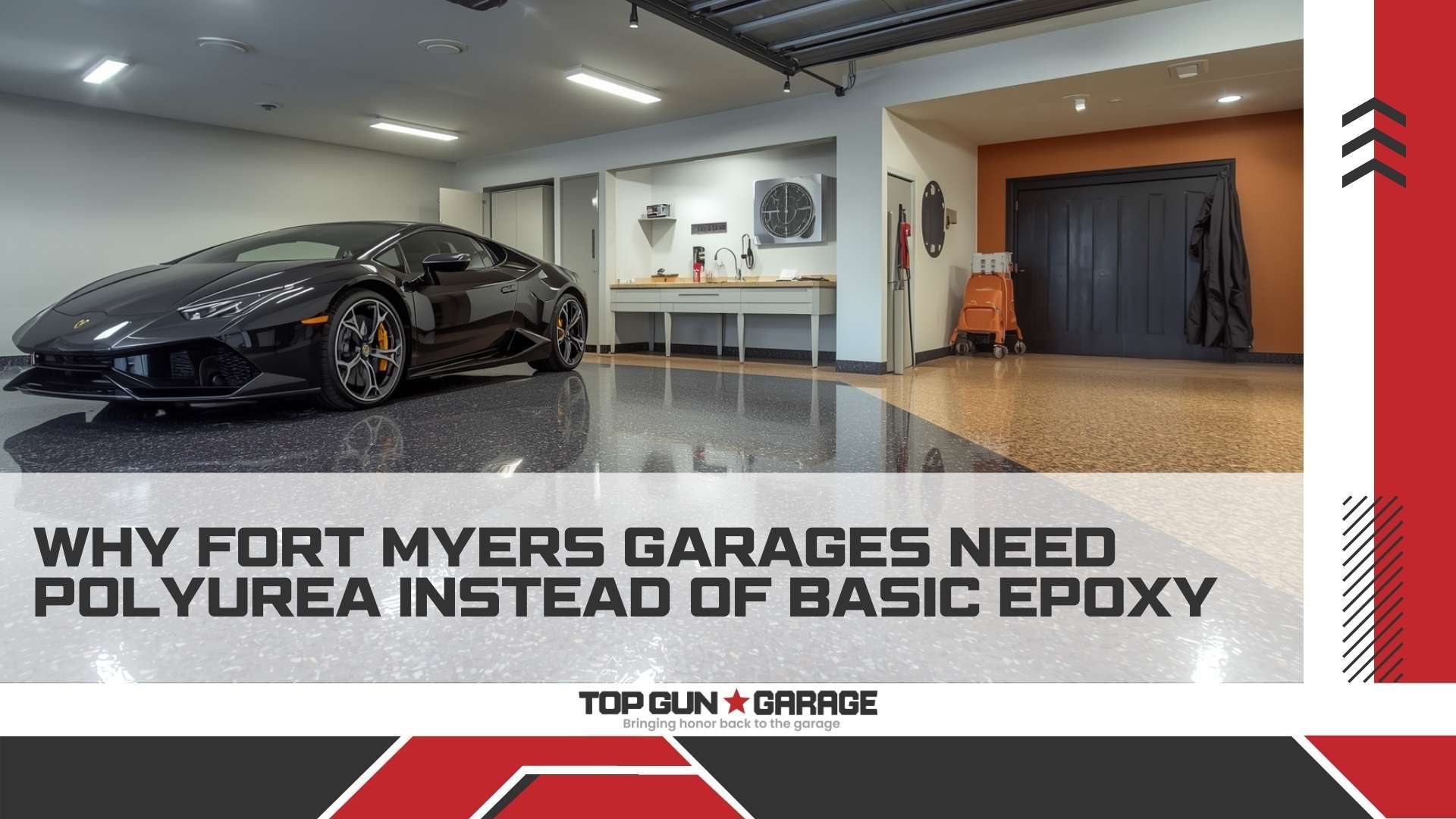
Fort Myers homeowners selecting an epoxy garage floor Fort Myers coating face a unique challenge—the combination of extreme heat, relentless humidity, and intense UV exposure creates conditions that standard epoxy simply cannot withstand. While basic epoxy may work in milder climates, Southwest Florida’s average temperatures of 91°F in summer and year-round humidity levels of 72-79% demand polyurea garage floor coating as a more advanced solution. Fort Myers garage flooring with polyurea technology delivers the durability, flexibility, and environmental resistance that local garages require, outlasting traditional epoxy by up to 10 years while resisting common failures like hot tire marks, yellowing, and moisture-related delamination.
Overview
This comprehensive guide explains why polyurea has become the preferred garage floor coating for Fort Myers homes. You’ll discover how Southwest Florida’s climate accelerates epoxy degradation, the specific performance advantages polyurea offers, and how molecular-level differences translate to real-world durability. We’ll cover hot tire pickup prevention, UV stability, moisture barrier systems, installation considerations, and cost-benefit analysis giving you the knowledge to make an informed flooring decision that protects your investment for 15+ years.
Key Takeaways
-
Fort Myers’ 72-79% average humidity and 91°F summer temperatures cause basic epoxy to fail within 3-5 years
-
Polyurea coatings resist hot tire pickup, UV yellowing, and moisture vapor transmission better than standard epoxy
-
Flexible polyurea chemistry prevents cracking during temperature fluctuations common in Southwest Florida
-
Same-day installation and rapid curing minimize downtime compared to multi-day epoxy applications
-
15-year warranties on polyurea systems versus 2-5 years on basic epoxy demonstrate superior long-term value
Fort Myers Climate Challenges for Garage Floors
Fort Myers experiences some of the most demanding environmental conditions for garage floor coatings in the United States. Summer months bring average high temperatures of 91°F with Florida humidity levels consistently ranging from 78-79%, creating a moisture-saturated environment that penetrates concrete slabs and challenges coating adhesion. The combination of heat and humidity causes concrete to release vapor at rates 30% higher than in drier climates, pushing moisture upward through the slab and creating pressure beneath floor coatings.
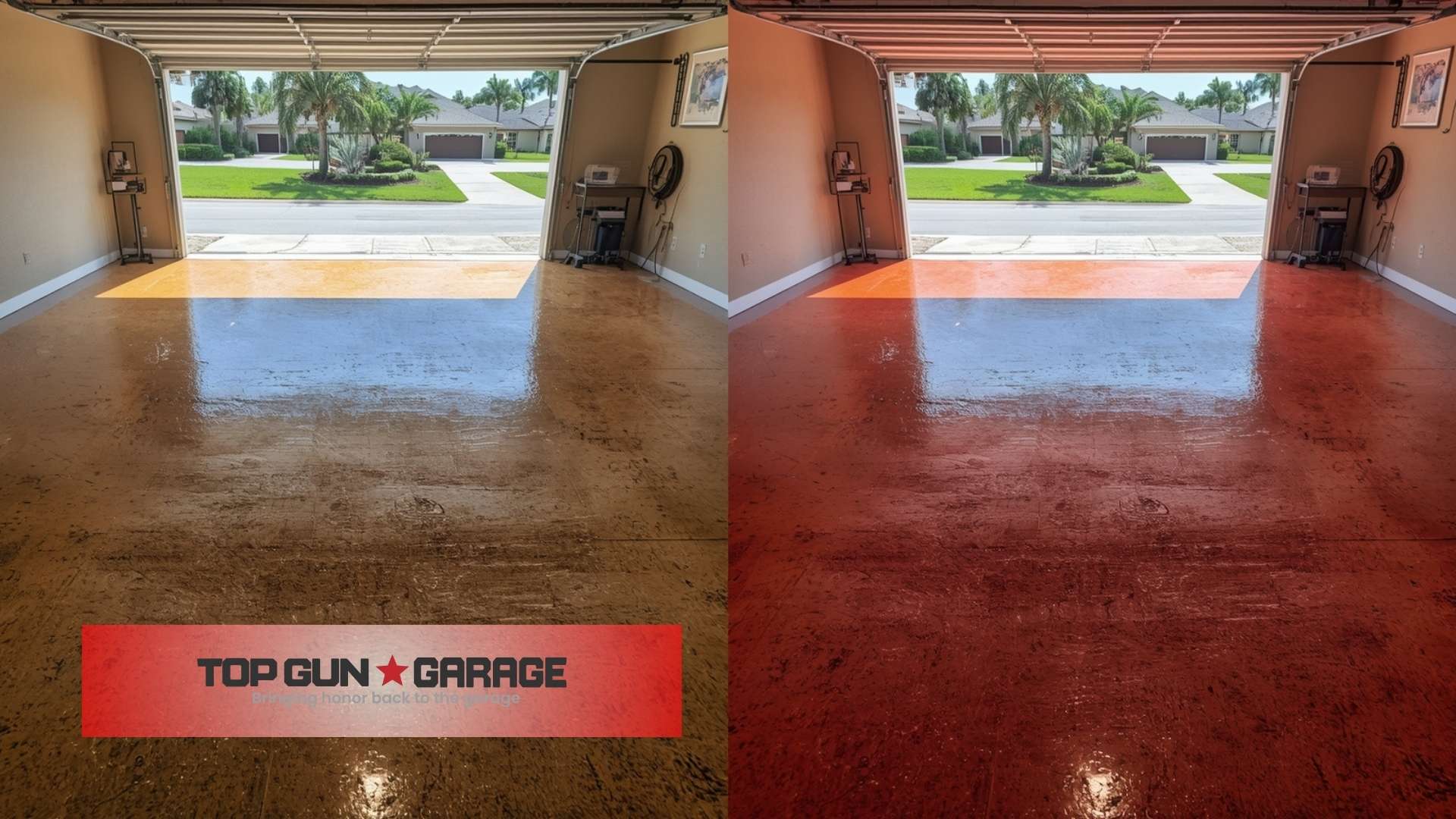
Standard epoxy coatings lack the flexibility to accommodate the thermal expansion and contraction cycles that Fort Myers garages experience daily. When concrete slabs heat up during the day and cool at night, rigid epoxy formulations develop microcracks that allow moisture intrusion and accelerate deterioration. The region’s average annual precipitation of 57 inches further compounds these challenges, as water pools around garage entrances and seeps beneath coatings through compromised areas.
Heat and Humidity in Fort Myers
Direct sunlight poses a significant threat to garage floor coatings in Fort Myers, particularly for homes with open garage doors or those using garage spaces as workshops. UV radiation breaks down the molecular bonds in standard epoxy formulations, causing yellowing, chalking, and color fading within 18-36 months of installation. This photodegradation not only affects aesthetics but also compromises the coating’s protective capabilities, as the damaged surface layer becomes more susceptible to chemical damage and abrasion.
The intensity of Southwest Florida sunlight accelerates this deterioration process significantly faster than in northern climates. Epoxy coatings without UV-stable topcoats can lose up to 40% of their protective properties within the first three years when exposed to regular sunlight. For Fort Myers homeowners who use their garages for hobbies, storage, or as functional living spaces, this rapid degradation translates to costly recoating cycles and diminished floor performance.
What Is Polyurea Garage Flooring?
The fundamental difference between polyurea and epoxy lies in their chemical composition and curing mechanisms. Epoxy coatings consist of resin and hardener components that undergo a chemical reaction requiring specific temperature and humidity conditions for proper curing, making them sensitive to environmental fluctuations during installation. Polyurea, by contrast, forms through the reaction of isocyanate and polyol resin, creating an elastomeric polymer with superior flexibility and faster curing times—often setting within minutes rather than hours.
This molecular flexibility gives polyurea coatings the ability to expand and contract with concrete slabs during temperature changes without cracking or delaminating. The polymer chains in polyurea maintain their integrity under stress, allowing the coating to withstand substrate movements that would fracture rigid epoxy systems. Additionally, polyurea’s chemical resistance surpasses epoxy when exposed to acids, solvents, and automotive fluids common in garage environments.
How Polyurea Differs from Basic Epoxy
Polyurea coatings achieve 100% waterproof protection due to their seamless, non-porous surface structure. Unlike epoxy, which can develop microscopic pathways for moisture penetration over time, polyurea creates an impermeable barrier that blocks vapor transmission from below and liquid intrusion from above. This makes polyurea particularly effective in Fort Myers’ high-humidity environment where moisture barrier technology determines coating longevity.
Polyurea coatings demonstrate exceptional thermal stability, maintaining their structural integrity at temperatures exceeding 200°F—well above the heat generated by vehicle tires on Fort Myers pavement. Standard epoxy formulations begin softening at temperatures around 150°F, which explains why hot tire pickup occurs so frequently with basic epoxy in Southwest Florida garages. The superior heat resistance of polyurea prevents the surface softening that allows tire rubber to bond with the coating, eliminating the dark marks and adhesion loss that plague epoxy floors.
Performance in Extreme Florida Conditions
Abrasion resistance represents another critical performance advantage for polyurea systems. Fort Myers garages endure daily vehicle traffic, dragged equipment, and dropped tools that gradually wear away softer coating materials. Polyurea’s elastomeric properties allow it to absorb impacts without permanent damage, while rigid epoxy chips and cracks under similar conditions. This durability translates to significantly longer service life—polyurea coatings typically last 10-15 years compared to 3-5 years for basic epoxy, even with proper maintenance.
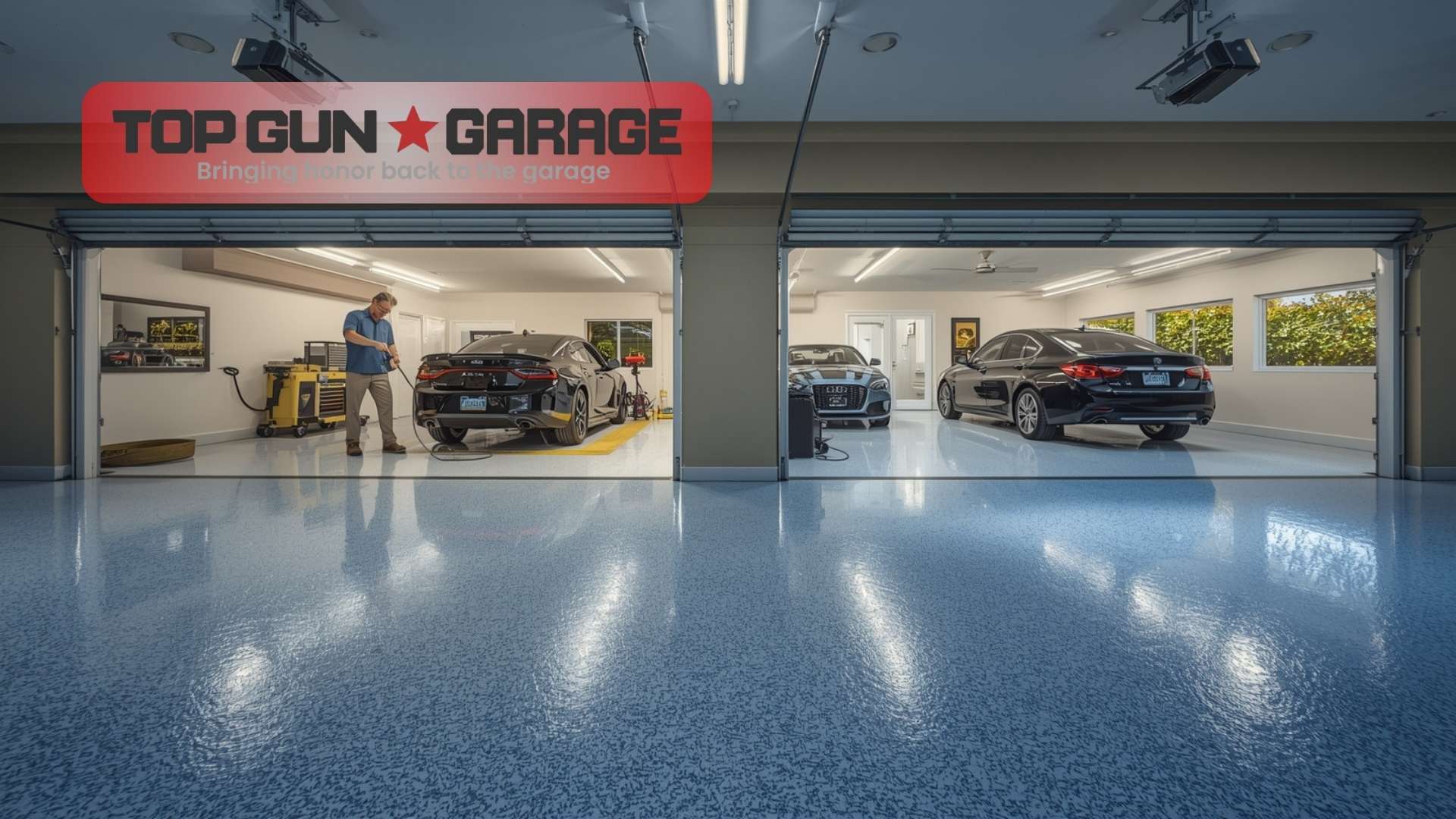
The chemical composition of polyurea also provides superior resistance to the cleaning products, automotive fluids, and salt exposure common in coastal Fort Myers homes. Epoxy can deteriorate when repeatedly exposed to harsh chemicals or saltwater intrusion, gradually losing its protective properties and requiring earlier replacement. Polyurea maintains its chemical resistance throughout its service life, protecting the underlying concrete from staining, etching, and structural damage.
Hot Tire Pickup on Garage Floors
Hot tire pickup represents one of the most frustrating and visible failures of basic epoxy garage floors in Fort Myers. This phenomenon occurs when vehicle tires heated by Southwest Florida’s scorching pavement transfer enough thermal energy to temporarily soften the epoxy coating surface. Over 60% of homeowners with epoxy-coated garage floors report dark tire marks within the first three years, with the problem accelerating during summer months when pavement temperatures exceed 140°F.
The mechanism behind tire mark formation involves a temporary bonding between heated rubber and softened epoxy resin. When tires cool and the epoxy re-hardens, rubber compounds remain embedded in the coating, creating unsightly dark streaks that resist normal cleaning methods. Extended parking durations compound this issue—a 30-minute stop may leave faint marks, while overnight parking can permanently alter the surface texture and appearance.
Why Epoxy Suffers from Hot Tire Pickup
Installation quality and coating thickness directly influence susceptibility to hot tire pickup. Properly prepared concrete surfaces with industrial-grade epoxy resins withstand approximately 40% more thermal stress than DIY kits or budget contractor applications. However, even premium epoxy formulations lack the thermal stability needed to completely prevent hot tire pickup in Fort Myers’ extreme heat environment.
Polyurea garage floor coatings eliminate hot tire pickup through superior thermal stability that prevents surface softening at the temperatures encountered in Fort Myers garages. The coating remains dimensionally stable even when tires heated to 180-200°F park directly on the surface, maintaining a firm, non-tacky finish that prevents rubber bonding. This thermal resistance stems from polyurea basecoat technology, which doesn’t exhibit the glass transition temperature issues that cause epoxy softening.
How Polyurea Stops Hot Tire Damage
Fort Myers installers specifically recommend polyurea or polyaspartic systems for homes with high-traffic garage floors. The coating’s ability to handle thermal stress without degradation means homeowners never need to implement tire-cooling protocols or rotation parking strategies—practices often recommended to extend epoxy floor life. Polyurea simply performs reliably regardless of vehicle use patterns, parking duration, or seasonal temperature variations.
The long-term appearance benefits of this thermal resistance extend beyond preventing tire marks. Because polyurea doesn’t undergo repeated softening and hardening cycles, the coating maintains uniform surface texture and gloss retention throughout its 15-year service life. Epoxy floors that experience thermal cycling gradually develop surface irregularities, dull spots, and reduced chemical resistance even when tire marks aren’t visibly present.
Moisture and Humidity in Florida Garages
Southwest Florida’s consistently high humidity levels create moisture vapor transmission rates significantly higher than most U.S. regions. Fort Myers concrete slabs absorb airborne moisture like sponges, with vapor moving continuously through the porous concrete matrix and attempting to escape through the surface. When a floor coating blocks this vapor transmission, pressure builds beneath the coating until adhesion fails and delamination occurs.
South Florida’s air holds approximately 20% more water vapor than other regions, creating destructive conditions that damage one in three improperly sealed floor coatings within 18 months. Daily temperature swings push vapor upward at rates three times faster than northern states, with concrete releasing 30% more moisture during summer humidity spikes. These invisible forces represent the primary reason basic epoxy installations fail prematurely in Fort Myers garages despite appearing properly installed.
Moisture Vapor Transmission Explained
Professional moisture testing protocols reveal that Fort Myers concrete slabs frequently emit vapor at rates exceeding the tolerance levels of standard epoxy systems. Coastal proximity compounds this issue, as salt-laden moisture accelerates the chemical reactions that compromise coating adhesion. Without specialized moisture management strategies, epoxy coatings experience bubbling, peeling, and widespread adhesion failure regardless of surface preparation quality.
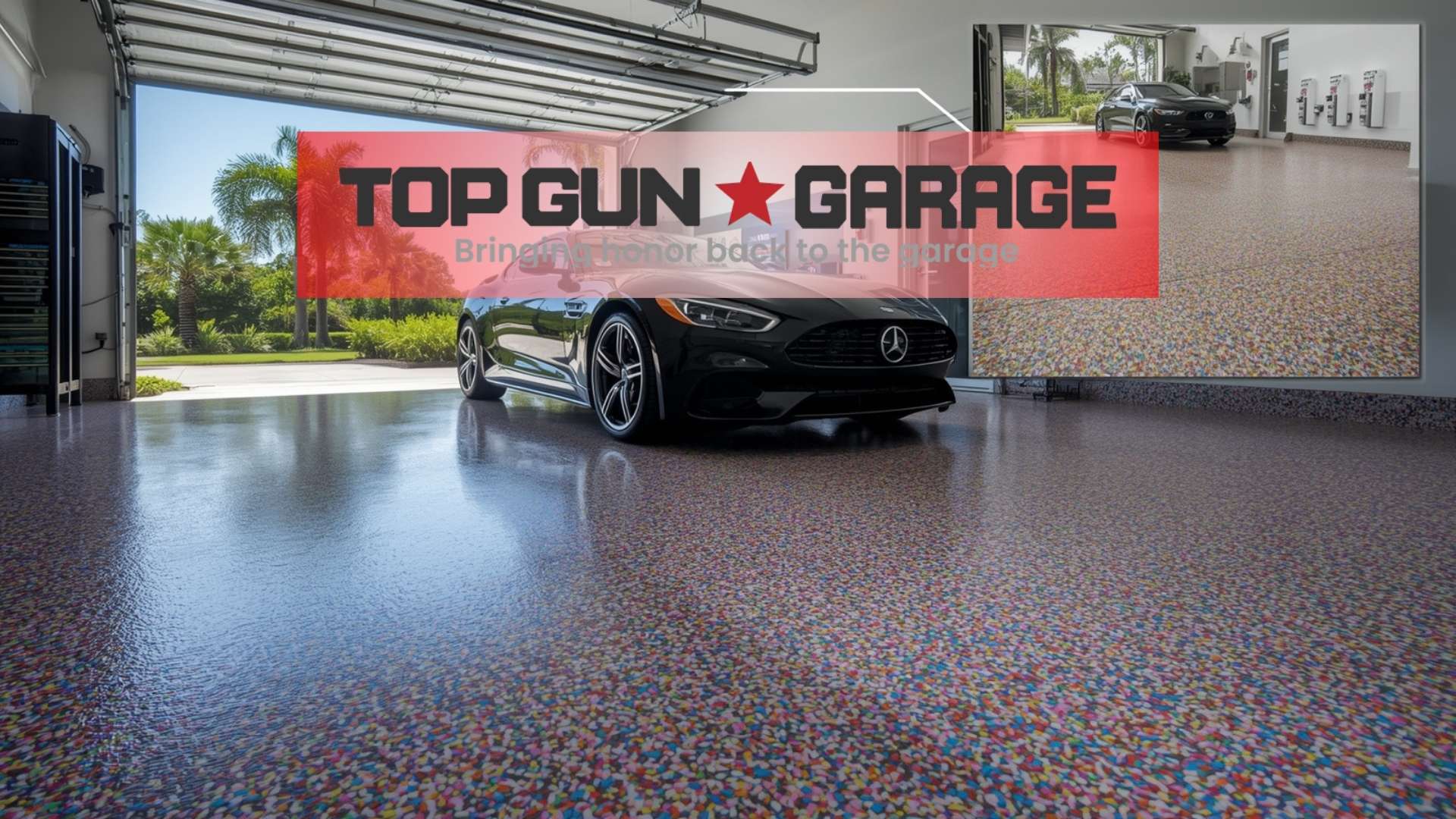
Polyurea coatings provide superior moisture vapor blocking capabilities that make them ideally suited for Fort Myers’ high-humidity environment. The 100% waterproof barrier created by polyurea prevents liquid water intrusion from above while also managing vapor transmission from below more effectively than epoxy. This dual-direction moisture protection ensures coating adhesion remains intact even during Fort Myers’ intense summer humidity periods.
How Polyurea Systems Manage Moisture
Advanced polyurea systems incorporate moisture vapor barriers as part of the multi-layer application process, creating redundant protection against vapor-related failures. These specialized primer layers bond chemically to damp concrete and create a vapor-retardant foundation that allows the decorative polyurea topcoats to perform optimally. Professional Fort Myers installers use digital sensors to map vapor emission points and adjust moisture mitigation strategies accordingly.
The flexibility of polyurea chemistry also contributes to moisture resistance by allowing slight substrate movement without creating pathways for vapor infiltration. Rigid epoxy coatings develop microcracks when concrete expands and contracts with temperature and moisture changes, and these cracks become conduits for accelerated moisture damage. Polyurea’s elastomeric properties maintain a continuous, impermeable seal even as the concrete substrate responds to environmental conditions.
Installation Experience for Fort Myers Homeowners
Standard epoxy garage floor installations typically require multiple days to complete, with each layer needing 12-48 hours of cure time before the next application. Fort Myers’ humidity complicates this timeline further, as epoxy requires specific temperature and moisture conditions for proper curing. Installers must monitor weather forecasts and often postpone work when humidity exceeds recommended levels, extending project timelines and creating scheduling uncertainty.
The typical epoxy installation process involves surface preparation steps, primer application, base coat, decorative flake broadcast, and topcoat—with mandatory waiting periods between each step. Fort Myers homeowners often lose garage access for 3-5 days during installation, requiring them to park vehicles outside and relocate stored items. Humidity-related curing issues can extend this timeline further if improper hardening requires coating removal and reapplication.
Traditional Epoxy Installation Timeline
Temperature fluctuations during the multi-day curing process can create inconsistent hardness across the floor surface, with some areas curing faster than others. This variability affects long-term performance, as softer sections become more susceptible to hot tire pickup and abrasion damage. The extended epoxy cure time also increases the risk of contamination from airborne dust, debris, or unexpected weather events in Fort Myers’ unpredictable climate.
Polyurea garage floor coatings cure rapidly—often within minutes to hours—allowing Fort Myers homeowners to regain garage access the same day as installation. This accelerated timeline results from polyurea’s unique chemical reaction, which proceeds independently of ambient temperature and humidity conditions. Installers can complete surface preparation, primer, base coat, decorative broadcast, and polyurea topcoat in a single work session, typically 6-8 hours total.
Same-Day Polyurea Installation Process
The fast cure time minimizes disruption to homeowners’ daily routines and eliminates the need for extended vehicle relocation. Professional Fort Myers installers like those serving the Naples and Southwest Florida region specialize in same-day polyurea applications that allow light foot traffic within hours and full vehicle use within 24 hours. This convenience represents a significant advantage for busy homeowners who cannot accommodate multi-day garage closures.
Rapid curing also produces more uniform coating properties since the entire floor system hardens under consistent environmental conditions. Unlike epoxy, which cures gradually and can develop varying hardness levels across the surface, polyurea achieves uniform properties that ensure consistent performance throughout the garage. This uniformity contributes to the coating’s superior durability and resistance to premature wear patterns.
Longevity and Warranty Protection
Basic epoxy garage floor coatings generally last 3-5 years in Fort Myers’ demanding climate before showing significant wear, discoloration, or adhesion failure. With meticulous maintenance and favorable conditions, premium epoxy systems may extend to 5-10 years, but this requires regular resealing and careful protection from thermal and chemical stresses. The combination of UV exposure, hot tire traffic, humidity, and thermal cycling accelerates degradation in Southwest Florida far beyond what manufacturers project for moderate climates.
Polyurea garage floor coatings typically deliver 10-15 year lifespan under the same conditions that cause epoxy to fail within five years. The superior chemical composition and flexibility of polyurea allow it to withstand daily vehicle traffic, environmental extremes, and chemical exposure without the gradual deterioration that affects epoxy. Fort Myers homeowners who invest in polyurea systems can expect single-application longevity that eliminates the recoating cycles required with epoxy.
Expected Lifespan of Epoxy vs Polyurea
Over a 15-year period, this durability difference means polyurea requires one installation while epoxy demands three to four complete recoating projects. Each epoxy recoat involves surface preparation, coating removal, reinstallation costs, and garage downtime—expenses that quickly surpass the initial price premium of polyurea systems. The long-term cost-per-year calculation consistently favors polyurea for Fort Myers homeowners seeking maximum value.
Premium polyurea garage floor systems come with 15-year warranties that cover adhesion failure, significant wear, and coating defects. These comprehensive warranties reflect manufacturers’ confidence in polyurea’s ability to withstand Fort Myers’ climate challenges without premature degradation. Coverage typically includes labor for repairs or replacement, providing genuine financial protection rather than material-only warranties that leave homeowners paying for reinstallation.
Warranty Differences Homeowners Should Know
Basic epoxy installations rarely offer warranties exceeding 2-5 years, with many budget contractors providing no warranty coverage at all. Even when warranties exist, they often exclude common failure modes like hot tire pickup, UV yellowing, or moisture-related delamination—precisely the issues that plague epoxy in Southwest Florida. Homeowners frequently discover that warranty fine print limits coverage to manufacturing defects while excluding environmental or use-related damage.
The warranty difference signals a fundamental performance gap between coating technologies. Polyurea installers can offer long-term guarantees because the product reliably performs as expected in Fort Myers’ environment. Epoxy contractors limit warranty exposure because they know climate-related failures occur frequently despite proper installation. For Fort Myers homeowners, warranty terms provide valuable insight into which coating technology will truly deliver lasting value.
Cost and Long-Term Value
Polyurea garage floor coatings typically cost 30-50% more than basic epoxy installations for comparable square footage in Fort Myers. This price difference reflects the superior materials, specialized equipment, and installer expertise required for professional polyurea applications. A standard two-car garage might receive a basic epoxy coating for $1,800-$3,000, while a comparable polyurea system ranges from $2,800-$4,500 depending on decorative options and surface preparation requirements.
The initial cost premium often creates hesitation among budget-conscious homeowners evaluating garage makeover options. However, focusing solely on upfront expense overlooks the total cost of ownership over the floor’s functional lifetime. Fort Myers’ climate accelerates coating degradation, meaning the cheapest initial option rarely proves most economical long-term.
Upfront Costs of Epoxy and Polyurea
Premium polyurea systems include features that justify higher investment—moisture vapor barriers, UV-stable topcoats, enhanced decorative options, and same-day installation that minimizes disruption. These components address specific Fort Myers environmental challenges that basic epoxy cannot overcome regardless of price. Homeowners who select polyurea avoid the frustration of premature coating failure and the expense of unplanned replacement projects.
Analyzing garage floor coating costs over a 15-year ownership period reveals polyurea’s superior value proposition for Fort Myers homes. A $3,000 polyurea installation that lasts 15 years costs $200 annually, while a $2,000 epoxy coating requiring replacement every 5 years totals $6,000 over the same timeframe—$400 per year. This calculation excludes the additional costs of surface preparation for recoating, inflation-adjusted material prices, and homeowner time managing multiple contractor projects.
Lifetime Return on Investment
Maintenance expenses further favor polyurea systems. Epoxy floors require periodic resealing, specialized deep cleaning methods, and more frequent maintenance to address staining and discoloration. Polyurea’s superior stain resistance and easier maintenance reduce ongoing care costs while preserving appearance with basic cleaning protocols. Fort Myers homeowners report significantly lower cleaning product expenses and less time spent on floor maintenance with polyurea compared to epoxy.
Property value considerations add another dimension to ROI analysis. High-quality garage floors enhance home resale value, with professionally installed polyurea systems serving as a premium selling feature. Homes with fresh, attractive garage floors command higher prices and sell faster than comparable properties with deteriorated or outdated flooring. The 15-year lifespan of polyurea means Fort Myers homeowners enjoy this value enhancement throughout their ownership period and benefit at resale.
Frequently Asked Questions
What is the main difference between polyurea and epoxy garage floor coatings?
Polyurea forms through rapid chemical reaction creating a flexible, elastomeric polymer, while epoxy produces a rigid coating requiring days to cure. Polyurea offers superior flexibility, faster installation, better UV resistance, and 10-15 year lifespan compared to epoxy’s 3-5 years in Fort Myers’ climate.
Why does epoxy fail so quickly in Fort Myers garages?
Fort Myers’ 91°F summer temperatures, 72-79% humidity, and intense UV exposure cause epoxy to soften, yellow, and delaminate. The combination of moisture vapor transmission, thermal cycling, and hot tire pickup accelerates degradation that wouldn’t occur in moderate climates.
Can polyurea prevent hot tire pickup marks on garage floors?
Yes, polyurea maintains dimensional stability at temperatures exceeding 200°F, preventing the surface softening that causes rubber bonding. Unlike epoxy which softens around 150°F, polyurea eliminates hot tire pickup regardless of parking duration or tire temperature.
How long does polyurea installation take compared to epoxy?
Polyurea garage floors typically install in 6-8 hours with same-day curing, allowing vehicle use within 24 hours. Epoxy installations require 3-5 days with mandatory cure time between layers, extended further by Fort Myers’ humidity affecting proper hardening.
Is polyurea worth the extra cost for Southwest Florida homes?
Absolutely—polyurea’s 15-year lifespan costs approximately $200 annually versus $400/year for epoxy requiring replacement every 5 years. Superior durability, eliminated hot tire marks, UV stability, and comprehensive warranties deliver significantly better long-term value.
Will polyurea yellow or fade in direct sunlight?
No, polyurea incorporates UV-stable chemistry that resists photodegradation causing yellowing and color fade. Fort Myers garages with regular sunlight exposure maintain original appearance for 10-15 years, while standard epoxy shows visible yellowing within 18-36 months.
How does polyurea handle Fort Myers’ high humidity?
Polyurea creates a 100% waterproof barrier blocking moisture vapor transmission that causes epoxy delamination. Advanced systems include moisture vapor barriers managing the 20% higher vapor content in Southwest Florida air compared to other U.S. regions.
Can I install polyurea over existing epoxy coating?
Generally no—proper polyurea installation requires coating removal and surface preparation for optimal adhesion. Fort Myers professionals use diamond grinding to expose concrete pores, ensuring the moisture barrier and polyurea layers bond correctly to withstand humidity and thermal stress.
What maintenance does polyurea garage flooring require?
Polyurea needs only routine sweeping and occasional mopping with pH-neutral cleaners. The non-porous surface resists staining, doesn’t require resealing, and maintains appearance with basic cleaning—far less maintenance than epoxy which needs specialized products for tire mark removal.
Do professional installers offer warranties on polyurea floors?
Premium polyurea systems include 15-year warranties covering adhesion, wear, and defects including labor for repairs. This contrasts sharply with basic epoxy’s 2-5 year material-only warranties that exclude common Fort Myers failure modes like UV damage and moisture delamination.
Conclusion
Fort Myers garages demand flooring solutions engineered specifically for Southwest Florida’s extreme climate and polyurea delivers the performance that basic epoxy cannot match. The combination of thermal stability preventing hot tire pickup, UV resistance maintaining long-term appearance, moisture vapor management controlling humidity damage, and rapid installation minimizing disruption makes polyurea the clear choice for homeowners seeking lasting value. With 15-year warranties, superior durability, and lifetime costs significantly lower than repeated epoxy replacements, polyurea garage floor coatings protect your investment while enhancing your home’s functionality and appeal.
Ready to upgrade your Fort Myers garage with a polyurea floor coating that lasts? Top Gun Garage specializes in professional polyurea installations designed for Southwest Florida’s demanding conditions. Request your free estimation today and discover why Naples, Fort Myers, and Bonita Springs homeowners trust our expertise for garage flooring that performs as beautifully as the day it was installed 15 years later.