 Skip to content



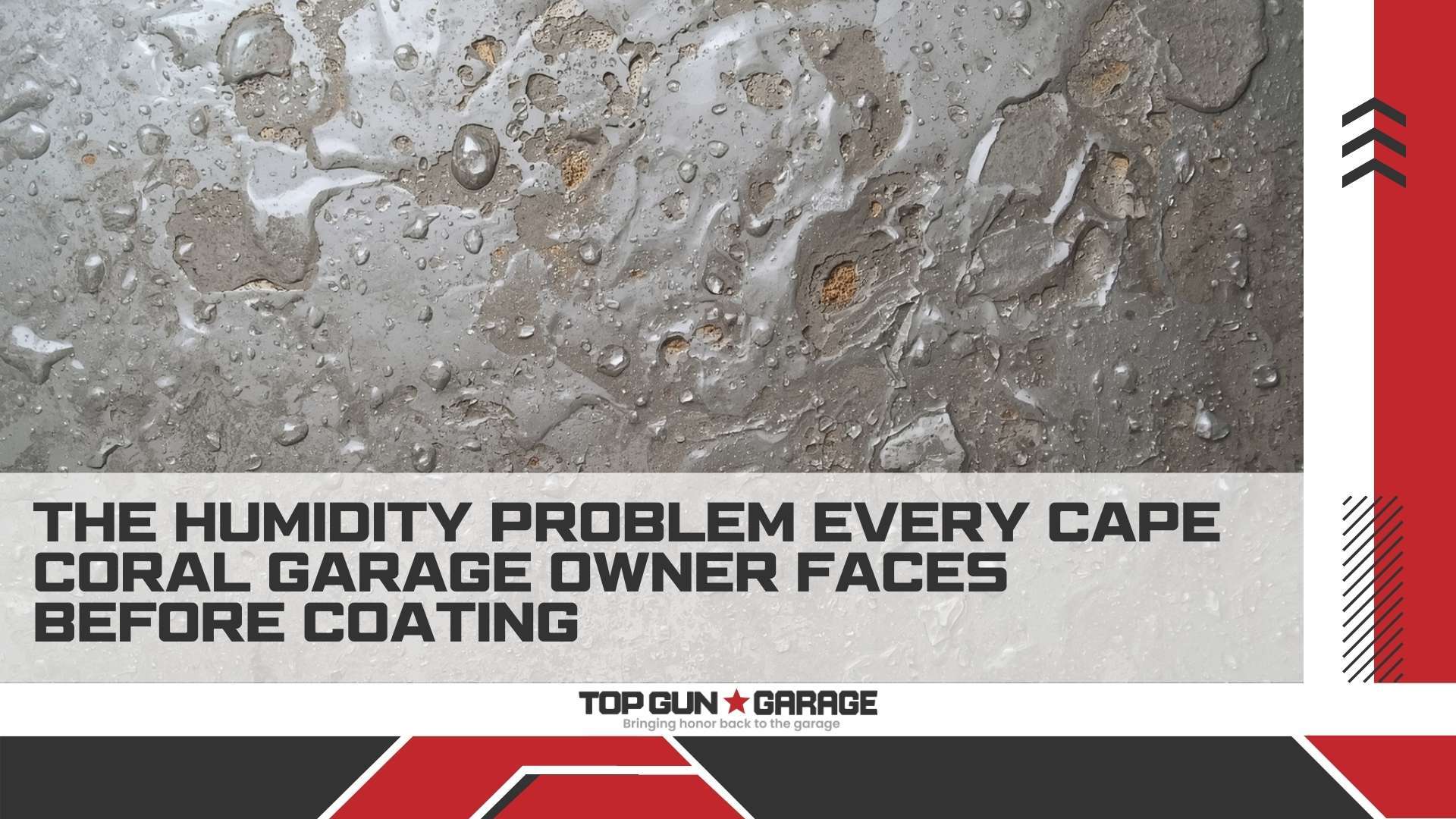
Cape Coral homeowners planning epoxy flooring Cape Coral projects encounter a critical challenge that determines coating success or failure—moisture vapor transmission pushing through concrete slabs at rates 30% higher than drier climates. The region’s 75-80% average humidity levels create constant upward pressure as water vapor moves through porous concrete, attempting to escape through the surface. Without proper Cape Coral garage flooring moisture management, even premium epoxy coatings experience bubbling, peeling, and complete adhesion failure within 18-24 months of installation. Understanding this humidity problem and implementing the right moisture vapor transmission solutions means the difference between a $3,000 coating that lasts 15 years and one that requires complete replacement after just two summers.
Overview
This comprehensive guide reveals the hidden moisture challenges Cape Coral garage owners must address before any coating application. You’ll discover how Southwest Florida’s unique climate creates vapor pressure beneath floor coatings, why standard epoxy systems fail despite proper installation, and which moisture testing protocols professionals use to assess your concrete’s suitability. We’ll cover moisture barrier technology, coating selection for high-humidity environments, surface preparation requirements, and long-term maintenance strategies—equipping you with the knowledge to make coating decisions that withstand Cape Coral’s demanding conditions for decades.
Key Takeaways
-
Cape Coral’s 75-80% humidity creates moisture vapor transmission rates that exceed standard epoxy tolerance levels
-
Concrete moisture testing is mandatory before coating—skipping this step causes 72% of premature coating failures
-
Moisture vapor barriers must be applied to Cape Coral garage floors to prevent hydrostatic pressure buildup
-
Polyurea and polyaspartic systems resist moisture damage better than traditional epoxy in humid climates
-
Professional surface preparation and moisture mitigation add 10-12 years to coating lifespan in Southwest Florida
Understanding Cape Coral’s Unique Humidity Challenge
Cape Coral’s subtropical climate maintains year-round humidity levels between 75-80%, with summer months frequently exceeding 85% relative humidity. This moisture-saturated air doesn’t just make the environment uncomfortable—it actively penetrates concrete garage slabs, which act like dense sponges constantly absorbing and releasing moisture. The ground beneath Cape Coral homes remains saturated due to the region’s high water table and 53 inches of annual rainfall, creating persistent upward moisture movement through concrete pores.
This phenomenon, called moisture vapor transmission (MVT), occurs as water molecules migrate from areas of high concentration (saturated ground) to low concentration (garage air) through the concrete’s porous matrix. In Cape Coral’s climate, MVT rates can reach 12-16 pounds per 1,000 square feet per 24 hours—significantly higher than the 3-5 pound tolerance of most epoxy coating systems. When homeowners apply floor coatings without addressing this moisture movement, they’re essentially trapping vapor beneath an impermeable barrier, creating hydrostatic pressure that inevitably breaks the coating bond.
Why Standard Epoxy Fails in Cape Coral Garages
Traditional epoxy coatings create a solid, impermeable barrier on concrete surfaces—a characteristic that works well in dry climates but becomes a critical weakness in Cape Coral. While this non-porous surface prevents liquid spills from penetrating, it also blocks moisture vapor attempting to escape from below. Think of it like sealing a pot of simmering water with a tight lid—the pressure has nowhere to go except upward against the coating.
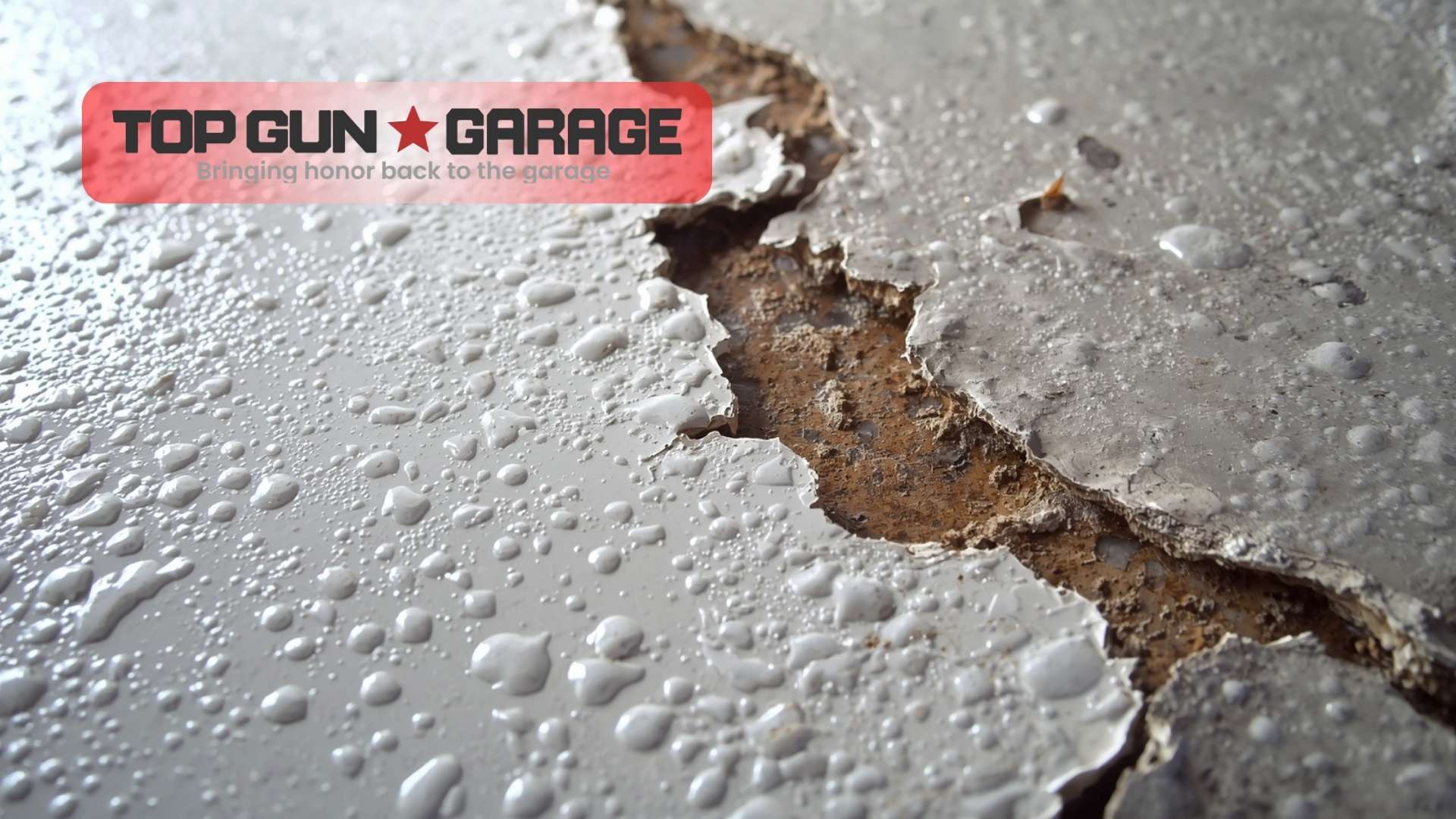
As moisture vapor accumulates beneath the epoxy layer, it creates osmotic blistering where small bubbles form, grow, and eventually pop, breaking the bond between coating and concrete. This process accelerates during Cape Coral’s hot summer months when heat increases vapor transmission rates and creates additional thermal expansion stress. Homeowners typically notice the first signs of failure within 12-18 months: small bubbles near expansion joints, peeling edges around garage door thresholds, and hot tire marks where vehicle weight and heat compound the adhesion loss.
Cape Coral Garage Floor Moisture Testing Requirements
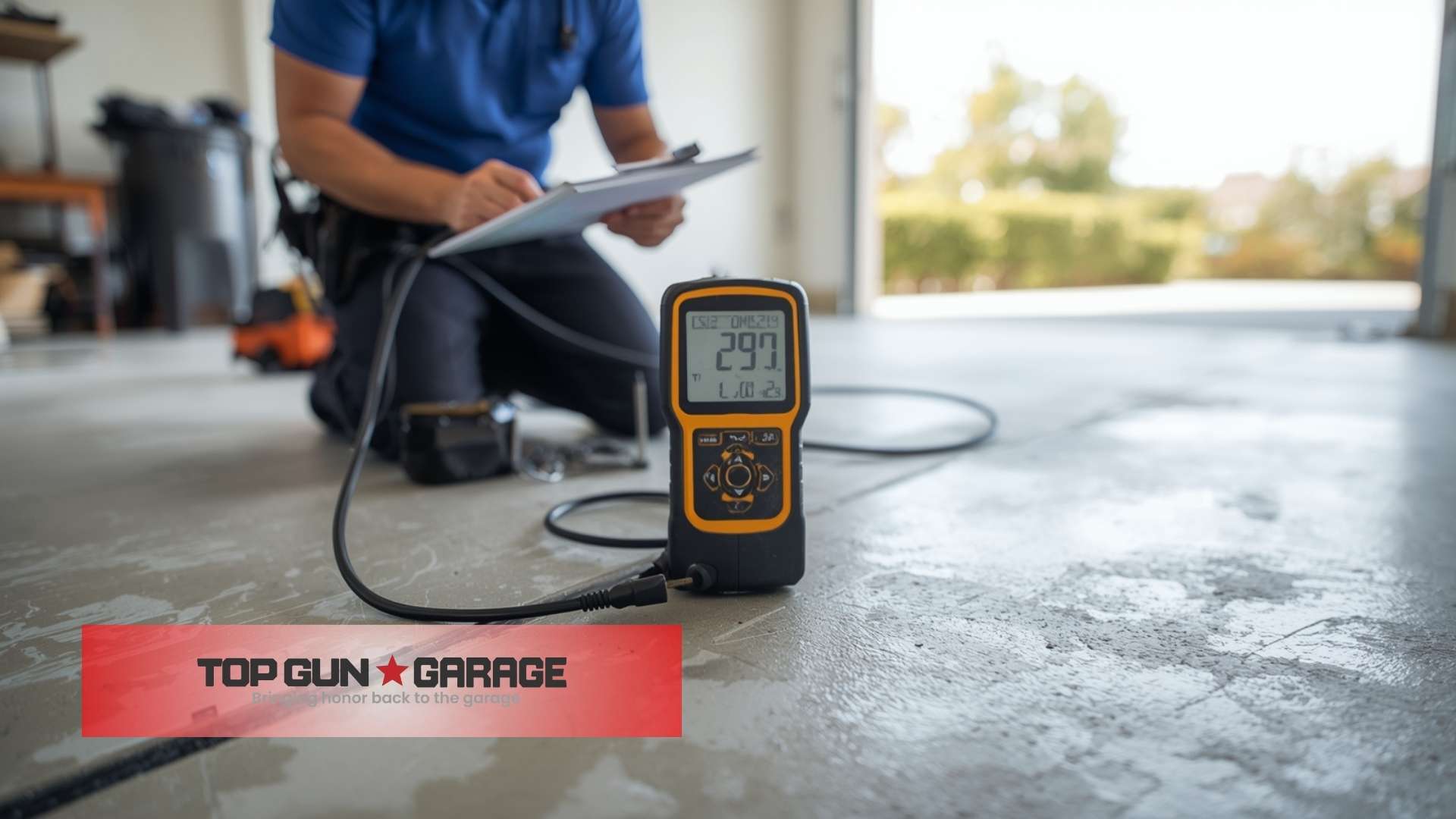
Professional Cape Coral garage flooring contractors use calcium chloride tests and plastic sheet tests to measure moisture vapor emission rates before coating recommendations. The plastic sheet test provides a simple preliminary assessment: tape a 2×2 foot plastic square to dry concrete, wait 48 hours, then check for moisture condensation on the underside. Beaded moisture indicates a defective or absent vapor barrier beneath the slab, while general dampness suggests ambient humidity issues common throughout Cape Coral.
More accurate calcium chloride testing measures exact MVT rates over 60-72 hours, providing quantifiable data on whether your concrete exceeds coating manufacturer specifications. If test results show emission rates above 3 pounds per 1,000 square feet, standard epoxy systems will fail regardless of surface preparation quality or installation expertise. Cape Coral’s coastal proximity and saturated soil conditions mean approximately 65% of garage slabs test above safe epoxy thresholds without moisture mitigation.
Homeowners should also assess several humidity indicators: does the garage feel perpetually damp, do metal tools rust quickly, is there visible efflorescence (white powdery deposits) on concrete, or do stored cardboard boxes deteriorate rapidly ? Answering yes to any question suggests moisture management will be critical to coating success.
Moisture Vapor Barriers for Cape Coral Concrete
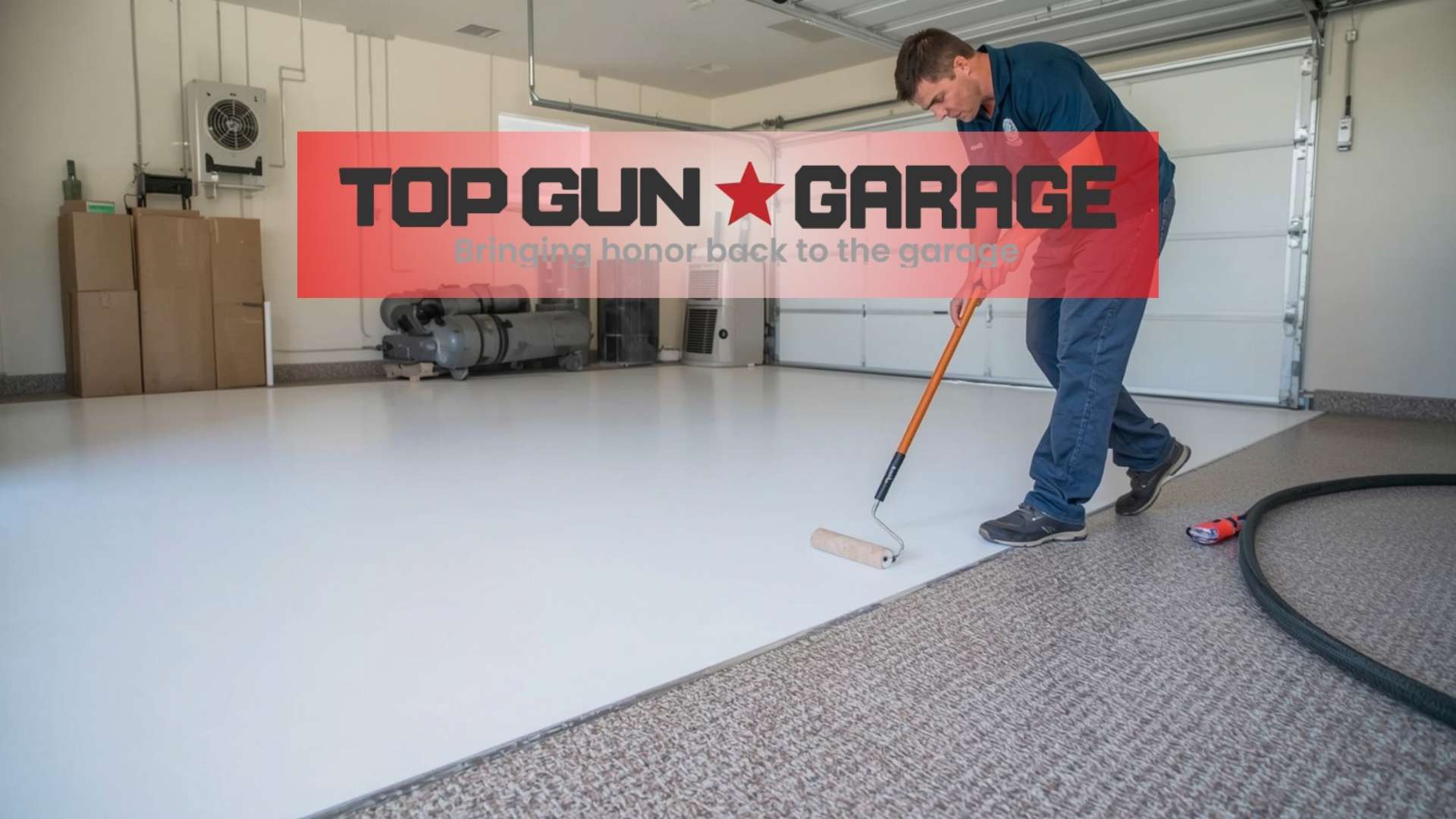
Advanced coating systems designed for Cape Coral’s climate incorporate 100% solids epoxy moisture vapor barriers as the foundational layer. These specialized primers contain moisture-blocking additives that penetrate deep into concrete pores and create a vapor-retardant membrane capable of withstanding up to 16 pounds of moisture pressure per 1,000 square feet. This effectively doubles or triples the moisture tolerance compared to standard epoxy basecoats, providing the protection Cape Coral slabs require.
Professional installers apply moisture barrier systems immediately after diamond grinding, while concrete pores remain open and receptive to deep penetration. The saline-based additives in these barriers chemically react with concrete calcium hydroxide, forming crystalline structures that physically block water molecule movement while allowing the concrete to “breathe” at controlled rates. This prevents the dangerous pressure buildup that causes coating delamination while maintaining concrete structural integrity.
Cape Coral garage owners should verify that contractors include moisture vapor barriers in their proposals, not just standard primer coats. The cost difference—typically $1-2 per square foot—represents genuine value when it prevents a $3,000-5,000 coating failure and replacement expense within two years.
Surface Preparation Critical for Humid Climates
Proper surface preparation becomes even more critical in Cape Coral’s humid environment because coating adhesion must overcome persistent moisture pressure. Professional installers use industrial diamond grinders rather than weak acid etching to mechanically abrade the concrete surface, opening pores and removing any existing sealers, contaminants, or laitance that would compromise bond strength. This preparation process creates the surface profile needed for moisture barrier and coating penetration.
DIY acid etching kits sold at home improvement stores cannot achieve the aggressive profile required for Cape Coral conditions. These chemical treatments barely scratch the concrete surface and leave residues that actually prevent proper coating adhesion. Diamond grinding, by contrast, mechanically removes the top concrete layer and exposes fresh aggregate, creating millions of anchor points for the moisture barrier to grip.
Timing also matters—Cape Coral’s humidity means concrete surfaces can absorb airborne moisture within hours of grinding. Professional contractors apply moisture barriers and basecoats the same day as surface preparation to ensure optimal conditions. Multi-day delays between grinding and coating allow moisture reabsorption that compromises the entire system.
Polyurea Systems Outperform Epoxy in Humidity
Polyurea and polyaspartic coating systems represent a superior alternative to traditional epoxy for Cape Coral garages, specifically engineered to handle high-humidity environments. Unlike epoxy which sits on the concrete surface, polyurea basecoats penetrate deep into concrete pores and chemically fuse with the slab itself, creating a bond that withstands the hydrostatic pressure from moisture vapor transmission. This molecular-level adhesion prevents the lifting and peeling that plagues surface-bonded epoxy systems.
The flexibility of polyurea chemistry provides additional moisture resistance by allowing slight substrate movement as concrete expands and contracts with temperature and moisture changes. Rigid epoxy develops microcracks during these cycles, and those cracks become pathways for accelerated moisture intrusion and coating failure. Polyurea’s elastomeric properties maintain a continuous seal even as Cape Coral’s daily temperature swings cause concrete dimensional changes.
Installation advantages also favor polyurea in humid conditions—these systems cure independently of ambient humidity levels, eliminating the curing problems that affect epoxy during Cape Coral’s wet season. Epoxy requires specific temperature and humidity windows for proper hardening, often forcing installation delays or resulting in weak, tacky surfaces when conditions aren’t optimal. Polyurea achieves full cure within hours regardless of humidity, allowing same-day installation and faster return to service.
Seasonal Considerations for Cape Coral Installations
Cape Coral’s dry season (November through April) offers the most favorable conditions for garage floor coating projects, with lower humidity levels and reduced rainfall minimizing moisture-related complications. Concrete slabs contain less absorbed moisture during these months, and vapor transmission rates drop closer to coating tolerance thresholds. Professional contractors schedule most installations during this window to maximize coating performance and minimize moisture mitigation requirements.
Summer installations (May through October) require enhanced moisture management protocols as humidity peaks and afternoon thunderstorms saturate the ground beneath garage slabs. Contractors must use calcium chloride testing rather than relying on plastic sheet tests, as ambient humidity can produce false readings. Moisture vapor barriers become mandatory rather than optional during wet season projects, and installation timing must account for recent rainfall that increases concrete moisture content.
Cape Coral homeowners planning coating projects should avoid scheduling within 72 hours of heavy rainfall, as this saturates concrete and creates vapor emission rates that exceed even advanced moisture barrier capabilities. Patient timing and proper season selection contribute significantly to long-term coating success in Southwest Florida’s challenging climate.
Common Signs of Pre-Existing Moisture Problems
Before investing in garage floor coatings, Cape Coral homeowners should inspect for moisture damage indicators that signal severe vapor transmission issues requiring remediation. White powdery efflorescence on concrete surfaces indicates water carrying dissolved salts upward through the slab—a clear sign of active moisture movement. This crystalline deposit not only reveals moisture problems but also compromises coating adhesion by creating a weak, chalky layer between concrete and coating.
Persistent dampness or “sweating” concrete, especially during summer months, demonstrates that moisture vapor is reaching the surface faster than it can evaporate into the garage air. Homeowners who run dehumidifiers continuously yet struggle to maintain comfortable humidity levels likely have significant moisture transmission through their garage slab. Metal tools and equipment that rust quickly despite indoor storage further confirm excessive moisture in the garage environment.
Previous coating failures—peeling paint, bubbling epoxy, or delaminated floor tiles—provide the clearest evidence that moisture issues must be addressed before new coating installation. Cape Coral garages with history of coating problems require professional moisture testing and mitigation rather than simply recoating over failed materials.
Long-Term Maintenance in Humid Environments
Cape Coral garage floors with properly installed moisture barriers and humidity-resistant coatings still benefit from maintenance practices that reduce moisture stress. Ensuring adequate ventilation through garage door operation or exhaust fans helps moisture escape rather than accumulating against the coating surface. Running a dehumidifier during extreme humidity periods further reduces ambient moisture that can penetrate through expansion joints or perimeter gaps.
Regular cleaning with pH-neutral solutions preserves coating integrity while removing contaminants that could trap moisture against the surface. Cape Coral’s coastal proximity means salt-laden air deposits on garage floors, and these hygroscopic salts attract additional moisture if not cleaned periodically. Quarterly deep cleaning prevents this moisture-attracting buildup.
Annual professional inspections identify early signs of moisture-related stress before they escalate into coating failures. Small edge lifting or minor bubbling can be addressed through spot repairs that prevent complete system failure, saving thousands in replacement costs. Proactive maintenance extends coating lifespan from the typical 10-12 years to 15-20 years in Cape Coral’s challenging environment.
Cost Implications of Moisture Mitigation
Adding moisture vapor barriers and enhanced surface preparation increases initial coating costs by approximately $2-3 per square foot compared to basic epoxy applications. A standard 400-square-foot two-car garage might see project costs rise from $1,600-2,000 to $2,400-3,200 when proper moisture management is included. However, this investment prevents the $3,000-5,000 expense of complete coating removal and reinstallation after premature failure.
Cape Coral homeowners evaluating garage coating options should calculate total cost of ownership over 15 years rather than focusing solely on initial expense. A $2,800 polyurea system with moisture barriers that lasts 15 years costs $187 annually, while a $1,800 basic epoxy requiring replacement after 3 years totals $9,000 over the same period—$600 per year. The math consistently favors upfront investment in moisture-resistant systems for Southwest Florida applications.
Professional contractors who include moisture testing, vapor barriers, and climate-appropriate coating selection demonstrate expertise worth the premium pricing. Bargain installations that skip these critical steps inevitably fail in Cape Coral’s humid environment, regardless of surface coating quality.
Choosing the Right Coating System
Cape Coral garage owners should prioritize coating systems specifically engineered for high-humidity, high-moisture environments rather than generic products. Polyurea basecoats with polyaspartic topcoats represent the gold standard for Southwest Florida applications, offering superior moisture resistance, flexibility, and UV stability compared to traditional epoxy. These advanced systems cost 30-40% more than basic epoxy but deliver 3-4 times longer service life in humid climates.
If budget constraints require epoxy selection, insist on 100% solids formulations with moisture vapor barrier primers specifically rated for high MVT environments. Water-based or low-solids epoxy kits sold at retail stores lack the chemical resistance and adhesion strength needed for Cape Coral conditions and should be avoided entirely. Professional-grade products applied by experienced contractors deliver vastly superior results compared to DIY approaches in challenging climates.
Warranty coverage provides valuable insight into coating system quality—manufacturers and contractors confident in their moisture management offer 10-15 year guarantees, while basic systems rarely exceed 2-5 years. Cape Coral homeowners should verify that warranties explicitly cover moisture-related failures, not just manufacturing defects.
Frequently Asked Questions
How do I know if my Cape Coral garage has moisture problems? Conduct a plastic sheet test: tape a 2×2 foot plastic square to dry concrete for 48 hours and check for condensation. Visible moisture, persistent dampness, efflorescence, or rapidly rusting tools indicate moisture issues requiring professional testing before coating.
Can I use DIY epoxy kits from home improvement stores in Cape Coral? No—Cape Coral’s 75-80% humidity exceeds the moisture tolerance of retail epoxy kits. These products lack the vapor barriers and professional-grade adhesion needed for Southwest Florida conditions and typically fail within 12-24 months of application.
What is moisture vapor transmission and why does it matter? Moisture vapor transmission (MVT) is the upward movement of water molecules through porous concrete from saturated ground below. Cape Coral’s high water table creates MVT rates of 12-16 pounds per 1,000 square feet, exceeding standard epoxy tolerance and causing coating delamination.
When is the best time to install garage floor coatings in Cape Coral? November through April offers optimal conditions with lower humidity and reduced rainfall. Summer installations require enhanced moisture barriers and testing, with 72-hour delays after heavy rain to allow concrete drying.
How much does moisture barrier treatment cost? Moisture vapor barriers add $1-2 per square foot to coating costs, increasing a typical 400-square-foot garage from $1,600-2,000 to $2,400-3,200. This prevents $3,000-5,000 replacement expenses from premature coating failure.
Will a dehumidifier solve my garage moisture problems? Dehumidifiers reduce ambient humidity but cannot stop moisture vapor transmission through concrete slabs. They help maintain coating longevity but don’t replace the need for proper moisture barriers during installation.
Why did my previous garage floor coating fail? Most Cape Coral coating failures result from inadequate moisture testing, missing vapor barriers, or inappropriate coating selection for humid climates. Standard epoxy cannot withstand the region’s moisture vapor transmission rates without specialized preparation.
Is polyurea better than epoxy for Cape Coral garages? Yes—polyurea systems penetrate concrete pores and chemically bond to the slab, resisting moisture pressure that causes epoxy delamination. Polyurea also cures independently of humidity levels and offers superior flexibility for temperature-related concrete movement.
How long should garage floor coatings last in Cape Coral? With proper moisture barriers and climate-appropriate systems, expect 10-15 years from polyurea and 5-7 years from professional-grade epoxy. Basic epoxy without moisture mitigation typically fails within 2-3 years in Southwest Florida.
Can moisture problems be fixed after coating installation? Once coatings fail due to moisture, complete removal and reinstallation with proper vapor barriers is required. Attempting to coat over failed sections compounds the problem and wastes money on temporary fixes.
Conclusion
The humidity challenge facing Cape Coral garage owners demands respect and proper preparation before any coating application. Moisture vapor transmission, driven by the region’s 75-80% humidity and saturated ground conditions, creates upward pressure that destroys improperly installed coatings within 18-24 months. Success requires mandatory moisture testing, professional-grade vapor barriers, appropriate coating system selection, and expert installation timing. Homeowners who invest in moisture-resistant polyurea systems or properly prepared epoxy with vapor barriers enjoy 10-15 years of durable, attractive garage floors, while those who skip these critical steps face repeated coating failures and exponentially higher long-term costs.
Ready to solve your Cape Coral garage humidity problems with a coating that lasts? Top Gun Garage specializes in moisture-resistant flooring systems engineered for Southwest Florida’s demanding climate. Our comprehensive moisture testing, vapor barrier application, and climate-appropriate coating selection ensure your investment delivers 15+ years of performance. Request your free estimation today and discover why Cape Coral, Naples, and Fort Myers homeowners trust our expertise for garage flooring that withstands humidity challenges other contractors can’t solve.