



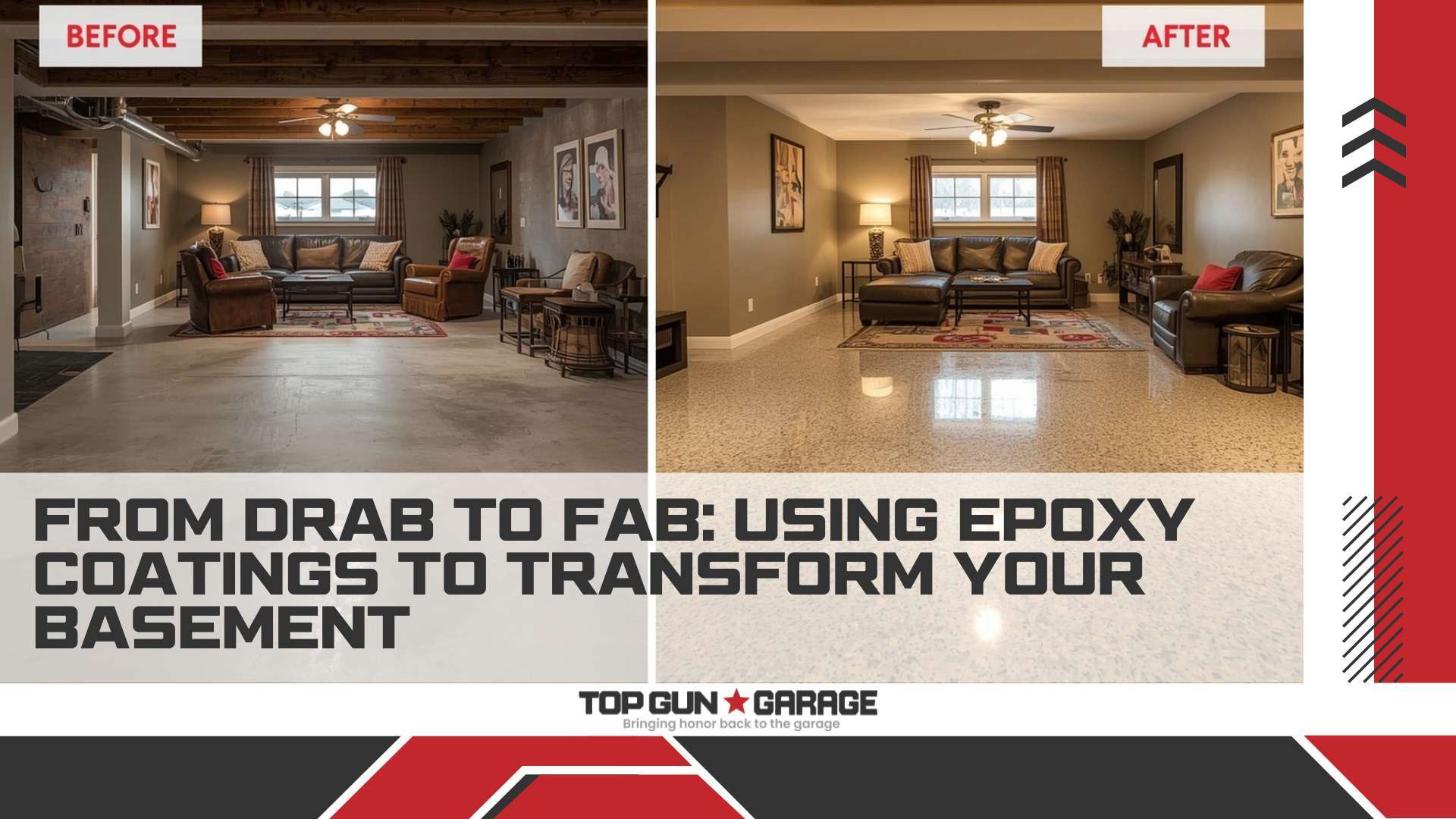
Your basement holds incredible potential, but if you’re like most homeowners, you’re probably looking down at a cold, gray concrete floor that makes the space feel more like a storage dungeon than a livable area. The good news is that transforming your basement from drab to fab doesn’t require a complete renovation or breaking the bank. With the right flooring solution, you can completely revolutionize this underutilized space and add significant value to your home.
Epoxy flooring for basements has emerged as one of the most effective and affordable ways to breathe new life into these often-neglected areas. Unlike traditional flooring options that can be problematic in basement environments, epoxy coatings are specifically designed to handle the unique challenges that basements present, including moisture issues, temperature fluctuations, and heavy foot traffic.
The transformation that epoxy flooring can provide goes far beyond simple aesthetics. While the visual impact is undeniably dramatic – turning plain concrete into a sleek, professional-looking surface – the practical benefits are equally impressive. Epoxy creates a seamless, non-porous barrier that protects your concrete substrate while providing a surface that’s incredibly easy to clean and maintain.
Whether you’re planning to convert your basement into a family recreation room, home office, workshop, or rental unit, the flooring you choose will set the foundation for everything else. Poor flooring choices can make even the most well-designed basement feel cold and unwelcoming, while the right flooring can make the space feel warm, inviting, and truly livable.
What makes epoxy particularly appealing for basement applications is its versatility in both function and design. Modern epoxy systems come in countless colors, patterns, and finishes, allowing you to create anything from a sophisticated solid color that mimics polished stone to decorative flakes that add texture and visual interest. You can even incorporate metallic pigments for a truly unique, artistic floor that becomes a conversation piece.
The installation process, while requiring proper preparation and expertise, can typically be completed in just a few days, making it one of the fastest ways to achieve a dramatic basement transformation. Unlike other flooring options that might require extensive subfloor preparation or ongoing maintenance, epoxy works directly with your existing concrete and, once cured, provides decades of reliable performance with minimal upkeep.
Key Takeaways
For additional context, see this comprehensive guide.
-
Moisture Resistance: Epoxy flooring for basements provides superior moisture protection compared to traditional flooring options, creating a waterproof barrier that prevents water damage and mold growth while maintaining the integrity of your concrete substrate.
-
Cost-Effective Transformation: Epoxy coatings deliver maximum visual impact for your investment, typically costing significantly less than tile, hardwood, or carpet while providing a more durable and long-lasting solution that won’t need replacement for decades.
-
Design Versatility: Modern epoxy systems offer unlimited design possibilities, from solid colors and decorative flakes to metallic finishes and custom patterns, allowing you to create a unique look that matches your basement’s intended purpose and your personal style.
-
Enhanced Safety: Properly installed epoxy flooring eliminates the dust and debris associated with bare concrete while providing better traction and slip resistance, especially important in basement environments where moisture can create safety hazards.
-
Increased Property Value: A professionally finished basement floor significantly increases your home’s marketable square footage and overall value, making epoxy flooring an investment that pays dividends whether you’re staying in your home or planning to sell.
-
Low Maintenance Requirements: Unlike carpet that can harbor allergens or hardwood that requires regular refinishing, epoxy floors need only basic cleaning with standard household cleaners, saving you time and money on ongoing maintenance.
-
Temperature Regulation: Epoxy coatings help insulate your basement floor, making the space more comfortable year-round while potentially reducing heating and cooling costs for the entire home.
Understanding Basement Flooring Challenges
Basements present unique environmental conditions that make flooring selection critical to long-term success. The below-grade nature of basement spaces creates a perfect storm of challenges that traditional flooring materials often can’t handle effectively. Understanding these challenges is essential before selecting any flooring solution, as the wrong choice can lead to expensive problems down the road.
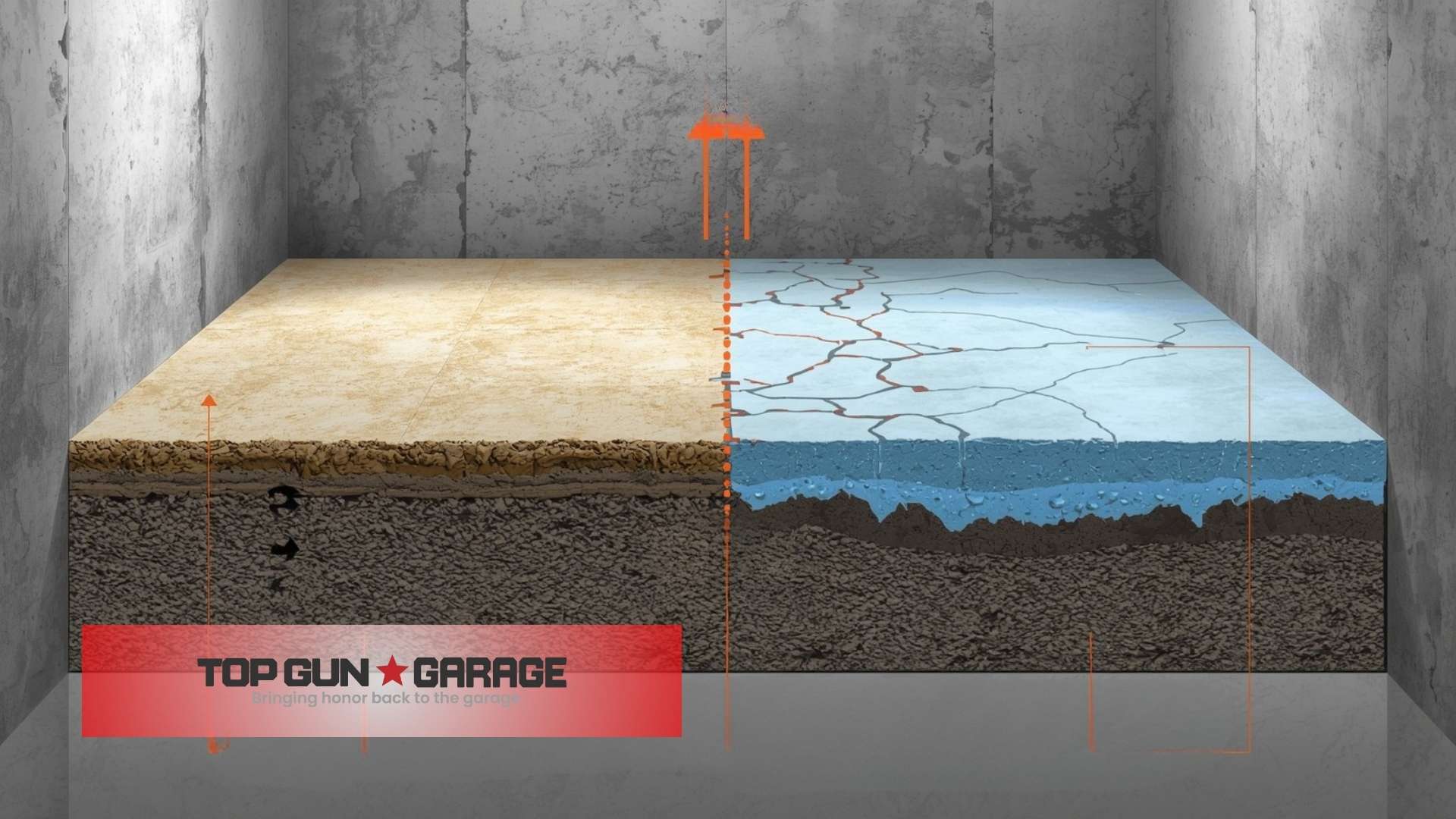
Moisture is the primary enemy of basement floors, and it comes from multiple sources. Ground moisture can seep through concrete foundations, especially in older homes where vapor barriers weren’t standard construction practice. Understanding how moisture vapor transmission affects flooring helps prevent installation failures. Humidity levels in basements typically run higher than in above-ground spaces, creating condensation issues that can damage flooring materials. Additionally, basements are prone to occasional flooding from plumbing issues, heavy rains, or groundwater infiltration.
Temperature fluctuations present another significant challenge. Basements experience more dramatic temperature swings than other areas of your home, expanding and contracting with seasonal changes. Understanding how epoxy floors affect temperature reveals thermal performance benefits. This movement can cause traditional flooring materials to crack, buckle, or separate at seams. Materials like hardwood and laminate are particularly susceptible to these issues, often requiring costly repairs or complete replacement.
The concrete substrate itself poses challenges. Bare concrete is porous, allowing moisture to wick up from below while collecting dust, dirt, and stains on the surface. Learning about how floor coatings reduce concrete dust highlights health benefits. The alkaline nature of concrete can also break down certain adhesives and flooring materials over time. Additionally, concrete floors are notoriously cold and uncomfortable underfoot, making basements feel unwelcoming regardless of how well they’re decorated.
Epoxy flooring for basements addresses each of these challenges systematically. Understanding how epoxy bonds at the molecular level reveals why it works so effectively. The chemical bond that epoxy forms with concrete creates a moisture-impervious barrier that prevents water infiltration while remaining flexible enough to accommodate the natural movement of the substrate. This flexibility, combined with the seamless nature of epoxy installation, eliminates the weak points where traditional flooring systems typically fail.
The Science Behind Epoxy Basement Transformations
The remarkable transformation that epoxy provides isn’t just cosmetic – it’s the result of advanced polymer chemistry that creates a fundamentally different flooring system. Understanding how epoxy works at the molecular level helps explain why it’s so effective in basement environments and why the results are so dramatically different from simply painting or covering concrete floors.
Epoxy flooring systems consist of two main components: epoxy resin and a polyamine hardener. When these components are mixed, they undergo a chemical reaction called cross-linking, where the molecules form strong covalent bonds that create a three-dimensional polymer network. This isn’t just a coating sitting on top of your concrete – it’s a chemical transformation that penetrates into the concrete pores and becomes an integral part of the floor structure.
The penetration aspect is crucial for basement applications. Quality epoxy systems don’t just sit on the surface where they can be prone to peeling or chipping. Understanding why some garage coatings peel reveals adhesion principles. Instead, they soak into the concrete substrate, filling microscopic pores and creating mechanical bonds that make the epoxy and concrete function as a single unit. This integration is what gives epoxy floors their legendary durability and resistance to moisture infiltration.
The curing process is equally important to understand. Unlike paint that simply dries through solvent evaporation, epoxy undergoes a chemical cure that continues for days after application. During this time, the polymer chains continue to cross-link, creating an increasingly dense and durable surface. The final result is a floor that’s actually harder and more durable than the concrete substrate beneath it.
Modern epoxy formulations for basement applications include specialized additives that enhance performance in challenging environments. Moisture-tolerant primers allow installation even when concrete hasn’t completely dried, while flexible additives help the system accommodate substrate movement without cracking. Understanding what determines chemical resistance ratings helps evaluate system capabilities. UV-stable pigments prevent color fading, and antimicrobial additives can be incorporated to prevent mold and mildew growth.
The benefits of epoxy flooring become even more apparent when you consider the thermal properties. Epoxy has excellent thermal conductivity, which means it efficiently transfers heat from radiant heating systems while remaining comfortable underfoot even without supplemental heating. This thermal efficiency can significantly improve the comfort level of your basement space while potentially reducing heating costs.
Professional installation techniques maximize these scientific advantages. Proper surface preparation, including concrete profiling and moisture testing, ensures optimal adhesion. Understanding what concrete surface profile is needed prevents installation errors. Multi-coat systems build thickness gradually, allowing each layer to cure properly while creating depth and richness in the final appearance. The result is a flooring system that leverages advanced materials science to solve the fundamental problems that plague basement spaces.
Design Options and Aesthetic Possibilities
The design possibilities with epoxy flooring for basements are virtually limitless, allowing you to create a space that truly reflects your vision and intended use. Gone are the days when epoxy meant only industrial gray floors – today’s systems offer sophisticated color palettes, textures, and effects that can complement any design aesthetic from ultra-modern to rustic traditional.
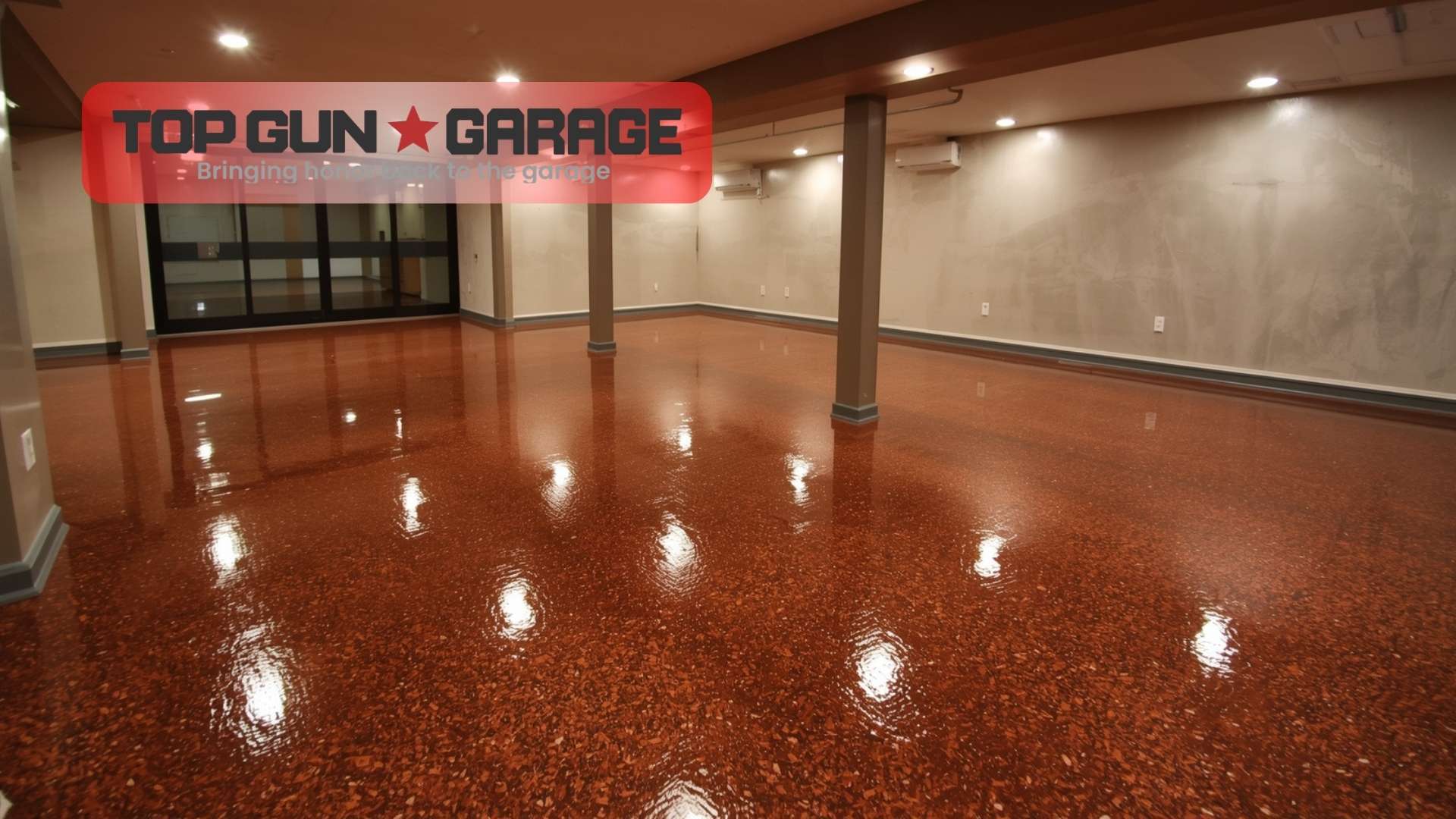
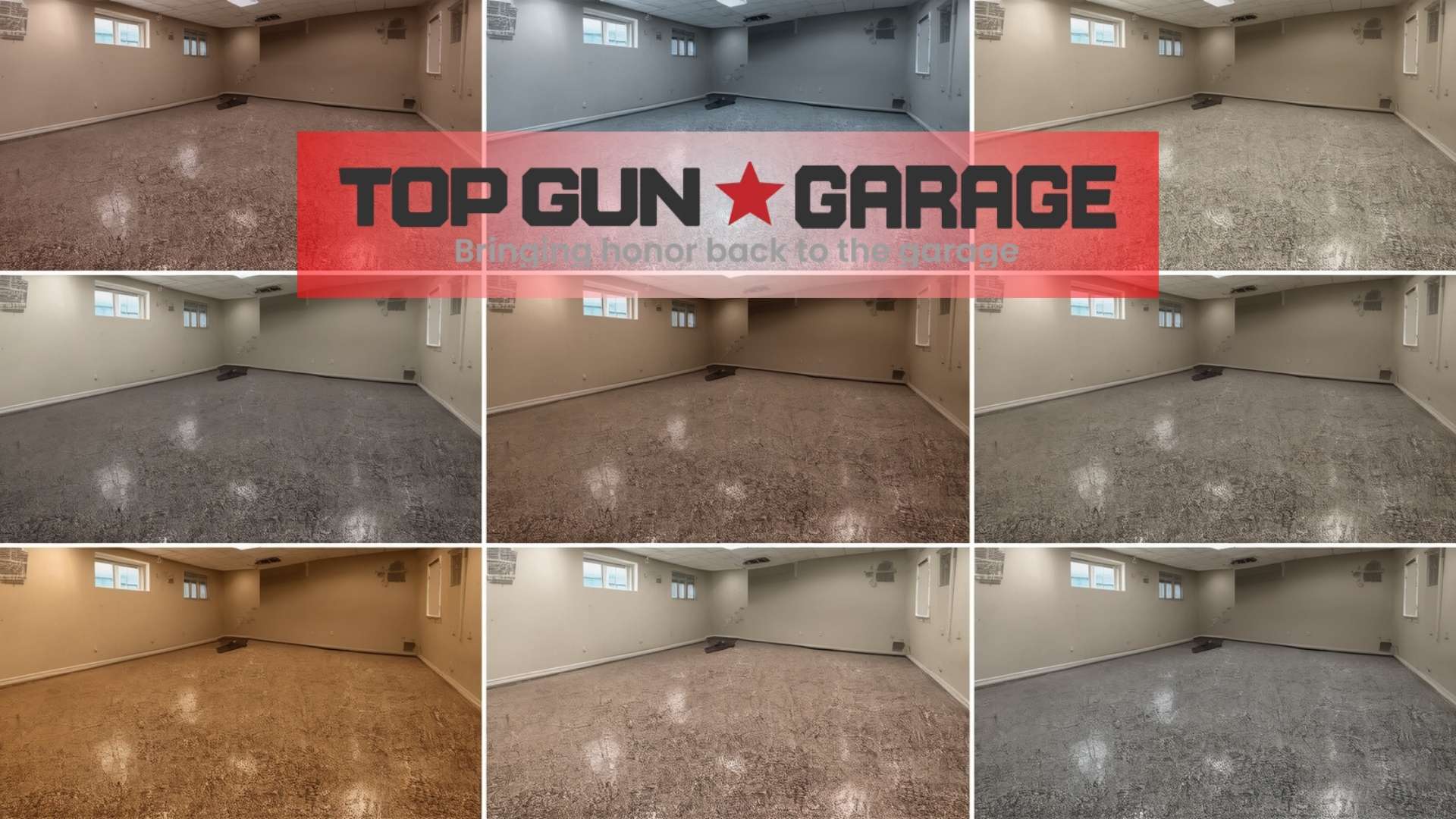
Solid color systems provide the foundation for most epoxy installations and offer clean, sophisticated looks that work well in any basement application. These systems can mimic the appearance of polished stone, ceramic tile, or even hardwood, depending on the color and finish selected. Exploring various garage floor color ideas provides design inspiration. Popular basement colors include warm earth tones that make the space feel cozy and inviting, cool grays that provide a modern industrial aesthetic, and rich blues or greens that add personality without being overwhelming.
Decorative flake systems add visual interest and practical benefits to your basement floor. These colored vinyl or acrylic chips are broadcast into the wet epoxy, creating texture that improves slip resistance while adding depth and movement to the floor’s appearance. Learning about modern epoxy flake flooring designs reveals contemporary options. Flake systems can be subtle, using chips that closely match the base color, or dramatic, incorporating contrasting colors that create dynamic visual effects. The size and density of flakes can be customized to achieve exactly the look you want.
Metallic epoxy systems represent the cutting edge of decorative flooring, creating unique, artistic floors that are truly one-of-a-kind. Understanding benefits of metallic epoxy reveals their visual appeal. These systems use special metallic pigments that create flowing, organic patterns reminiscent of natural stone, flowing water, or abstract art. The three-dimensional appearance changes as you move through the space, creating a dynamic floor that serves as a stunning focal point for your basement transformation.
Custom graphics and logos can be incorporated into epoxy systems, making them perfect for basement workshops, home gyms, or entertainment areas. Whether you want to include your favorite sports team’s logo, create designated zones for different activities, or incorporate geometric patterns that define spaces, skilled installers can create custom designs that make your basement truly unique.
The finish options are equally important to the overall aesthetic. High-gloss finishes create dramatic light reflection that can make basement spaces appear larger and brighter, while satin finishes provide a more subtle, sophisticated appearance. Understanding epoxy floor finishes helps select appropriate options. Matte finishes offer a contemporary look that hides minor imperfections while providing excellent slip resistance. Each finish level affects both the appearance and practical characteristics of your floor.
When exploring design options, it’s helpful to learn more about this process and how different aesthetic choices can impact the functionality and longevity of your installation. Professional installers can provide samples and mock-ups that help you visualize how different design options will look in your specific space and lighting conditions.
Installation Process and Professional Considerations
The installation of epoxy flooring for basements is a precise process that requires expertise, proper equipment, and attention to detail. While the concept might seem straightforward, the reality is that successful epoxy installation depends on numerous factors, from substrate preparation to environmental conditions during application. Understanding this process helps homeowners appreciate why professional installation is typically the best choice for achieving optimal results.
Surface preparation is absolutely critical and often represents the most time-consuming part of the installation process. The concrete must be properly cleaned, with all oils, sealers, paints, and contaminants completely removed. Understanding what to do before epoxy flooring ensures proper preparation. This typically involves mechanical preparation such as diamond grinding or shot blasting, which opens the concrete pores and creates the proper surface profile for maximum adhesion. Any cracks or imperfections must be repaired using appropriate concrete patching compounds.
Moisture testing is particularly important in basement applications. Professional installers use calcium chloride tests or relative humidity probes to measure moisture levels in the concrete substrate. Understanding why concrete moisture matters prevents adhesion failures. If moisture levels are too high, the installation may need to be delayed, or moisture-tolerant primer systems may be required. Rushing this step can lead to adhesion failures and costly repairs down the road.
The actual epoxy application involves multiple steps, each with specific timing requirements. Primer application ensures proper adhesion between the concrete and epoxy system. Learning about primer types and applications ensures optimal results. The base coat provides the foundation color and primary protection, while subsequent coats build thickness and durability. If decorative elements like flakes or metallics are being incorporated, they must be applied at precisely the right time during the curing process.
Environmental conditions during installation are crucial. Temperature and humidity must be within specified ranges, and the concrete temperature must be at least 5 degrees above the dew point to prevent moisture condensation during curing. Understanding how proper ventilation affects installation ensures ideal conditions. Professional installers monitor these conditions continuously and may use dehumidifiers, heaters, or fans to maintain optimal conditions throughout the installation process.
Quality control measures throughout the installation ensure long-term performance. Film thickness gauges verify that adequate material has been applied, while adhesion testing confirms proper bonding. Understanding why installation sequences can’t be rushed prevents application errors. Professional installers also know how to identify and address potential issues before they become problems, such as outgassing from the concrete or contamination that could affect adhesion.
The curing process requires patience and proper conditions. While epoxy floors may be walkable within 24 hours, full cure and maximum durability develop over several days. During this time, the space must be protected from contamination, extreme temperatures, and heavy loads. Professional installers provide detailed care instructions and timelines for returning the space to full use.
Choosing the right installation professional is crucial for success. Look for contractors with specific experience in basement applications, proper licensing and insurance, and a portfolio of successful projects. They should be willing to discuss the technical aspects of your specific situation and provide detailed proposals that address potential challenges unique to your basement environment.
Long-term Benefits and Return on Investment
The decision to install epoxy flooring in your basement represents an investment that continues to pay dividends for decades. Unlike many home improvement projects that provide primarily aesthetic benefits, epoxy flooring delivers tangible returns through reduced maintenance costs, increased property value, and enhanced functionality of your basement space.
The durability of properly installed epoxy flooring is exceptional, with many systems lasting 20-30 years or more with minimal maintenance. Understanding how long epoxy floors last sets realistic expectations. This longevity compares favorably to other flooring options that may require replacement every 5-10 years. Carpet in basements is particularly problematic, often needing replacement due to moisture damage, odors, or wear patterns. Tile installations can suffer from grout deterioration and individual tile failures that require ongoing repairs.
Maintenance costs for epoxy floors are minimal compared to alternatives. The seamless, non-porous surface resists stains and doesn’t harbor bacteria, allergens, or odors. Regular cleaning requires only basic mopping with standard household cleaners – no special treatments, waxing, or professional cleaning services. Implementing seasonal maintenance routines extends lifespan significantly. This simplicity translates to significant savings over the life of the floor.
The impact on property value is substantial, particularly because epoxy flooring effectively converts your basement from unfinished space to finished living area. Understanding if epoxy flooring increases home value helps justify the investment. Real estate professionals consistently note that finished basements add significant value to homes, and the flooring is often the first thing potential buyers notice. A professionally finished epoxy floor suggests that the space is truly livable and has been properly maintained.
Energy efficiency improvements are an often-overlooked benefit. Epoxy flooring helps insulate basement floors, reducing heat loss and making the space more comfortable year-round. This improved comfort often allows homeowners to use their basements more extensively, effectively increasing their home’s functional square footage without the cost of an addition.
The health benefits are particularly important in basement environments. Unlike carpet or other porous flooring materials, epoxy doesn’t support mold or mildew growth, contributing to better indoor air quality. This is especially valuable for family members with allergies or respiratory sensitivities. The easy cleaning and lack of hiding places for dust and allergens make basement spaces much healthier environments.
Professional installation by experienced contractors like Top Gun Garage ensures that you realize the maximum return on your investment. Their expertise in basement applications means your flooring system will be properly designed and installed to provide decades of reliable performance, protecting your investment and maximizing the transformation of your space.
The versatility of epoxy flooring also protects your investment by adapting to changing needs. If you decide to repurpose your basement from a workshop to a family room, or from storage to a rental unit, the flooring will continue to perform excellently. This adaptability means you won’t need to factor flooring replacement into future renovation plans.
Frequently Asked Questions
How long does epoxy flooring last in basement environments? Properly installed epoxy flooring for basements typically lasts 20-30 years or more with minimal maintenance. The longevity depends on the quality of installation, the specific epoxy system used, and the level of traffic the floor receives. Professional-grade systems installed by experienced contractors generally provide the longest service life.
Can epoxy flooring be installed over existing basement floors? Epoxy can be installed over most existing concrete floors, but proper preparation is essential. Any existing coatings, sealers, or adhesive residues must be completely removed. Cracks and imperfections need repair, and the concrete must be properly profiled to ensure adequate adhesion. Some existing floors may require more extensive preparation than others.
Will epoxy flooring make my basement warmer? Yes, epoxy flooring provides better thermal properties than bare concrete, making basement floors more comfortable underfoot. The coating helps insulate the floor surface and works excellently with radiant heating systems if you choose to install them. Many homeowners notice an immediate improvement in comfort levels.
How do I maintain epoxy basement floors? Maintenance is simple and requires only regular sweeping or vacuuming to remove debris, followed by mopping with standard household cleaners. Avoid abrasive cleaners or tools that could scratch the surface. For detailed maintenance guidelines, our comprehensive guide provides specific recommendations for keeping your floors looking their best.
Can moisture damage epoxy flooring in basements? Quality epoxy systems are specifically designed to handle moisture challenges common in basements. The coating creates a moisture barrier that protects both the epoxy and the concrete substrate. However, proper installation and moisture testing are crucial to ensure long-term performance in high-moisture environments.
What design options are available for basement epoxy floors? Design options are virtually unlimited, including solid colors, decorative flakes, metallic finishes, and custom graphics. You can choose from hundreds of colors and create patterns that complement your basement’s intended use. Professional installers can provide samples and help you select options that work best for your space and lighting conditions.
How long does installation take for basement epoxy flooring? Installation typically takes 2-4 days, depending on the size of the space, the complexity of the design, and the condition of the existing concrete. This includes surface preparation, primer application, base coats, decorative elements if applicable, and topcoats. Additional time may be needed for curing before the space can be returned to full use.
Is epoxy flooring slip-resistant for basement applications? Modern epoxy systems can be formulated with slip-resistant additives or decorative flakes that improve traction. This is particularly important in basements where moisture might occasionally be present. Professional installers can recommend the appropriate level of slip resistance based on your specific needs and local building codes.
Conclusion
Transforming your basement from drab to fab with epoxy flooring represents one of the most impactful and cost-effective home improvements you can make. The combination of dramatic aesthetic improvement, practical functionality, and long-term value makes epoxy flooring for basements an investment that continues to pay dividends for decades.
The science behind epoxy technology ensures that your basement flooring will handle the unique challenges of below-grade environments while providing a beautiful, durable surface that enhances your home’s livability. From moisture resistance to design versatility, epoxy addresses every concern that makes basement flooring selection so critical to long-term success.
The transformation goes beyond just flooring – it’s about reimagining what your basement can become. Whether you’re creating a family recreation space, home office, workshop, or rental unit, the right flooring sets the foundation for everything else. Epoxy flooring provides that foundation while offering design flexibility that ensures your space reflects your personal style and functional needs.
Professional installation ensures that you realize the maximum potential of your investment. The expertise required for proper surface preparation, environmental control, and quality application makes working with experienced contractors essential for achieving optimal results. The peace of mind that comes with professional installation, combined with the long-term performance of quality epoxy systems, makes this investment decision straightforward.
Your basement holds tremendous potential, and epoxy flooring is the key to unlocking that potential. The combination of durability, beauty, and functionality that epoxy provides makes it possible to create basement spaces that rival any other area of your home in both comfort and appeal. The time to transform your basement from drab to fab is now – your future self will thank you for making this investment in your home’s value and your family’s quality of life.