



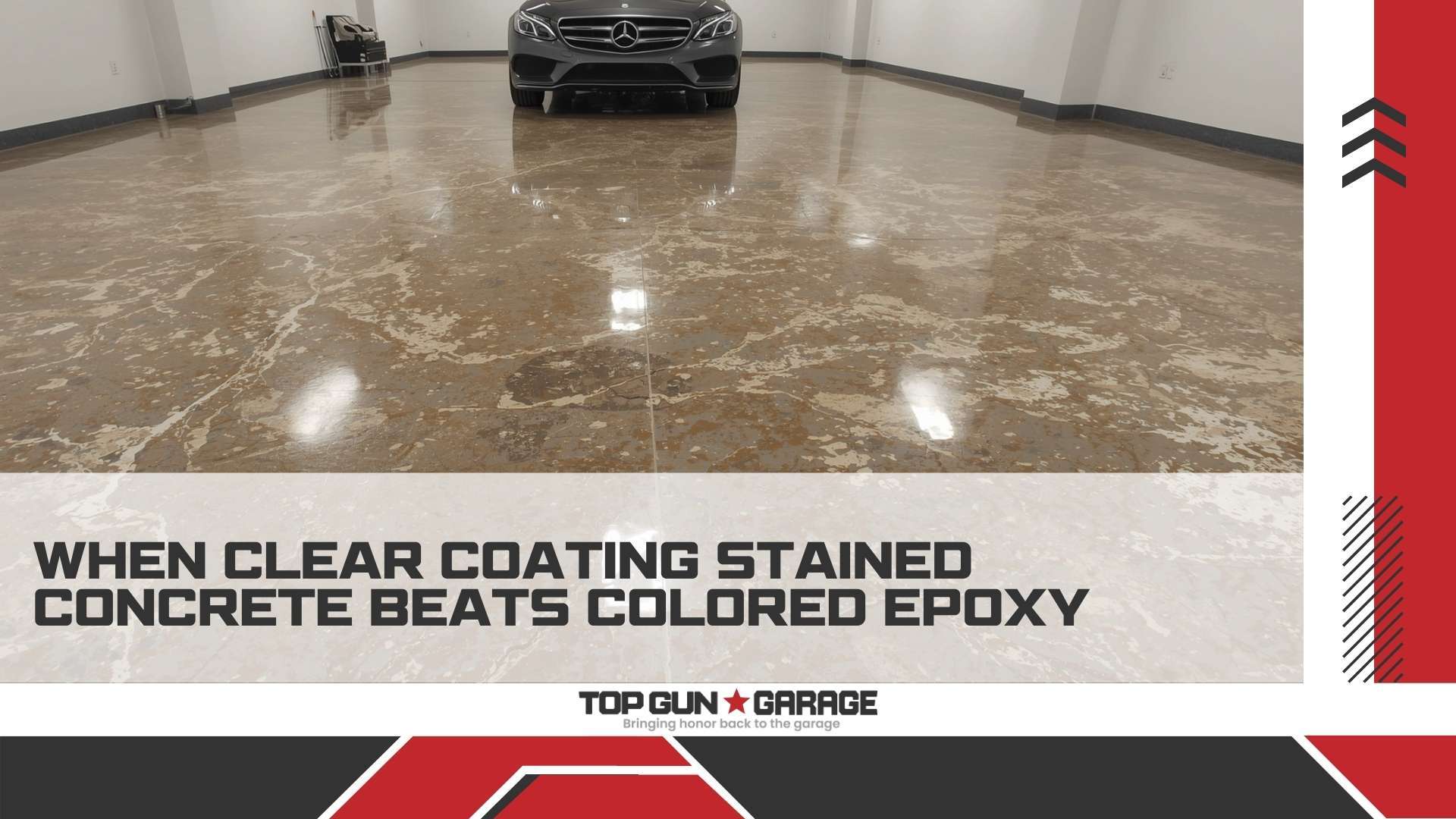
Choosing between clear coat vs colored epoxy garage floor finishes is one of the most important decisions homeowners face during a garage transformation. Both options protect concrete and enhance appearance, but they serve different aesthetic goals and perform differently under various conditions.
For Southwest Florida homeowners in Naples, Fort Myers, and surrounding areas, this decision carries extra weight. The region’s humidity, heat, and salt air affect how coatings perform over time. This guide explains when stained concrete with a clear topcoat is the better choice and when colored epoxy floor coating remains the preferred option.
Key Takeaways
- Clear coats preserve the natural character of concrete while adding protection
- Colored epoxy systems hide imperfections and create a uniform, customizable appearance
- Stained concrete with clear coat works well for concrete in good condition
- Epoxy and polyaspartic systems better suit damaged or stained concrete floors
- Climate conditions in Florida favor moisture-resistant coating systems
Understanding Clear Coat Over Stained Concrete
Staining concrete involves applying acid-based or water-based stains that penetrate the surface and react with the concrete’s minerals. The result is a translucent, variegated appearance with natural color variations. A clear sealer or topcoat then protects the stained surface while enhancing color depth.
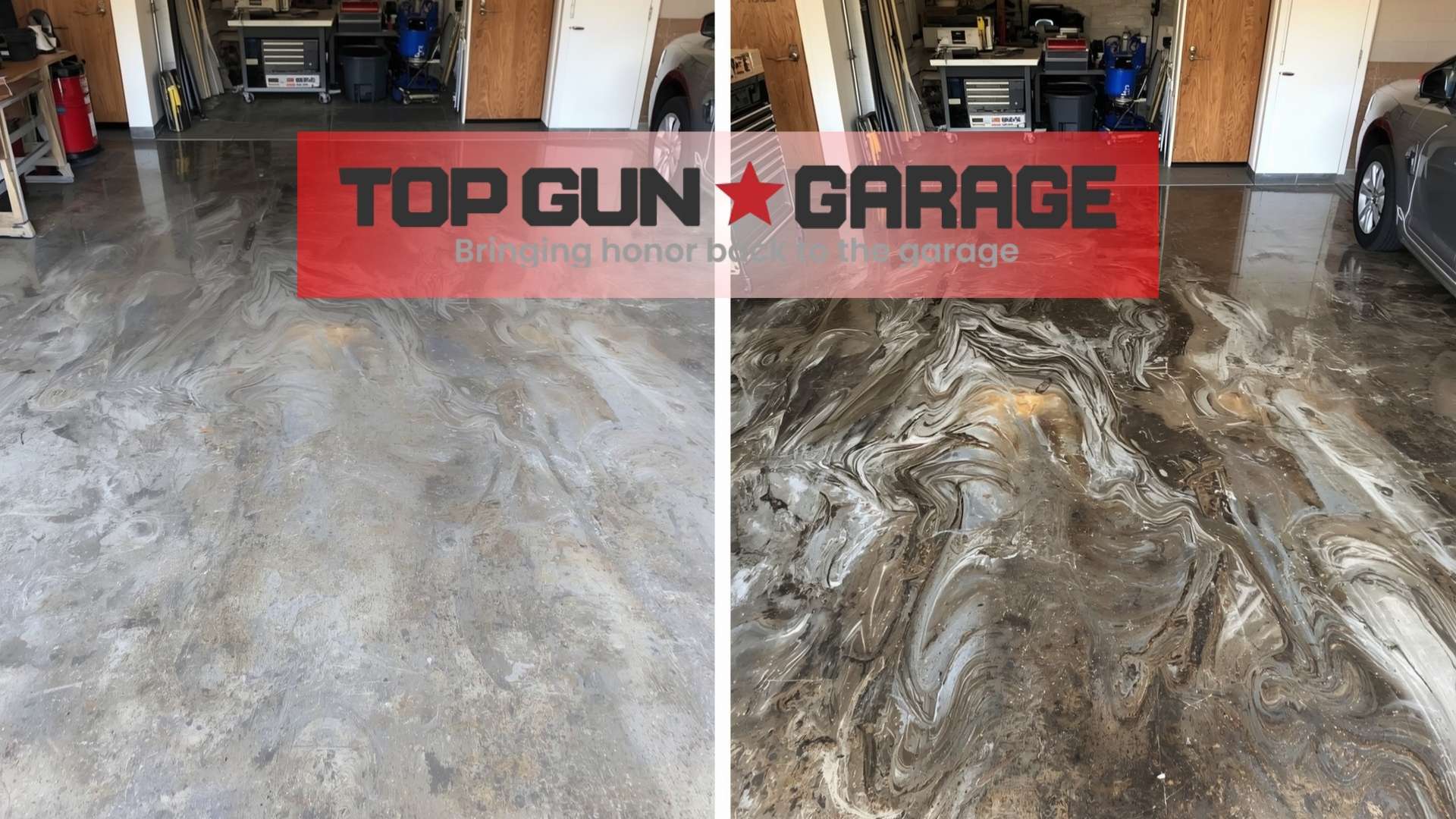
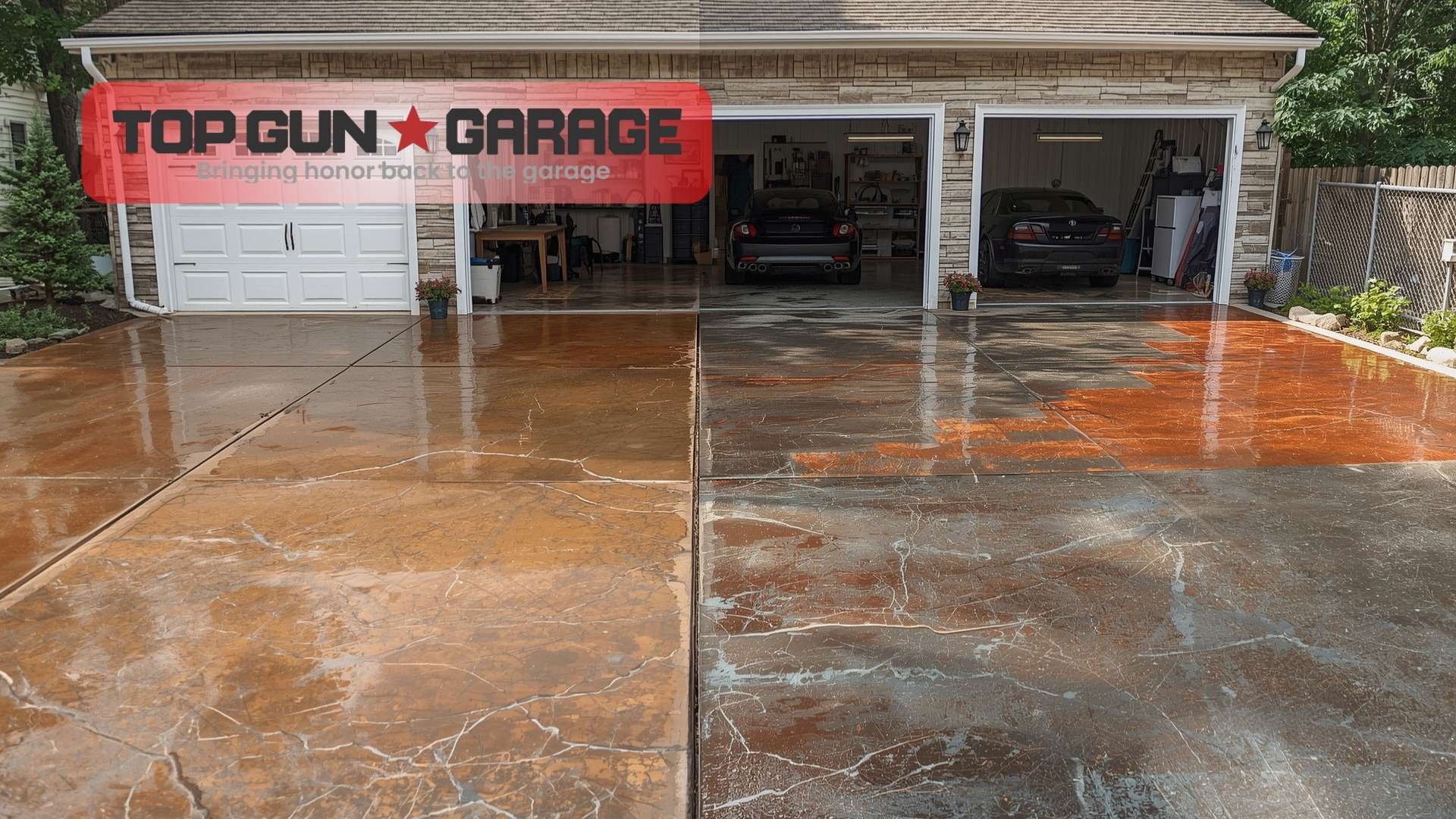
Acid stains create unique patterns through a chemical reaction with the lime in concrete. The metallic salts produce earthy tones including browns, tans, blue-greens, and terra cotta colors. No two acid-stained floors look identical because the reaction depends on the concrete’s composition and age.
Once stained, concrete requires a clear protective coating. The concrete staining process is incomplete without this final layer. Acrylic sealers provide affordable protection but require frequent reapplication. Polyurea and polyaspartic clear coats deliver superior performance for garage floors with better abrasion resistance and chemical protection.
When Clear Coat Makes Sense
Several situations favor choosing stained concrete with a clear topcoat over colored epoxy systems.
Good Concrete Condition: Clear coating works when your concrete slab has minimal cracks, spalling, or surface damage. The staining process does not hide imperfections since cracks and patches remain visible through the translucent stain.
Natural Aesthetic Preference: Homeowners who appreciate the natural look of concrete often prefer staining. Stained concrete reveals aggregate, subtle color variations, and the organic character of aged concrete. This aesthetic suits rustic, industrial, or contemporary design themes.
Lower Budget Requirements: Staining with a clear coat typically costs less than a full metallic epoxy flooring or flake system. Material costs are lower, and the application process requires fewer steps.
Easier Repairs: When damage occurs to a stained floor, repairs are simpler than with colored coatings. If the sealer gets scratched or worn, you can lightly sand the area and reapply clear coat without affecting the underlying stain.
When Colored Epoxy Beats Clear Coat
Colored epoxy and polyaspartic coating systems outperform clear coat over stained concrete in many situations.
Damaged or Imperfect Concrete: Colored coatings excel at hiding flaws. If your garage floor has cracks, patches, or oil stains, an epoxy garage floor system covers these issues completely. The opaque base coat creates a uniform surface.
Maximum Protection Required: Colored systems typically apply thicker than clear coats over stain. This added thickness provides better protection against impacts, abrasion, and chemical exposure. For garages used as workshops or commercial purposes, a full coating system makes more sense.
Customization Goals: If you want specific colors, patterns, or effects, colored coatings offer more options. Full flake systems, solid color epoxy floors, and metallic effects are possible with epoxy and polyaspartic products.
Moisture Concerns: Florida’s humidity creates moisture challenges for garage floors. According to the EPA’s guidelines on architectural coatings, coating selection should account for environmental conditions. Proper floor coating systems with moisture mitigation provide better long-term performance than thin sealers.
Performance Comparison
Understanding how these approaches perform helps make an informed decision.
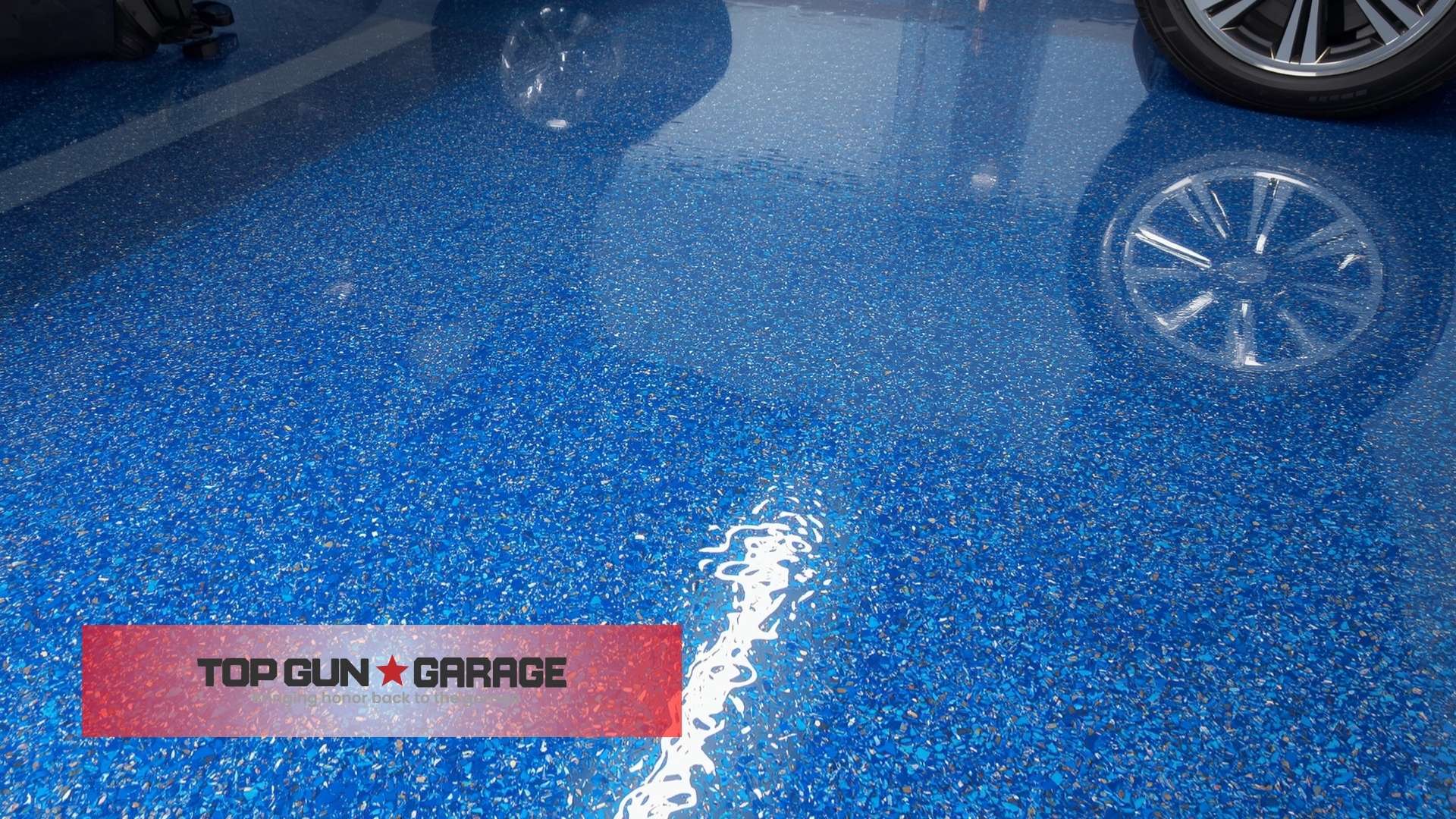
Durability: Both systems can last many years with proper installation. However, polyurea and polyaspartic topcoats over colored base coats generally outperform clear sealers in abrasion resistance. The full flake epoxy system handles heavy use better than most clear-coated stained floors.
Chemical Resistance: Colored epoxy and polyaspartic systems provide superior resistance to gasoline, oil, brake fluid, and other automotive chemicals. While high-quality polyurea clear coats resist most household chemicals, they may not match the protection of a complete commercial epoxy flooring system.
UV Stability: Modern polyaspartic clear coats and topcoats are UV stable and maintain clarity. Traditional epoxy clear coats may amber with sun exposure. Choose UV-stable products regardless of your approach.
Maintenance: Stained floors require periodic resealing every three to five years. Epoxy floor maintenance typically involves regular cleaning with longer intervals between top coat refresh.
Cost Comparison
Staining with a standard clear sealer typically costs $3 to $6 per square foot installed. Adding a high-performance polyurea clear coat increases this to $5 to $8 per square foot.
Complete colored epoxy or polyaspartic systems typically range from $6 to $12 per square foot installed. For a typical two-car garage of 400 to 500 square feet, expect to pay $1,500 to $3,500 for staining with a quality clear coat or $2,500 to $5,500 for a professional colored coating system. Get accurate pricing by requesting a free estimate from qualified installers.
Florida-Specific Considerations
Southwest Florida’s climate affects coating performance. High temperatures accelerate cure times and affect application windows. Professional installers understand how humidity and heat influence product performance.
Coastal properties in Naples, Marco Island, and Fort Myers experience salt air that can affect coatings. Quality garage coatings should include corrosion-resistant formulations. Garages in flood-prone areas benefit from waterproof coating systems that recover better than thin sealers.
Frequently Asked Questions
Can I apply clear coat over previously stained concrete? Yes, existing stained concrete can receive a new clear coat after cleaning and light preparation. The new sealer bonds to the existing surface and refreshes the appearance.
How long does stained concrete with clear coat last? With proper preparation and quality products, stained concrete with a polyurea clear coat can last 10 to 15 years. Resealing every three to five years extends life further.
Will clear coat make my garage floor slippery? High-gloss clear coats can be slippery when wet. Adding anti-slip additives or choosing a satin finish reduces slip risk without sacrificing appearance.
Does stained concrete show tire marks? Properly sealed stained concrete resists hot tire marks better than unsealed concrete. High-quality polyurea clear coats provide good resistance.
Is clear coat over stain good for a workshop garage? For light workshop use, yes. For heavy fabrication with welding and grinding, a colored polyaspartic floor system provides better protection.
Can I change from stained to epoxy later? Yes. Stained concrete can be coated with epoxy systems after proper preparation, including grinding to remove existing sealers.
What colors are available for concrete stain? Acid stains offer earthy tones: browns, tans, rusty reds, and blue-greens. Water-based stains provide a wider color range including grays and brighter colors.
Does stained concrete increase home value? Quality floor finishes enhance garage appeal and can increase home value. The impact depends on overall execution.
Sources
- U.S. Environmental Protection Agency: Architectural Coatings VOC Standards
- Florida Building Code: Flooring and Coating Standards
Make the Right Choice for Your Garage
Deciding between clear coat over stained concrete and colored epoxy depends on your concrete’s condition, your aesthetic preferences, and how you use your garage. For floors in good condition where you want to preserve natural character, staining with a high-quality clear topcoat delivers beautiful results. For damaged floors, maximum protection requirements, or custom design goals, a professional colored coating system serves better.
Top Gun Garage helps Southwest Florida homeowners choose and install the right garage floor finish for their needs. Whether you prefer stained concrete or our polyurea and polyaspartic coating systems, we deliver professional results backed by personal service.