



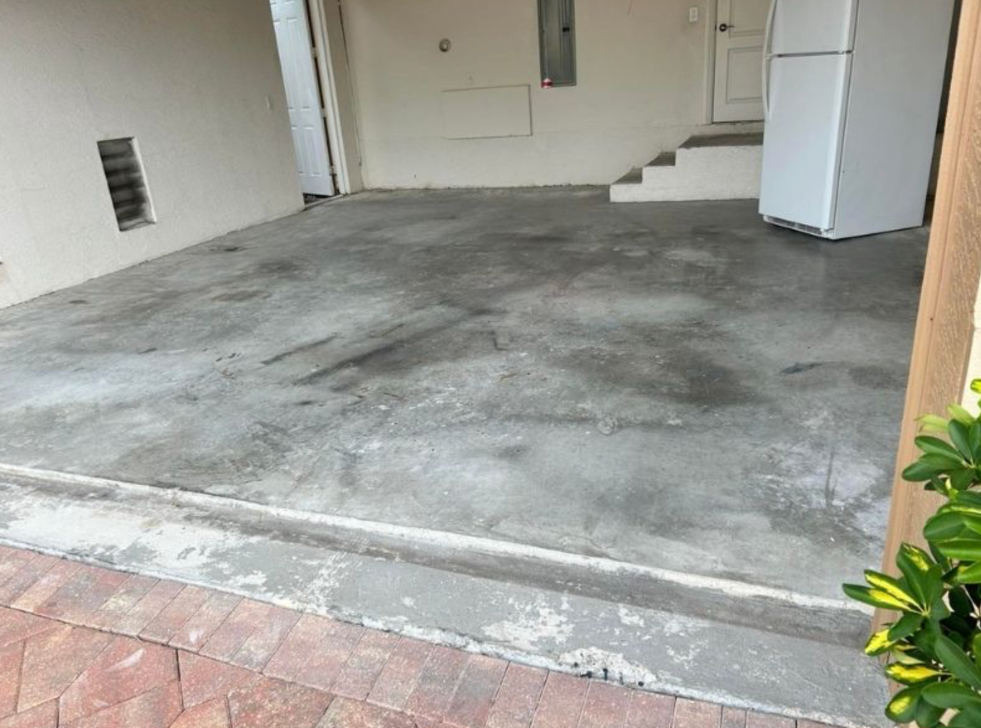
Fine concrete dust starts gathering near walls and storage. Spills leave dark marks. Dirt works into the pores. Cleaning takes more effort because the surface absorbs what lands on it instead of keeping everything near the top. That is where concrete floor coatings become worth considering.
A professionally prepared coating can create a finished surface that is easier to clean, less prone to concrete dust, and more resistant to common staining. However, coating is not automatically the right choice for every slab. The better option depends on how the floor is used, what condition the concrete is in, and what you expect from the space.
What Is the Difference Between Bare and Coated Concrete
Bare concrete is the structural slab itself with no protective resin coating over the surface.
Concrete looks solid, but its surface contains pores. Liquids, oils, dirt, and other materials can work into those pores if they remain long enough.
A concrete floor coating creates another surface over the slab. Systems can include epoxy, polyaspartic, decorative flakes, solid colors, or other resin materials depending on the application. Professional installations also involve concrete preparation before the coating system is applied.
That difference changes more than appearance. It affects cleaning, staining, dust, maintenance, and how the floor responds to regular wear.
Bare Concrete Can Produce Fine Dust
Concrete dust is one of the less obvious reasons homeowners decide to coat a floor.
An unfinished slab can release fine surface particles as it ages and experiences regular abrasion. The amount varies based on concrete quality, condition, finishing, and use.
You may notice the result on storage bins, shelving, tools, or other items near the floor.
Sweeping removes the loose dust, but it does not change the unfinished surface producing it.
A properly bonded concrete floor coating covers the prepared slab with a finished resin surface. This keeps ordinary use from directly wearing against the bare concrete underneath.
For garages and storage areas, that can noticeably change routine housekeeping.
Coated Floors Handle Stains Differently
Bare concrete absorbs liquids much more readily than a properly coated surface.
Oil provides an easy example. If oil remains on unfinished concrete, it can penetrate below the surface and leave a dark stain that becomes difficult to remove completely.
The same problem can occur with food spills, grease, household products, dirty water, and other liquids.
A floor coating creates a less porous surface. Spills generally remain closer to the top, giving you a better opportunity to wipe or wash them away before they become permanent-looking marks.
That does not make coatings immune to every chemical.
Strong solvents, concentrated cleaners, bleach, pool chemicals, fertilizers, and other aggressive substances can still affect certain systems. Prompt cleanup remains the better habit.
Which Floor Is Easier to Clean
For routine cleaning, coated concrete usually has the advantage.
Bare concrete has texture and porosity that allow fine dirt to settle into the surface. Sweeping removes loose debris, but stains and embedded grime may require more aggressive cleaning.
A finished coating creates a smoother, less absorbent surface.
Routine maintenance can usually include sweeping, dust mopping, or washing with a suitable cleaner.
However, texture changes the cleaning experience.
A heavily textured coating can provide additional traction but may hold more dirt than a smoother finish. Decorative flakes can also make small debris less visible depending on the colors used.
That is why coating design should consider maintenance alongside appearance.
The most decorative option is not automatically the easiest one to live with.
Appearance Is One of the Biggest Differences
Bare concrete has an industrial, unfinished appearance.
Some property owners prefer that look. In utility spaces, workshops, storage areas, or buildings where appearance carries little importance, leaving the concrete exposed may make sense.
Coatings provide far more design control. Depending on the system, the floor can use decorative flakes, solid colors, different sheen levels, or more complex finishes.
A garage can feel more like a finished extension of the property instead of leftover construction space.
Commercial floors can also use coatings to create a cleaner presentation across showrooms, retail spaces, offices, and other customer-facing areas. Still, color should be selected carefully.
Lighting, wall paint, cabinetry, room size, and nearby surfaces can change how a coating looks after installation. A small sample will not always look identical across several hundred square feet.
What About Surface Wear
Bare concrete is strong, but its exposed surface still experiences wear. Repeated foot traffic, equipment, rolling loads, dragging, grit, impacts, and cleaning can gradually affect the upper surface.
Coatings move that wear onto the coating system instead.
That can help protect the concrete underneath, although the coating itself is not indestructible.
Scratches, chips, abrasion, and wear can still happen.
Performance depends heavily on the system selected, the quality of concrete preparation, coating thickness, installation, and how the floor is used afterward.
A thin painted floor should not be expected to perform like a professionally prepared multi-layer coating system. Those are different products and different installations.
Moisture Changes the Decision
Moisture deserves attention before any concrete coating is installed.
A slab can appear dry from above while moisture vapor moves through the concrete from below. Bare concrete allows that vapor to reach the exposed surface without a coating trapping it underneath.
Once certain coating systems cover the slab, excessive moisture can contribute to blistering, bubbling, loss of adhesion, or other failures.
That does not mean a concrete floor with moisture can never be coated.
It means the moisture condition needs to be understood before choosing the system. Testing, primers, moisture mitigation products, or a different flooring approach may be needed depending on the slab.
Installing an attractive coating without the concrete underneath is where expensive problems can begin.
Bare Concrete Requires Less Upfront Work
Bare concrete wins one comparison easily. You do not have to install anything. There is no grinding, coating material, cure period, or installation expense when the slab remains unfinished.
For a low-priority utility area, that may be completely reasonable.
However, lower initial cost is not the same as better long-term value for every space.
An owner who repeatedly deals with concrete dust, difficult stains, paint failures, or appearance concerns may eventually spend money trying to improve the same floor.
The decision should therefore consider how long you plan to use the space and what problems actually bother you.
Concrete Paint Is Not the Same as Floor Coating
This distinction causes plenty of confusion. A painted floor and a professional resin coating may look somewhat similar immediately after installation. Their preparation and system builds can be very different.
Basic concrete paint generally offers a lower-cost way to change floor color. Depending on the product and preparation, it may also require more frequent touchups or recoating under demanding use.
Professional concrete floor coatings can involve mechanical surface preparation, repairs, primers, decorative layers, and protective topcoats.
That difference affects both installation cost and expected performance. When comparing estimates, ask what the contractor means by coating instead of relying only on the finished color.
When Bare Concrete Makes Sense
Leaving concrete unfinished can be reasonable when appearance and easier cleaning are not priorities.
Bare concrete may make sense for a low-use storage area, unfinished utility space, temporary property, or slab that requires further moisture investigation.
It can also make sense when the concrete is still part of an active construction or renovation project.
There is nothing inherently wrong with exposed concrete. The issue begins when the owner expects bare concrete to behave like a sealed, finished flooring surface. It will not.
When Concrete Floor Coatings Make More Sense
Coating becomes more attractive when the floor is part of a space you use frequently.
Garages are a common example because homeowners may want less concrete dust, easier cleanup, better stain resistance, and a more finished appearance.
Patios and pool decks can benefit from systems selected for outdoor exposure and suitable traction.
Commercial properties may prioritize presentation, cleaning, traffic, or chemical exposure.
Industrial applications can require much more specialized systems based on operations.
The important point is matching the coating to the actual environment.
There is no single concrete coating that is automatically best everywhere.
Concrete Floor Coatings vs Bare Concrete
Neither choice is automatically right for every property.
Bare concrete provides the lowest upfront cost and requires no installation. However, it remains porous, can produce surface dust, absorbs stains more easily, and keeps the unfinished appearance of the slab.
Concrete floor coatings require preparation and installation, but they can create a more finished surface with easier routine cleaning, reduced concrete dust, improved stain resistance, and far greater design control. The deciding factor should be how you use the space.
If you rarely enter the area and appearance means little, bare concrete may be enough.
If you regularly clean the floor, store belongings nearby, care about presentation, or want a finished surface, professional coating becomes much easier to justify.
Top Gun Garage provides concrete and epoxy flooring services for residential, commercial, and industrial properties throughout Southwest Florida. You can review additional flooring options on the Top Gun Garage Services page or see completed installations through Past Work.
FAQs About Concrete Floor Coatings
1. Is coated concrete easier to clean than bare concrete?
Usually, yes. A coating creates a less porous surface, so dirt and spills remain closer to the top instead of working into unfinished concrete.
2. Does a concrete coating completely stop stains?
No flooring is immune to every substance. Coatings generally improve stain resistance, but aggressive chemicals and long exposure times can still damage or discolor some systems.
3. Does bare concrete always create dust?
The amount varies by slab quality, age, finishing, and use. However, unfinished concrete can release fine surface dust as the upper layer experiences abrasion.
4. Can concrete floor coatings be installed over cracked concrete?
Many stable cracks can be repaired during preparation. However, coatings cannot stop structural movement, and active cracks may return if the slab continues moving.
5. Is epoxy better than leaving a garage floor bare?
It depends on your priorities. An epoxy or similar professional coating makes more sense when easier cleaning, appearance, reduced dust, and stain resistance matter to you.
Decide Based on How You Use the Floor
Bare concrete asks for less money upfront. A professionally coated floor asks more from the installation but can give much more back in everyday usability.
Think about how frequently you clean the area, what gets spilled there, how much the appearance matters, and what condition the concrete is already in.
When those answers point toward a finished floor, Top Gun Garage can evaluate the slab and recommend a coating system suited to the space rather than forcing one product onto every concrete surface.