 Skip to content



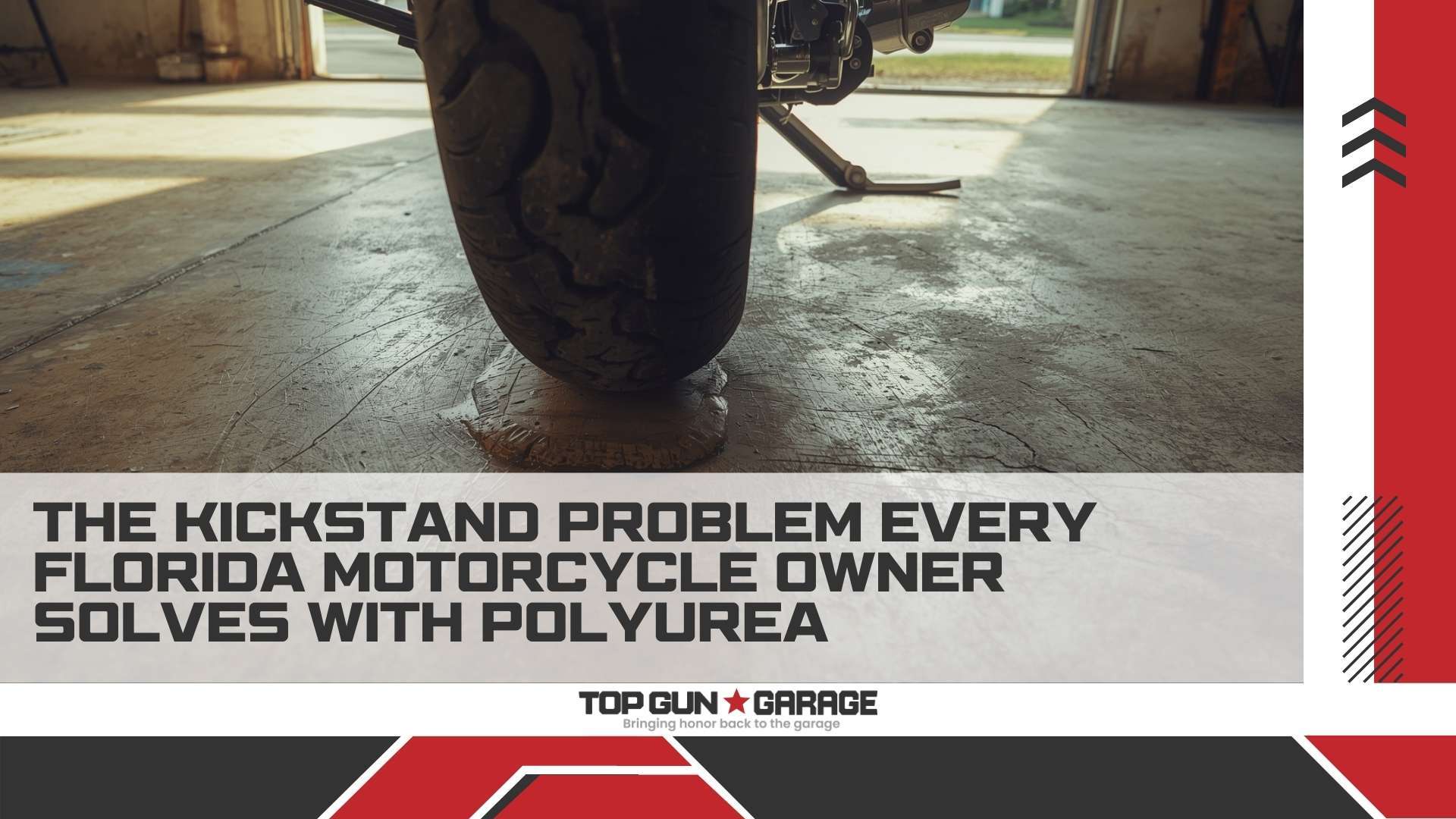
Florida motorcycle enthusiasts face a persistent challenge with their motorcycle garage floor—kickstands that sink into soft coatings, crack concrete, or leave permanent indentations during storage. The combination of Florida’s intense heat, humidity, and concentrated pressure from motorcycle kickstands creates unique flooring demands that standard epoxy coatings cannot reliably address. Polyurea garage floor systems deliver the hardness, load distribution, and thermal stability motorcycle owners need to protect both their bikes and concrete slabs while maintaining a professional appearance in their Florida motorcycle garage flooring.
Overview
This comprehensive guide explains why Florida motorcycle owners choose polyurea flooring to solve kickstand-related problems and protect their investment in both motorcycles and garage spaces. You’ll discover how kickstand pressure differs from vehicle tires, why Florida’s climate exacerbates flooring challenges, how polyurea’s unique properties prevent kickstand damage, and what installation considerations matter for motorcycle storage. We’ll cover load distribution science, surface hardness requirements, heat resistance, moisture management, and long-term performance—giving you the knowledge to select flooring that keeps your motorcycle stable and your garage looking pristine for 15+ years.
Key Takeaways
-
Motorcycle kickstands concentrate 400-800 PSI on small contact areas, exceeding typical vehicle tire pressure by 10-15x
-
Florida heat softens standard epoxy, causing kickstands to sink and create permanent indentations within months
-
Polyurea maintains surface hardness at temperatures exceeding 200°F, preventing kickstand penetration year-round
-
Proper moisture barriers protect concrete from Florida humidity that weakens slabs and accelerates kickstand damage
-
Premium polyurea systems distribute kickstand loads across wider surface areas, eliminating sinking and cracking
-
Motorcycle-specific floor coatings include slip-resistant textures for safe maneuvering on smooth garage surfaces
-
Professional installation with proper surface preparation ensures 15-year performance under concentrated kickstand loads
Understanding the Motorcycle Kickstand Challenge
Motorcycle kickstands create dramatically different pressure profiles compared to automobile tires, concentrating the entire vehicle weight onto contact patches measuring just 0.25-0.75 square inches. A 500-pound motorcycle resting on a standard kickstand generates 400-800 pounds per square inch of pressure directly onto the garage floor surface—pressure levels that exceed typical passenger vehicle tire contact by factors of 10-15x. This concentrated load challenges even properly installed floor coatings, as the small contact area focuses stress on individual coating molecules rather than distributing forces across larger surface areas.
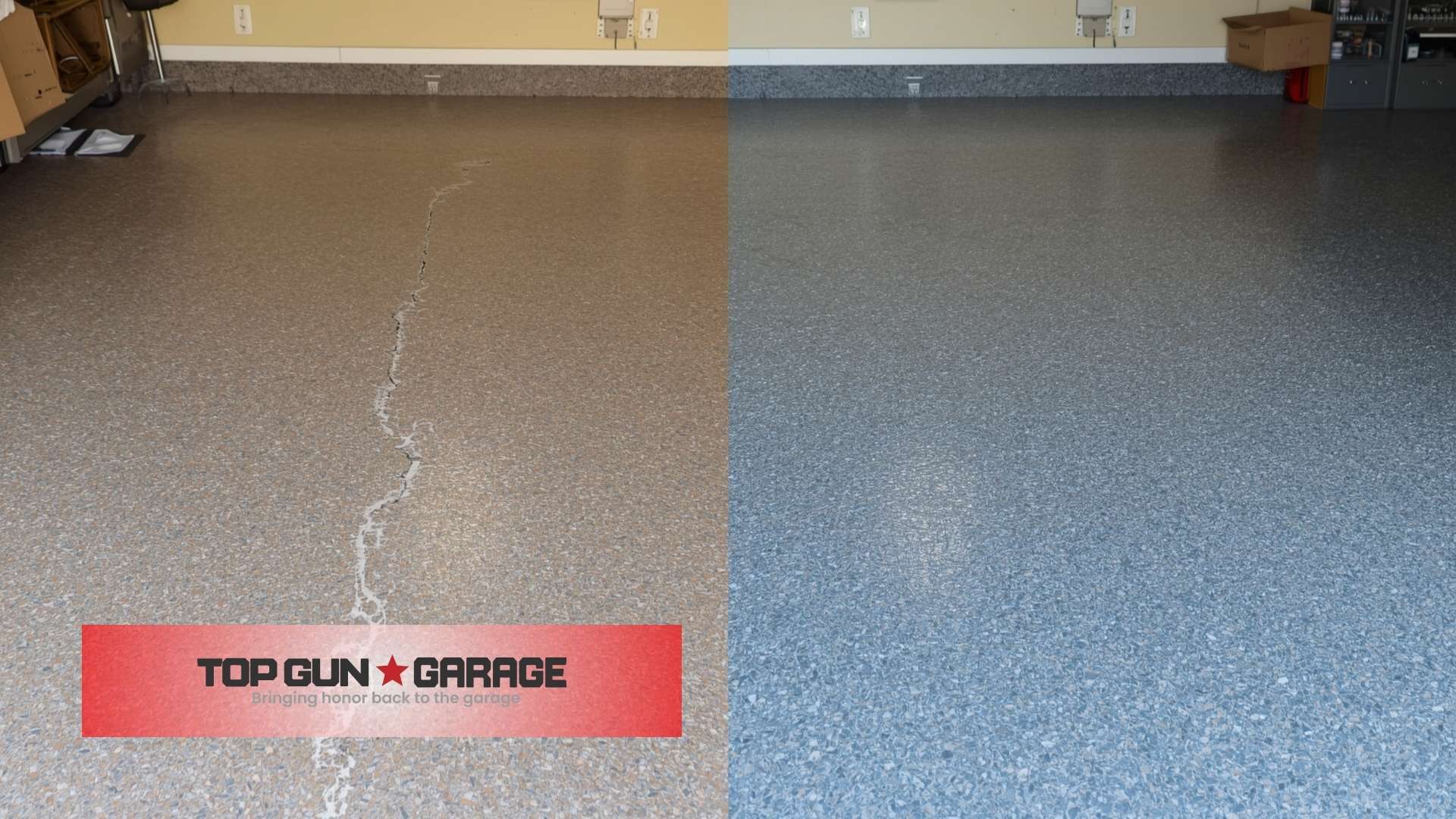
Florida’s subtropical climate compounds these pressure challenges through thermal effects that soften floor coatings during the hottest parts of the day. When garage temperatures reach 90-110°F during summer months, standard epoxy formulations lose significant surface hardness, creating conditions where kickstand pressure easily penetrates the coating layer. Motorcycle owners who park bikes after riding experience even more severe problems, as heated kickstands transfer additional thermal energy that further softens coating surfaces around contact points. The result manifests as circular indentations, coating displacement, and eventually concrete damage as kickstands gradually work through compromised floor systems.
Why Standard Epoxy Fails Florida Motorcycles
Basic epoxy garage floor coatings lack the hardness and thermal stability required to withstand sustained kickstand pressure in Florida’s demanding environment. Standard epoxy formulations achieve Shore D hardness ratings of 70-80, adequate for distributed vehicle loads but insufficient for the concentrated pressures kickstands generate. As ambient temperatures rise above 85°F, epoxy undergoes glass transition—a molecular change that reduces surface hardness by 15-25% and creates the soft spots where kickstands sink.
Florida motorcycle owners frequently report kickstand indentations appearing within 3-6 months of epoxy installation, with problems accelerating during summer months when heat and humidity peak. These indentations start as barely visible depressions but deepen over time as repeated parking cycles push coating material aside and expose underlying concrete. Once concrete becomes exposed, the kickstand pressure begins creating divots in the concrete itself—damage requiring expensive repairs involving concrete patching, surface re-profiling, and complete coating replacement. The cycle of coating failure, concrete damage, and repair costs motivates Florida motorcycle owners to seek permanent solutions that prevent kickstand problems from developing in the first place.
How Polyurea Solves Kickstand Sinking
Polyurea garage floor coatings provide the superior hardness and elastomeric properties needed to resist kickstand penetration under Florida conditions. Premium polyurea systems achieve Shore D hardness ratings of 85-95, significantly exceeding epoxy performance and maintaining these properties even when exposed to high temperatures. The molecular structure of polyurea includes flexible polymer chains that distribute concentrated loads across wider surface areas rather than allowing penetration at single points.
This load distribution effect works through polyurea’s elastomeric properties, which allow the coating to compress slightly under pressure while maintaining structural integrity. When a kickstand exerts 600 PSI on a small contact patch, polyurea compresses microscopically and transfers stress laterally through the coating matrix, effectively spreading the load across a circle 2-3x larger than the actual contact point. This distribution reduces peak pressure on both the coating surface and underlying concrete, preventing the indentation formation that plagues epoxy floors. The coating’s ability to recover immediately after pressure removal means kickstands leave no permanent marks, maintaining smooth surfaces even after years of daily parking.
Thermal Stability for Florida Heat
Polyurea’s exceptional thermal stability makes it uniquely suited for Florida garage environments where temperatures regularly exceed levels that compromise standard coatings. The coating maintains full hardness and load-bearing capacity at temperatures up to 200°F—well above the 110-130°F surface temperatures Florida garage floors experience during peak summer conditions. This thermal stability stems from polyurea’s chemical composition, which doesn’t exhibit the glass transition temperatures that cause epoxy softening.
For motorcycle owners, this thermal performance translates to reliable kickstand support regardless of when they park their bikes or how hot the garage becomes. Riders returning from long trips on sun-heated asphalt no longer worry about softened floor coatings failing under their kickstands. The polyurea surface remains dimensionally stable, preventing the rubber-like consistency that allows kickstands to sink into heat-compromised epoxy. This consistency proves particularly valuable for Florida riders who frequently take bikes in and out of storage, as the floor performs identically whether the garage temperature registers 70°F in winter or 105°F during summer afternoons.
Moisture Management for Concrete Protection
Florida’s high humidity levels create moisture transmission challenges that weaken concrete slabs and reduce their ability to support concentrated kickstand loads. Concrete that absorbs excessive moisture loses up to 30% of its compressive strength, making it vulnerable to divot formation when subjected to sustained kickstand pressure. Professional polyurea installations include moisture vapor barriers that prevent this humidity infiltration, maintaining concrete integrity and load-bearing capacity throughout Florida’s humid seasons.
These moisture barrier systems work by creating impermeable layers between the concrete slab and decorative polyurea topcoat, blocking vapor transmission from below while preventing liquid intrusion from above. For motorcycle storage areas, this protection proves critical since bikes typically park in the same location for extended periods, creating sustained pressure points where moisture-weakened concrete would gradually fail. Professional installers use moisture testing protocols to identify high-transmission areas and adjust barrier applications accordingly, ensuring comprehensive protection even in challenging Florida conditions.
Surface Preparation for Long-Term Performance
Proper concrete preparation determines whether polyurea floors successfully support motorcycle kickstands for their full 15-year service life or fail prematurely. Professional installations begin with diamond grinding that creates the proper surface profile for optimal polyurea adhesion—typically CSP 2-3 profiles that provide adequate mechanical bonding without excessive roughness. This preparation removes any existing coatings, surface contaminants, and weak concrete layers that would compromise adhesion under concentrated kickstand loads.
Crack repair represents another critical preparation step for motorcycle garage floors, as even hairline cracks can propagate under sustained kickstand pressure. Installers use flexible repair compounds that move with concrete thermal expansion rather than rigid patches that create weak points. Areas where kickstands will regularly rest receive extra attention, with installers sometimes applying additional polyurea layers in these zones to provide extra thickness and impact resistance. This preparation thoroughness ensures the polyurea system bonds permanently to the concrete substrate, creating a monolithic floor that handles kickstand pressure as effectively on day 5,000 as on installation day.
Slip Resistance for Motorcycle Maneuvering
Motorcycle owners require garage floors with carefully balanced traction properties—enough texture to provide secure footing when walking around bikes, but not so aggressive that it catches boot heels or complicates bike maneuvering. Polyurea systems accommodate these needs through customizable texture profiles added during installation. Light orange peel textures provide excellent grip for dismounting and walking while maintaining smooth surfaces that don’t interfere with kickstands or center stands.
The slip resistance becomes particularly important in Florida garages where humidity and temperature changes can create condensation on smooth surfaces. Polyurea’s non-porous finish prevents moisture absorption that causes some floor coatings to become slippery when damp. Riders confidently maneuver bikes even after washing them in the garage or during humid mornings when condensation forms. The textured surface also provides psychological comfort—riders know their boots will grip reliably when putting feet down to balance bikes during parking or repositioning.
Chemical Resistance for Motorcycle Maintenance
Motorcycle ownership involves regular maintenance that exposes garage floors to gasoline, oil, brake fluid, chain lubricant, and cleaning chemicals. Polyurea’s exceptional chemical resistance protects against all these substances, preventing staining and coating degradation that compromise both appearance and structural integrity. Unlike epoxy which gradually softens when exposed to petroleum products, polyurea maintains its hardness and kickstand-supporting properties even in areas where minor spills occur regularly.
This chemical resistance extends to the aggressive cleaners motorcycle enthusiasts use during detailing sessions. Degreasers, tire shine products, and specialized motorcycle cleaners that would damage or dull epoxy surfaces have no effect on polyurea’s appearance or performance. Riders who maintain multiple bikes and perform extensive garage-based maintenance appreciate that their floor retains its original gloss and hardness despite regular chemical exposure. The coating’s seamless, non-porous surface prevents chemicals from penetrating to the concrete below, eliminating the staining and etching problems that plague unprotected or inadequately protected floors.
Visual Appeal for Motorcycle Showcasing
Many Florida motorcycle enthusiasts view their garages as showcase spaces where bikes deserve presentation environments worthy of their investment. Polyurea floors deliver this aesthetic appeal through multiple decorative finish options including solid colors, metallic effects, and decorative flake broadcasts. These finishes maintain their appearance under the concentrated kickstand pressure that would damage decorative elements in softer epoxy systems.
The glossy finish characteristic of polyurea topcoats creates dramatic visual impact that highlights motorcycle details and makes even standard garage spaces feel like professional showrooms. Unlike epoxy which yellows and dulls over time, polyurea’s UV-stable formulation maintains color vibrancy and gloss retention for 10-15 years even with regular sun exposure through open garage doors. For riders who photograph their bikes or host club meetings in their garages, the pristine floor appearance provides the perfect backdrop that never detracts from the motorcycles themselves.
Installation Considerations for Motorcycle Garages
Professional polyurea installation for motorcycle storage requires understanding the unique use patterns that differ from standard vehicle garages. Installers assess where kickstands will consistently contact the floor, potentially applying additional coating thickness in these zones for extra protection. The rapid cure time of polyurea minimizes garage downtime—most motorcycle owners regain full access within 24 hours compared to the 3-5 days typical epoxy installations require.
Timing installation to avoid Florida’s rainy season ensures optimal curing conditions and allows proper moisture testing before coating application. Professional installers like those serving Naples and Southwest Florida regions understand how seasonal humidity affects installation protocols and adjust their methods accordingly. For motorcycle enthusiasts with multiple bikes, installers can create designated parking zones with subtle color variations or decorative borders that define spaces while maintaining the unified floor appearance.
Cost Analysis for Motorcycle Floors
Polyurea garage floors typically cost 30-50% more than basic epoxy installations, with single-bay motorcycle garages averaging $1,500-$2,500 depending on decorative options and surface preparation requirements. This initial investment delivers superior long-term value when considering the prevented costs of kickstand-damaged coatings and concrete repairs. Motorcycle owners who initially installed cheaper epoxy often spend $1,000-$1,500 repairing kickstand damage within 2-3 years—expenses that quickly exceed the price difference between epoxy and polyurea.
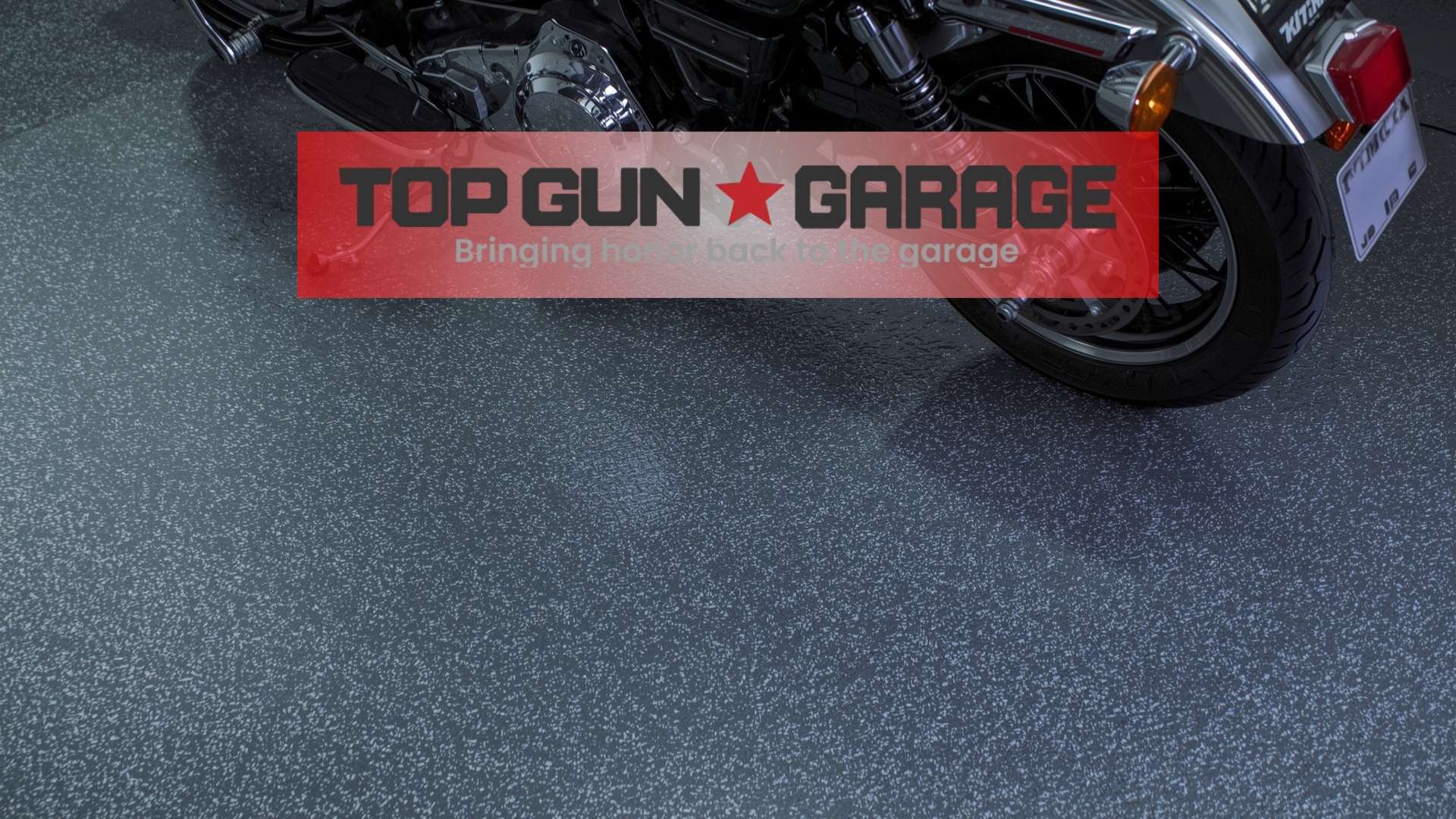
The 15-year service life polyurea provides means motorcycle owners invest once and enjoy maintenance-free floors throughout their ownership period. Minimal maintenance requirements save both time and money compared to epoxy floors that need periodic resealing, specialized cleaning for stains, and eventual replacement. For serious motorcycle collectors storing multiple high-value bikes, the floor protection and presentation quality justify premium coating investments that preserve both motorcycle and property values.
Frequently Asked Questions
Why do motorcycle kickstands damage garage floors? Kickstands concentrate 400-800 PSI onto 0.25-0.75 square inch contact areas, pressure exceeding vehicle tires by 10-15x. Florida heat softens standard coatings, allowing kickstands to sink and create permanent indentations within months of installation.
How does polyurea prevent kickstand sinking? Polyurea achieves Shore D hardness 85-95 and maintains properties at 200°F+. Elastomeric structure distributes concentrated loads laterally across wider areas, preventing penetration while allowing microscopic compression that immediately recovers when pressure releases.
What floor preparation do motorcycles need? Professional installations include diamond grinding to CSP 2-3 profile, crack repairs, moisture testing, and vapor barriers. Extra coating thickness in kickstand zones provides additional protection against concentrated pressure over 15-year service life.
Will polyurea work for multiple motorcycles? Yes, polyurea handles unlimited kickstand cycles without degradation. Load distribution properties and thermal stability ensure consistent performance across multiple parking locations, making it ideal for collectors storing several bikes in shared garage spaces.
How long before motorcycles can park? Polyurea typically cures within 4-8 hours for foot traffic and 24 hours for full motorcycle weight. This contrasts with epoxy requiring 3-5 days, minimizing storage disruption for riders who use bikes for daily transportation.
Does polyurea resist motorcycle chemicals? Polyurea provides exceptional resistance to gasoline, oil, brake fluid, chain lubricants, and cleaning chemicals. Non-porous surface prevents penetration and staining while maintaining hardness and kickstand-supporting properties despite regular chemical exposure.
What texture works best for motorcycles? Light orange peel texture provides secure footing for dismounting and walking while maintaining smooth surfaces that don’t interfere with kickstands. Balanced traction prevents slipping during maneuvering without catching boot heels or complicating bike movement.
How much does motorcycle polyurea cost? Single-bay motorcycle garage floors range $1,500-$2,500 depending on decorative options and preparation. Initial cost exceeds epoxy by 30-50% but eliminates kickstand damage repairs averaging $1,000-$1,500 every 2-3 years with cheaper coatings.
Can polyurea install over existing epoxy? Generally no—proper installation requires complete removal of existing coatings and fresh surface preparation. Bonding polyurea over compromised epoxy transfers underlying weaknesses, preventing proper kickstand pressure distribution and reducing long-term performance.
What warranty do motorcycle floors receive? Premium polyurea systems include 15-year warranties covering adhesion, wear, and kickstand-related damage. Comprehensive coverage reflects manufacturer confidence in product performance under concentrated loads that exclude standard epoxy warranties.
Conclusion
The motorcycle kickstand challenge that frustrates Florida riders finds its definitive solution in polyurea garage floor systems engineered to withstand concentrated pressure, extreme heat, and humid conditions. Superior hardness, load distribution properties, thermal stability, and moisture protection combine to create surfaces that support kickstands reliably for 15+ years without sinking, marking, or requiring repairs. The initial investment in professional polyurea installation eliminates ongoing costs, prevents concrete damage, and provides presentation-quality floors worthy of showcasing valuable motorcycle collections.
Top Gun Garage specializes in motorcycle-specific polyurea installations designed for Florida’s demanding climate. Contact us today for a consultation and discover why Naples, Bonita Springs, and Fort Myers motorcycle enthusiasts trust our expertise for floors that protect their bikes and enhance their riding lifestyle.