 Skip to content




The timing of aggregate application during epoxy floor installation can make or break your entire flooring project. Whether you’re working with decorative flakes, quartz sand, or metallic particles, understanding exactly when to introduce these materials into your epoxy system determines the final appearance, durability, and performance of your floor. Many contractors and DIY enthusiasts struggle with this critical timing element, often resulting in uneven distribution, poor adhesion, or aggregate that simply won’t stay put.
Epoxy flooring systems have revolutionized commercial and residential flooring applications, offering exceptional durability, chemical resistance, and aesthetic versatility. However, the success of these installations heavily depends on proper timing throughout the application process. When aggregate materials are added too early, they can sink completely into the epoxy, disappearing from view and failing to provide the intended texture or visual appeal. Conversely, adding aggregate too late results in poor adhesion, with particles that can be easily brushed or worn away over time.
The science behind proper aggregate timing involves understanding epoxy chemistry, environmental factors, and the specific characteristics of different aggregate materials. Temperature, humidity, epoxy formulation, and substrate conditions all influence the optimal window for aggregate application. Professional contractors develop an intuitive sense for these timing requirements through experience, but understanding the underlying principles can help anyone achieve professional-quality results.
This comprehensive guide explores the critical factors that determine when to add aggregate to epoxy floors, covering everything from material selection and environmental considerations to specific application techniques for different types of aggregate systems. Whether you’re planning a garage floor upgrade, commercial facility renovation, or industrial flooring project, mastering these timing principles will ensure your epoxy floor delivers the performance and appearance you expect for years to come.
Key Takeaways
Optimal Timing Window: Add aggregate when epoxy reaches a tacky, gel-like consistency, typically 15-45 minutes after application depending on temperature and humidity conditions. The surface should no longer be wet but still accept aggregate without rejection.
Temperature Impact: Warmer temperatures accelerate epoxy curing, requiring faster aggregate application, while cooler conditions extend the working window. Ideal application temperatures range from 65-85°F for most epoxy systems.
Aggregate Type Considerations: Different aggregate materials require specific timing adjustments. Fine decorative flakes need earlier application than heavier quartz aggregates, which can be applied slightly later in the curing process.
Environmental Factors: Humidity levels significantly affect epoxy curing rates and aggregate adhesion. High humidity can extend working time but may compromise final bond strength, while low humidity accelerates surface skinning.
Application Method Matters: Broadcasting techniques, aggregate density, and distribution patterns all influence the optimal timing window. Uniform coverage requires consistent timing across the entire floor surface.
Quality Control Indicators: Visual and tactile cues help determine readiness for aggregate application, including surface appearance, finger-touch tests, and epoxy flow characteristics.
Professional vs. DIY Considerations: Complex timing requirements and potential costly mistakes often make professional installation the preferred choice for high-value applications or challenging environmental conditions.
Understanding Epoxy Curing Phases and Aggregate Timing
The epoxy curing process involves distinct phases that directly impact when aggregate should be introduced to achieve optimal results. During the initial application phase, freshly mixed epoxy flows easily and maintains a wet, glossy appearance. This phase typically lasts 10-20 minutes under normal conditions, but adding aggregate during this period causes particles to sink completely below the surface, eliminating their decorative and functional benefits.
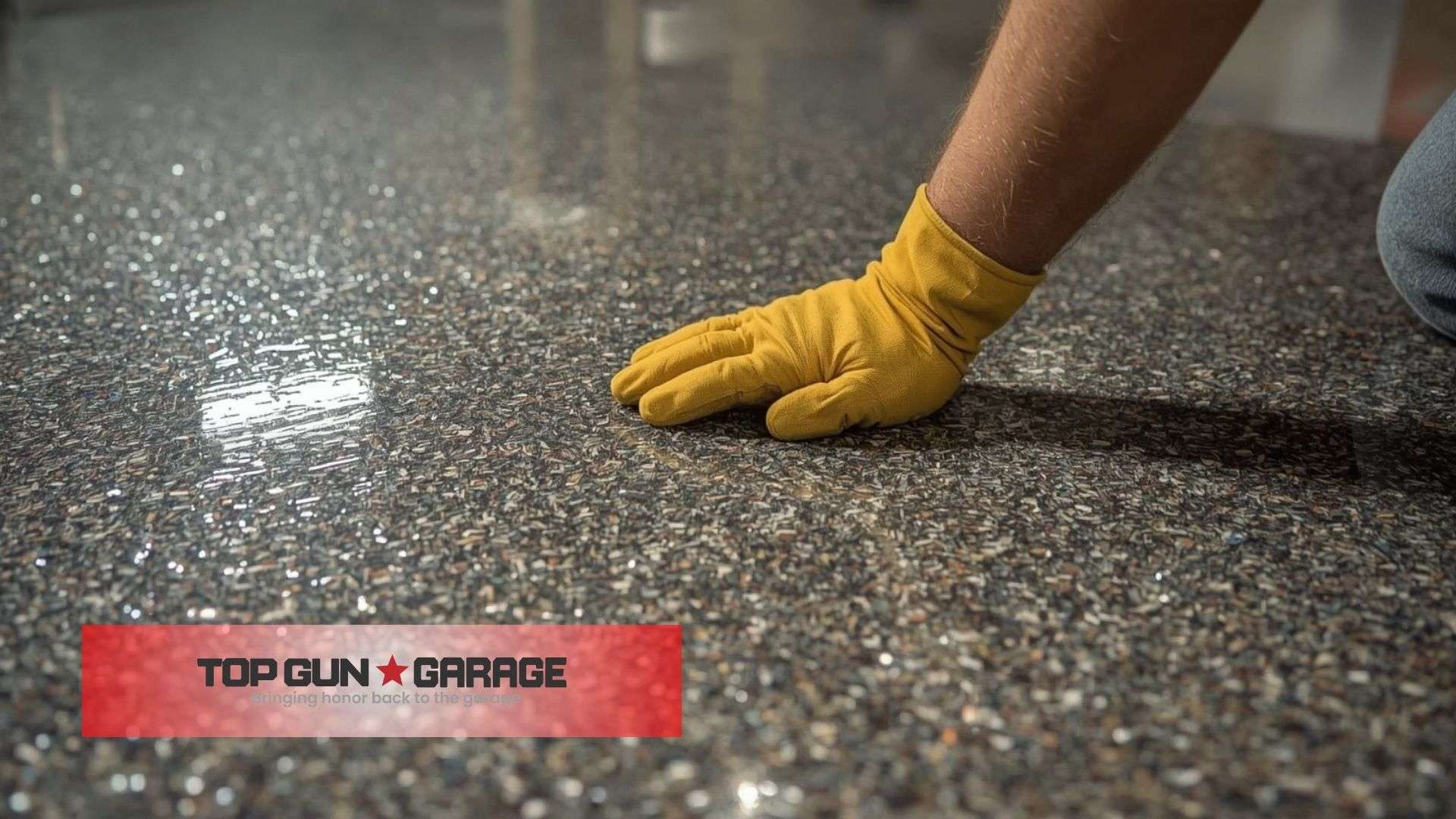
As epoxy begins transitioning from liquid to solid, it enters the gel phase where the material becomes increasingly viscous while retaining some tackiness. This critical window represents the optimal timing for aggregate application. The epoxy surface appears less glossy and feels slightly tacky to light touch, providing the perfect balance of adhesion and support for aggregate particles. Missing this window results in either buried aggregate or poor adhesion.
The final curing phase begins when epoxy develops a skin and loses its tackiness. Aggregate applied during this phase will not properly embed and can be easily disturbed or removed. Understanding these phases requires careful observation and experience, as environmental conditions significantly influence timing. Professional contractors often use test patches to determine optimal timing for specific conditions and epoxy formulations.
Different epoxy systems exhibit varying curing characteristics that affect aggregate timing. Fast-cure formulations may provide only a 10-15 minute window, while slower systems can extend this to 45 minutes or more. Solvent-based epoxies typically cure faster than water-based systems, requiring more precise timing and faster work pace. Understanding what affects epoxy cure time in naples climate helps explain these variations. Temperature-sensitive formulations may behave differently across seasons, necessitating timing adjustments based on ambient conditions.
Environmental Factors Affecting Aggregate Application Timing
Temperature stands as the most critical environmental factor influencing epoxy curing rates and aggregate timing. Higher temperatures accelerate chemical reactions within the epoxy, shortening the working window and requiring faster aggregate application. At 85°F and above, some epoxy systems may reach the gel phase in as little as 10-15 minutes, demanding immediate preparation and rapid application techniques. Conversely, temperatures below 65°F can extend working time to an hour or more, but may also affect final cure quality and bond strength.
Humidity levels create complex interactions with epoxy chemistry that significantly impact aggregate timing. High humidity conditions can extend surface working time by slowing initial skinning, but excessive moisture may interfere with proper curing and aggregate adhesion. Low humidity environments accelerate surface drying, potentially creating a deceptive skin that appears ready for aggregate but lacks proper tackiness underneath. Ideal humidity ranges typically fall between 40-60% for most epoxy systems. For detailed information on environmental impacts, explore how humidity affects garage floor installation timing.
Air circulation patterns within the workspace affect solvent evaporation rates and surface curing characteristics. Strong air movement accelerates surface skinning, potentially shortening the aggregate application window, while stagnant air conditions may extend working time but could trap solvents and affect final cure quality. Professional installations often involve controlling ventilation to optimize timing windows while maintaining air quality standards.
Substrate temperature can differ significantly from ambient air temperature, particularly on concrete floors that retain thermal mass. Cold substrates slow epoxy curing near the surface while maintaining longer working times, but may create adhesion issues if temperature differentials are excessive. Warm substrates accelerate curing throughout the epoxy thickness, requiring faster aggregate application but often producing superior final bonds. Measuring substrate temperature provides more accurate timing predictions than relying solely on air temperature readings.
Types of Epoxy Floor Aggregates and Their Specific Timing Requirements
Decorative vinyl flakes represent the most common aggregate choice for residential and light commercial applications, requiring precise timing for optimal results. These lightweight particles need application during the early gel phase when epoxy maintains sufficient flow to partially embed flakes while providing enough tackiness for adhesion. Applying flakes too early causes complete submersion, eliminating their decorative impact, while late application results in poor adhesion and easy removal. The optimal window typically occurs 15-25 minutes after epoxy application under standard conditions.
Quartz sand aggregates demand different timing considerations due to their higher density and functional requirements. These particles provide slip resistance and durability enhancement, requiring deeper embedding than decorative flakes. Application timing can extend slightly later into the gel phase, as the increased weight helps particles penetrate the increasingly viscous epoxy. However, waiting too long prevents proper embedding depth, compromising both adhesion and functionality. Quartz aggregate timing typically ranges from 20-35 minutes after initial epoxy application.
Metallic pigments and mica flakes create unique aesthetic effects but present challenging timing requirements. These materials must be applied during a narrow window that allows for proper dispersion and embedding while maintaining their reflective properties. Too early application causes metallic particles to sink and lose their visual impact, while late application prevents proper integration with the epoxy matrix. The timing window for metallic aggregates often falls between 18-28 minutes, requiring careful monitoring and rapid application techniques. Explore metallic epoxy colors that change with lighting for inspiration on aesthetic options.
Specialty aggregates including glass beads, aluminum oxide, and polymer chips each present unique timing challenges based on their physical properties and intended functions. Glass beads for retroreflectivity require surface embedding that maintains particle exposure, demanding precise timing during the gel transition. Aluminum oxide for extreme slip resistance needs sufficient embedding for retention but adequate exposure for functionality. Understanding these specific requirements helps contractors optimize timing for each aggregate type and application purpose.
Application Techniques and Timing Coordination
Successful aggregate application requires coordinated timing across multiple factors including mixing schedules, application rates, and crew coordination. Large floor areas demand systematic approaches that account for varying cure rates across different sections of the floor. Professional contractors often divide large areas into manageable sections, applying epoxy and aggregate in sequence to maintain optimal timing throughout the entire installation. This sectional approach prevents situations where early sections cure beyond the aggregate window while later sections remain too wet.

Broadcasting techniques significantly influence timing requirements and final results. Uniform aggregate distribution requires consistent application pressure and technique while working within the optimal timing window. Hand broadcasting allows for precise control but may be too slow for large areas with fast-curing epoxies. Mechanical broadcasting equipment enables rapid coverage but requires careful timing coordination to ensure uniform results across the entire floor surface.
Multiple aggregate applications create additional timing challenges that require careful planning and execution. Some decorative systems involve applying base aggregate followed by accent colors or specialty particles, each requiring specific timing windows. The initial aggregate application affects subsequent epoxy flow and curing characteristics, potentially altering timing for secondary applications. Professional contractors develop systematic approaches for multi-layer aggregate systems that account for these interactions.
Quality control during aggregate application involves continuous monitoring of timing indicators and application results. Visual inspection of aggregate embedding, adhesion testing, and coverage assessment help identify timing issues before they affect large areas. Experienced contractors develop intuitive timing sense through observation of epoxy behavior, environmental cues, and aggregate response characteristics. This expertise becomes particularly valuable when working with new products or challenging environmental conditions.
Temperature and humidity monitoring throughout the application process helps predict timing changes and adjust techniques accordingly. Digital monitoring equipment provides real-time data that enables proactive timing adjustments rather than reactive corrections. Professional installations often involve continuous environmental monitoring with documented timing protocols that ensure consistent results across varying conditions.
Common Timing Mistakes and How to Avoid Them
Premature aggregate application represents one of the most common timing errors, resulting in particles that sink completely below the epoxy surface. This mistake typically occurs when contractors rush the process or misread surface conditions, applying aggregate while epoxy remains too fluid. The result is aggregate that provides no decorative value, slip resistance, or texture enhancement. Prevention involves patient observation of curing indicators and resistance to rushing the process, even under time pressure.
Late aggregate application creates equally problematic results, with particles that fail to properly embed and can be easily disturbed or removed. This timing error often occurs when contractors become distracted by other tasks or misjudge environmental effects on curing rates. Late-applied aggregate may appear properly embedded initially but fails during use, creating maintenance issues and potential safety hazards. Avoiding this mistake requires dedicated attention to timing indicators and systematic application protocols.
Inconsistent timing across large floor areas creates visible differences in aggregate density, embedding depth, and overall appearance. This problem typically results from inadequate planning or insufficient crew coordination during application. Areas applied at optimal timing appear uniform and professional, while sections with timing errors show obvious defects. Prevention requires systematic sectional approaches and clear communication among crew members regarding timing protocols.
Environmental misjudgments frequently lead to timing errors when contractors fail to account for temperature, humidity, or air circulation effects on curing rates. Assuming standard timing windows without considering actual conditions often results in missed opportunities or rushed applications. Successful timing requires continuous environmental monitoring and willingness to adjust protocols based on real-time conditions rather than predetermined schedules.
Inadequate preparation and organization contribute to timing failures when materials, tools, or crew members are not ready when optimal timing windows arrive. Epoxy curing waits for no one, and delays in aggregate preparation or application technique can quickly move past optimal timing. Professional installations involve thorough preparation protocols that ensure all elements are ready before epoxy application begins, eliminating delays that compromise timing.
Professional Installation Benefits and Top Gun Garage Expertise
Top Gun Garage brings extensive experience in epoxy floor installations, understanding the critical timing requirements that determine project success. Our professional team has developed systematic approaches for aggregate application that account for environmental variables, substrate conditions, and specific aggregate characteristics. This expertise becomes particularly valuable for complex installations involving multiple aggregate types, challenging environmental conditions, or high-performance requirements where timing precision is essential.
Professional installation eliminates the guesswork involved in aggregate timing, utilizing proven protocols and quality control measures that ensure optimal results. Our experienced contractors recognize subtle timing indicators that inexperienced applicators might miss, preventing costly mistakes that can compromise entire installations. The investment in professional installation often proves cost-effective when considering the potential expenses of timing-related failures and the need for complete floor replacement.
Equipment and material advantages available to professional contractors include specialized broadcasting tools, environmental monitoring equipment, and access to professional-grade epoxy systems with predictable timing characteristics. These resources enable more precise timing control and superior final results compared to typical DIY installations. Professional contractors also maintain relationships with manufacturers that provide technical support and timing guidance for specific products and conditions.
Quality assurance protocols implemented by professional installers include documented timing procedures, environmental monitoring, and systematic quality control measures throughout the installation process. These protocols help identify and correct timing issues before they affect large areas, ensuring consistent results across entire floor surfaces. Professional installations typically include warranties that protect property owners from timing-related failures and performance issues.
Top Gun Garage’s commitment to excellence extends beyond basic installation to include comprehensive project planning, environmental assessment, and timing optimization for each unique application. Our team understands that successful epoxy flooring involves much more than simply mixing and applying materials, requiring careful attention to timing, technique, and quality control throughout the entire process.
When considering whether to pursue a flooring project yourself, review the professional advantages and DIY limitations in flooring to understand the complexity and risks involved.
Frequently Asked Questions
How long after applying epoxy should I add aggregate?
The optimal timing for aggregate application typically ranges from 15-45 minutes after epoxy application, depending on environmental conditions and epoxy formulation. The key indicator is when the epoxy surface becomes tacky but not wet, usually appearing less glossy than initial application. Temperature and humidity significantly affect this timing, with warmer conditions requiring faster application and cooler conditions extending the window.
What happens if I add aggregate too early to epoxy?
Adding aggregate too early causes particles to sink completely below the epoxy surface, eliminating their decorative and functional benefits. The aggregate becomes buried and invisible, providing no slip resistance, texture, or visual enhancement. This timing error typically requires complete removal and reapplication of the epoxy system, making it a costly mistake to avoid.
Can I add more aggregate if the first application wasn’t enough?
Additional aggregate can only be applied successfully if the epoxy remains within the optimal timing window. Once epoxy progresses beyond the tacky gel phase, additional aggregate will not properly embed and may create adhesion problems. If insufficient aggregate was applied during the optimal window, the best solution often involves applying a second epoxy coat followed by proper aggregate timing.
How do temperature changes affect aggregate timing?
Temperature has a dramatic impact on epoxy curing rates and aggregate timing windows. Every 10°F increase in temperature can reduce working time by 30-50%, while cooler temperatures extend the window proportionally. Substrate temperature often differs from air temperature and provides a more accurate predictor of curing behavior, making temperature monitoring essential for timing success.
What are the signs that epoxy is ready for aggregate application?
Visual indicators include reduced surface gloss, slight tackiness to light touch, and loss of the wet appearance characteristic of fresh epoxy. The surface should feel slightly sticky but not wet, and a light finger touch should leave a slight impression without transferring epoxy to your finger. These indicators require experience to interpret accurately under varying conditions.
Do different types of aggregate require different timing?
Yes, aggregate type significantly affects optimal timing requirements. Lightweight decorative flakes need earlier application during the gel transition, while heavier materials like quartz sand can be applied slightly later. Metallic particles require precise timing to maintain their visual effects, and specialty aggregates each have unique timing windows based on their physical properties and intended functions.
How does humidity affect when to add aggregate to epoxy?
High humidity can extend the working window by slowing surface skinning but may compromise final adhesion quality. Low humidity accelerates surface curing, potentially creating a deceptive skin that appears ready but lacks proper tackiness underneath. Ideal humidity levels range from 40-60% for most epoxy systems, with timing adjustments needed outside this range.
What should I do if I miss the optimal timing window?
If the timing window is missed and epoxy has progressed beyond the tacky phase, attempting to add aggregate will likely result in poor adhesion and future problems. The best solution typically involves allowing the epoxy to fully cure, then applying an additional epoxy coat with proper aggregate timing. This approach ensures proper adhesion and long-term performance, though it increases material costs and project time.
Conclusion
Mastering the timing of aggregate application represents one of the most critical skills in successful epoxy floor installation. The narrow window between too early and too late requires understanding of epoxy chemistry, environmental factors, and aggregate characteristics that can only be developed through experience and careful attention to detail. Professional contractors spend years developing the intuitive sense necessary to consistently achieve optimal timing across varying conditions and applications.
The consequences of timing errors extend far beyond aesthetic concerns, affecting durability, functionality, and long-term performance of epoxy floor systems. Properly timed aggregate application creates floors that maintain their appearance and performance for decades, while timing mistakes can necessitate complete replacement within months or years. The investment in understanding and implementing proper timing protocols pays dividends in reduced maintenance, enhanced performance, and professional-quality results.
Environmental control and monitoring play increasingly important roles in modern epoxy installations, with professional contractors utilizing sophisticated equipment and protocols to optimize timing windows. Temperature and humidity management, combined with systematic application procedures, enable consistent results even under challenging conditions. These professional approaches often justify the investment in expert installation services, particularly for high-value applications where timing precision is essential.
Whether pursuing DIY installation or professional services, understanding aggregate timing principles helps ensure successful outcomes and realistic expectations. The complexity of timing requirements, combined with the potential costs of mistakes, often makes professional installation the preferred choice for property owners seeking reliable, long-lasting results. Understanding how epoxy flooring works in naples humidity helps explain why environmental control is so critical. Top Gun Garage’s expertise in epoxy flooring timing and application techniques provides the assurance that your investment will deliver the performance and appearance you expect for years to come.