 Skip to content



Key Takeaways
- Coastal humidity levels sabotage curing processes
- Salt air accelerates chemical breakdown of bonds
- Historic concrete formulations resist modern adhesives
- Surface preparation requires climate-specific adjustments
- Thermal stress from temperature changes weakens adhesion
Why Concrete Conditions Matter for Epoxy Performance in Naples
Epoxy flooring problems in Naples often come from the area’s unique environment and building ways. Epoxy is durable, but it needs to fit well with local concrete. This part talks about two key things that affect how well it works.Southwest Florida’s Environmental Double Whammy
Naples’ warm weather makes epoxy sticking hard. Before applying any coating, contractors must think about these conditions.High Water Table & Humidity Swings
In Naples, the water level is just 2-4 feet below the surface all year. With 70-90% humidity in summer, concrete soaks up moisture like a sponge. Florida’s building codes have strict rules to stop this. There are three main seasons that affect epoxy projects:- Dry season (Nov-Apr): Lower humidity but saltier air
- Wet season (May-Oct): Frequent rain and groundwater surges
- Hurricane months: Extreme moisture changes
Coastal vs Inland Concrete Differences
Places near the Gulf have different epoxy problems than those inland. Salt in the air damages coastal concrete. Inland areas deal with clay soils that hold moisture.Local Concrete Ingredients Matter
In Naples, concrete mixes affect epoxy’s performance. Knowing what’s in the mix helps avoid coating failures.Aggregate Types in Regional Mixes
| Aggregate Type | Source | Epoxy Impact | Common Use |
|---|---|---|---|
| Limestone | Local quarries | High porosity | Residential slabs |
| Shell-based | Coastal dredging | Salt contamination | Driveways |
| Granite | Imported | Low absorption | Commercial floors |
Building Code Preparation Rules
Florida’s FBC 2020 has rules for slab prep before epoxy:- Mechanical scarification (no chemical etching)
- Slope verification (≥1/4″ per foot)
- 72-hour moisture testing
Subsurface Moisture: The #1 Epoxy Killer
Under Naples’ sunny surface, a hidden enemy threatens epoxy coatings. Over 73% of epoxy failures in Collier County come from hidden water, surveys show. Naples’ coastal changes and limestone foundations make it a perfect spot for moisture to ruin epoxy.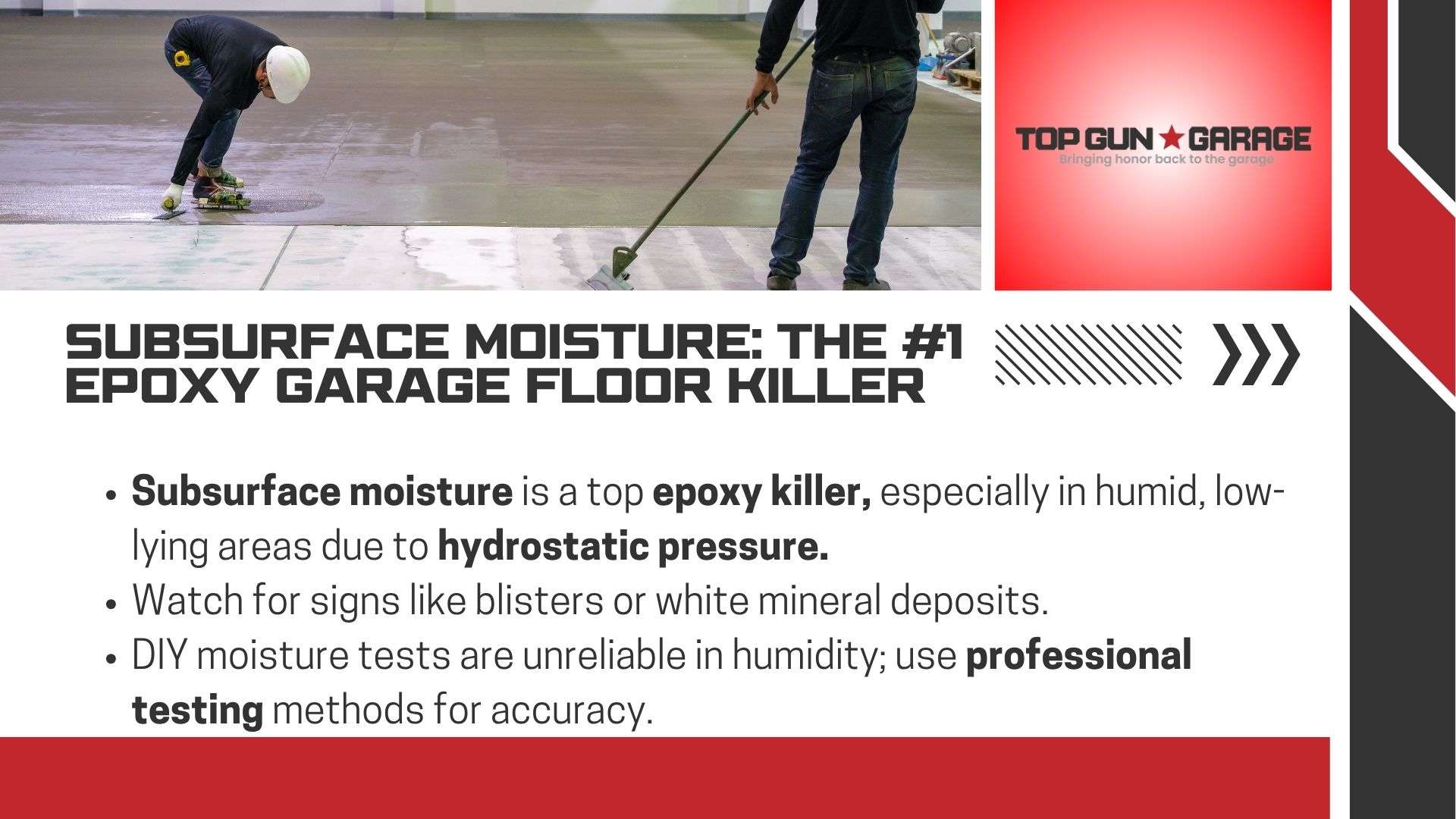
Hydrostatic Pressure in Low-Elevation Areas
Naples’ height varies from sea level to 13 feet. This creates big differences in water table depth:Water Table Depth Variations Across Naples Neighborhoods
- Coastal zones (Port Royal, Aqualane Shores): 1-2 ft below surface
- Golden Gate Estates: 4-5 ft depth year-round
- Vineyards area: Seasonal fluctuations up to 3 ft
Signs of Moisture Vapor Transmission (MVT)
Look out for these signs:- Blisters forming within 48 hours of application
- Whitish mineral deposits on concrete surfaces
- Musty odors despite proper ventilation
Improper Moisture Testing Methods
DIY tests often fail in Southwest Florida’s climate:Why Plastic Sheet Tests Fail in Humid Climates
Traditional ASTM D4263 plastic sheet tests fail when:- Morning dew forms under the plastic
- Ambient humidity exceeds 85%
- Concrete temperatures drop below air temperature
| Testing Method | Accuracy in Humidity | Time Required | Cost Range |
|---|---|---|---|
| Plastic Sheet | 38% Reliable | 16-24 hrs | $5-$15 |
| Calcium Chloride | 89% Reliable | 60-72 hrs | $75-$200 |
| Tramex Moisture Meter | 94% Reliable | Instant | $300-$600 |
Professional Calcium Chloride Testing Requirements
ASTM F1869 standards require:- Three tests per 1,000 sq ft minimum
- 72-hour stabilization period before testing
- Strict temperature controls (70-90°F)
Temperature Extremes During Application
Getting epoxy right in Southwest Florida means controlling the temperature. Naples’ weather is hot and sometimes cold, making it hard to cure epoxy just right. The temperature affects how the epoxy reacts, so timing is key.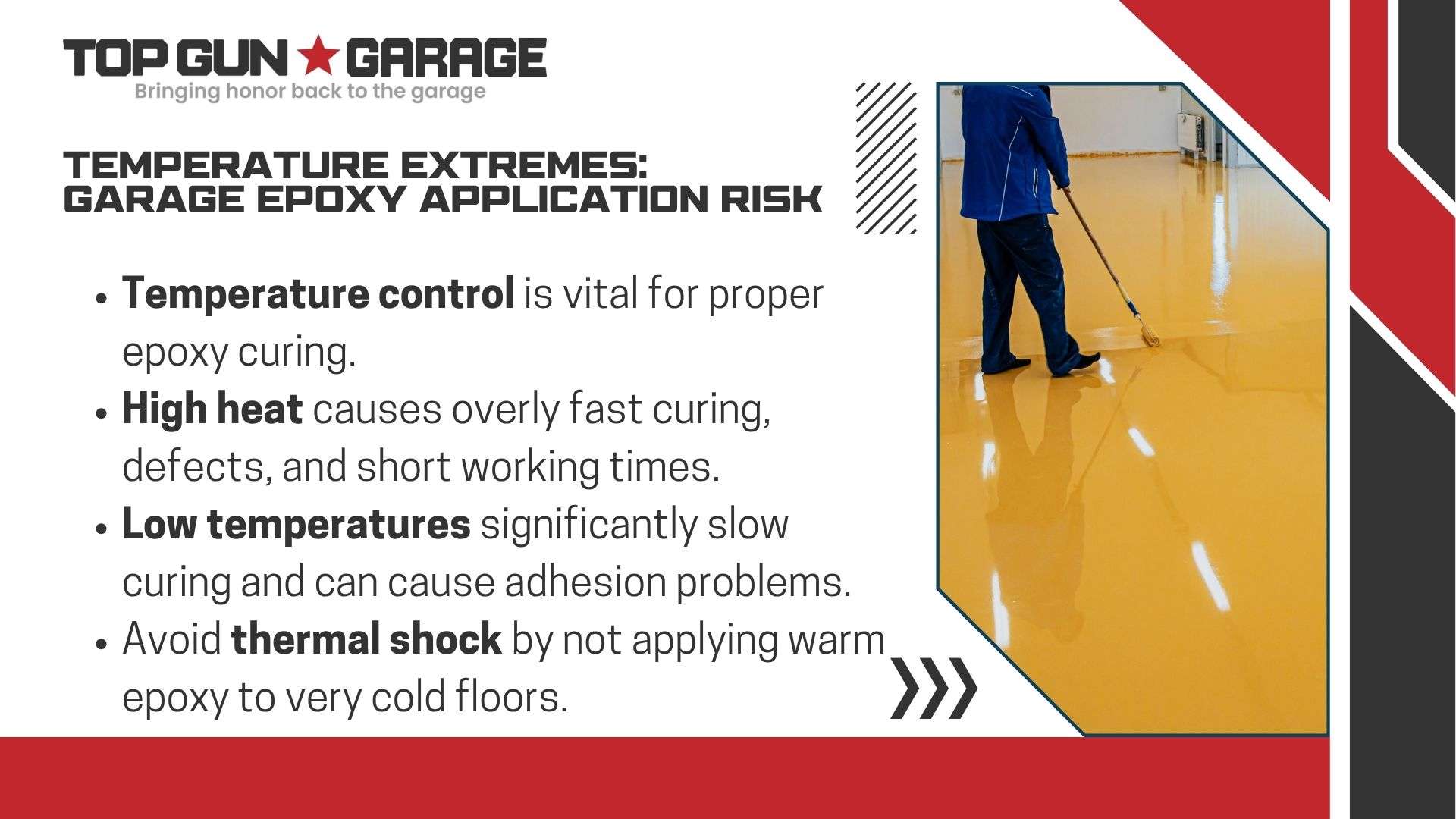
Summer Heat Acceleration Issues
In July and August, Naples gets very hot. This heat causes several problems:Optimal temperature ranges for epoxy application
Epoxy works best when it’s between 70-85°F. But if it gets too hot:- Over 90°F: The resin gets too thin, affecting film thickness
- Over 95°F: It cures too fast, leading to blushing (a white haze)
- Over 100°F: You’ll see more bubbles and uneven surfaces
| Epoxy Type | Working Time @ 75°F | Working Time @ 95°F |
|---|---|---|
| Standard 100% Solids | 45 minutes | 18 minutes |
| Polyurea Hybrid | 25 minutes | 8 minutes |
Morning vs afternoon application windows
During the summer, contractors work carefully:- 6-9 AM: This is the best time to apply primer as temperatures rise
- 9 AM-Noon: They need to work in the shade
- After 1 PM: This is the riskiest time due to direct sun
Cold Snap Complications
Winter in Naples can be cold, and this brings its own set of problems:Winter temperature drops below 50°F
The cold slows down the epoxy’s curing process, leading to:- Longer curing times (up to 72 hours)
- Difficulty in wetting the substrate and adhesion issues
- Thicker epoxy that needs special additives
Thermal shock from AC-chilled floors
Many homes in Naples keep their floors cool all year. Applying warm epoxy to these floors causes:- Changes in viscosity right away
- Condensation under the coating
- Different curing rates through the film’s depth
Salt Air Corrosion and Concrete Porosity
Naples’ location near the Gulf makes it a tough spot for epoxy. The salty air turns concrete into a challenge. Coastal homes face hidden dangers – salt particles carried inland up to 3 miles bond with concrete pores. This creates long-term structural weaknesses that need special fixes.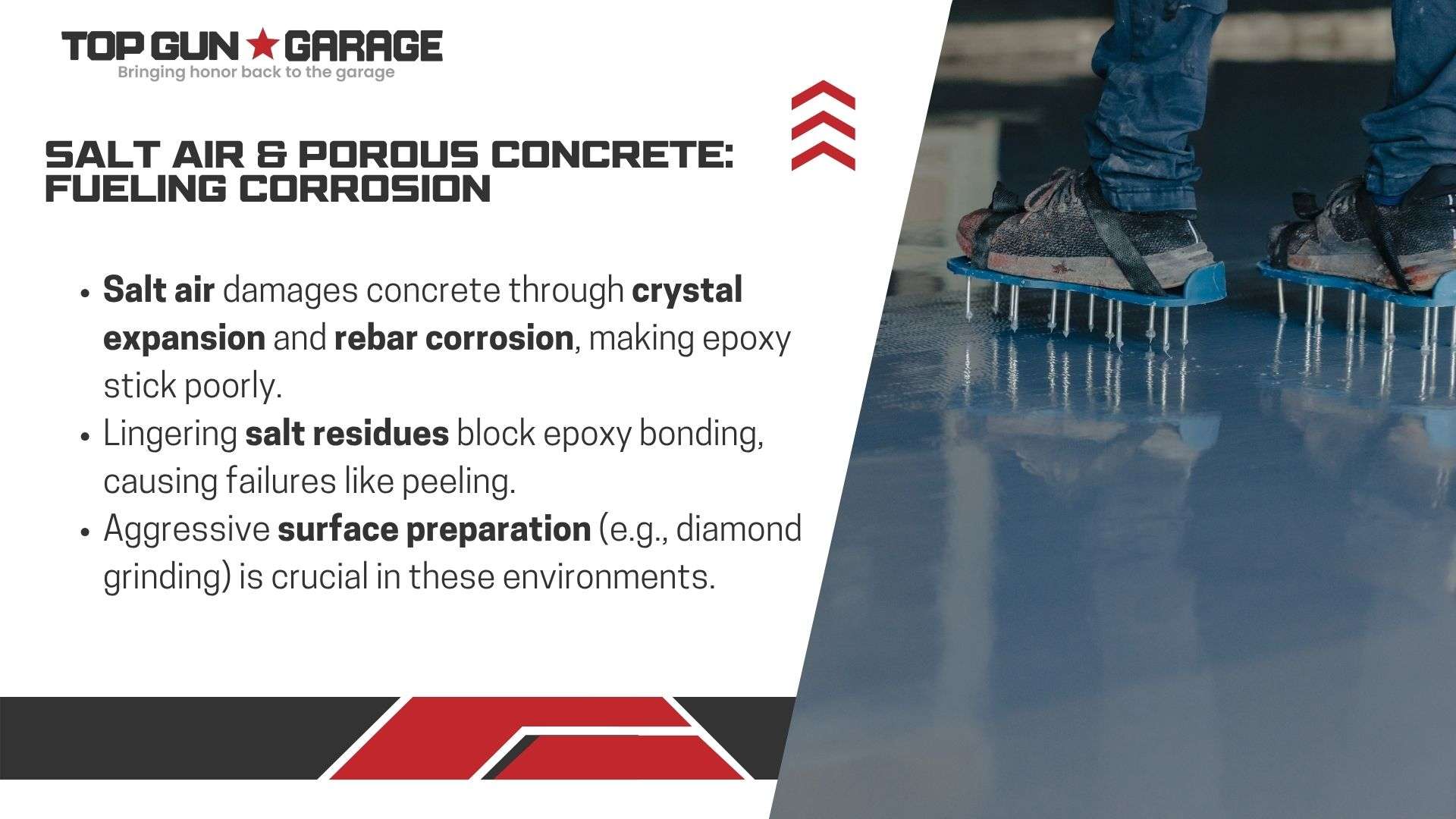
Hidden Damage Beneath the Surface
Concrete in Southwest Florida wears down in ways not seen inland. These changes happen slowly, often showing up when epoxy coatings start to fail early.Salt crystal expansion in surface pores
Saltwater in concrete evaporates, leaving behind growing crystals. This makes pores wider, making it hard for epoxy to stick. Each breeze brings more salt, speeding up the damage.Electrochemical corrosion of rebar networks
Chloride ions from salt air get to steel reinforcements in concrete. This causes rust that:- Expands up to 6 times original volume
- Cracks surrounding concrete
- Creates uneven surfaces for epoxy application
Overcoming Bonding Obstacles
Epoxy failures in coastal homes often hide from salt residues. Standard prep methods inland don’t work against Naples’ salt.Salt residue interference with chemical bonding
Even after washing, tiny salt crystals stay in concrete. These:- Block epoxy’s mechanical grip
- Create weak molecular bonds
- Lead to bubbling and peeling within months
Necessary surface etching modifications
Experts use 60-grit diamond grinding to fight salt. This method, proven on Marco Island homes,:- Removes salt-polluted surface layers
- Exposes fresh concrete matrix
- Creates optimal texture for quartz epoxy systems
Surface Contamination from Common Sources
Unseen residues on concrete can ruin epoxy projects in Southwest Florida garages. Things like oil spills or old coatings stop epoxy from sticking well. This leads to early peeling and a big waste of money. Naples homeowners often find out too late, after their new floor coating fails.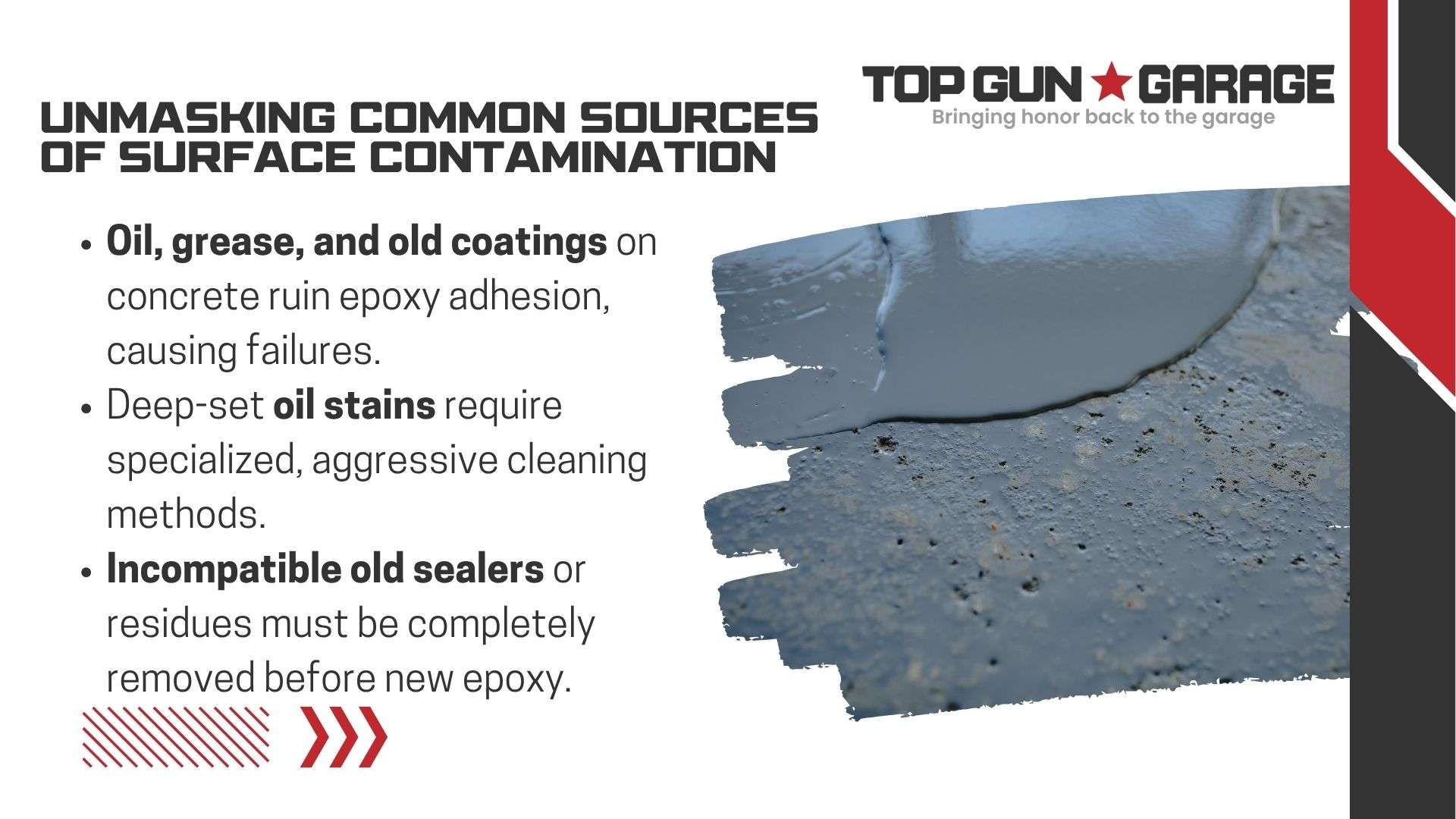
Oil and Grease Penetration in Garage Slabs
Car fluids soak deeper into concrete than people think. Transmission fluid goes ¼” deep in hours. Motor oil can reach ½” in porous concrete. Even stains from seven years ago might need special treatments.Automotive Fluid Absorption Depths
- Brake fluid: 3/8″ average penetration
- Power steering fluid: ½” in high-porosity concrete
- Antifreeze: Spreads laterally before deep absorption
Specialized Cleaning Techniques for Stained Concrete
For recent spills, industrial-grade cleaners work well. But for old stains, you need a stronger approach:- Use citrus-based solvent to break down hydrocarbons
- Scrub with diamond-embedded floor pads
- Rinse with 3000 PSI hot water extraction
Previous Coating Failures
In Naples, almost 40% of epoxy failures come from bad surface prep over old coatings. Water-based acrylic sealers don’t mix well with solvent-based epoxy. This causes problems like fisheyes and adhesion loss.Identifying Incompatible Sealers
| Sealer Type | Compatibility Sign | Failure Timeline |
|---|---|---|
| Silane/Siloxane | White haze formation | 2-3 weeks |
| Epoxy Paint | Edge curling | Immediate |
| Urethane | Bubble patterns | 6-12 months |
Complete Removal Requirements for Old Epoxy
Just grinding doesn’t remove all old coatings. Pros use a mix of mechanical scarification and chemical strippers. This gets the surface clean to ISO 8501-1 Sa2.5 standards. Any big pieces left over will mess up the new epoxy bond.Crack Dynamics in Florida Slabs
Understanding crack behavior in Naples’ concrete surfaces is key to epoxy coating success. Slab fractures under 1/8″ might seem minor but can harm protective layers if not fixed right. Local contractors say 63% of epoxy coating issues come from unmanaged cracks due to Florida’s humidity and temperature changes.Decoding Crack Activity Levels
Contractors use simple tests to classify fractures:| Crack Type | Width Threshold | Movement Potential | Repair Method |
|---|---|---|---|
| Shrinkage | < 1/16″ | Dormant | Epoxy sealant |
| Settlement | 1/16″-1/4″ | Active | Polyurea injection |
| Structural | > 1/4″ | Critical | Concrete replacement |
Hairline Crack Treatment Protocols
- Clean cracks with compressed air
- Apply low-viscosity epoxy primer
- Use UV-resistant filler for outdoor slabs
Structural Movement Warning Signs
- Diagonal cracks near corners
- Uneven gaps around windows/doors
- Recurring fractures after repairs
Managing Surface Breakdown
Spalling concrete makes surfaces uneven, stopping epoxy from sticking well. When concrete layers separate, you must remove everything before coating.Repair Thresholds for Damaged Concrete
- Resurface if < 1/4″ depth loss
- Replace sections with > 1/2″ spalling
- Full slab replacement when reinforcement rusts
Epoxy Filler Compatibility Issues
Standard epoxy fillers fail when:- Substrate moisture exceeds 4%
- Ambient temperatures drop below 55°F
- Surface contains chlorides from saltwater
Curing Process Mistakes Specific to Naples
Epoxy coatings in Naples face a critical phase during curing. The Southwest Florida climate increases risks not seen in drier areas. Two main factors can ruin projects: humidity during curing and using surfaces too soon. Knowing how to handle these issues is key to a successful floor.Humidity Trapping During Polymerization
Naples’ humidity, averaging 75%, is a hidden danger during epoxy’s 24-hour curing time. Moisture can cause clouding, weak bonds, and “fish eyes.” To fight this, contractors use:Optimal Dehumidification Strategies
- Running industrial-grade dehumidifiers 12 hours before applying
- Keeping humidity between 45-55% with digital hygrometers
- Sealing garage doors with plastic barriers
Monsoon Season Precautions
Installations in July-September need extra care. Successful teams:- Plan coatings between storms using NOAA forecasts
- Use portable canopies over driveway entrances
- Delay jobs if rain chance is over 40%
Premature Use Disasters
63% of epoxy failures in Naples come from rushing back into garages. Two main issues lead to repairs:Vehicle Weight Impacts on Fresh Epoxy
Tire marks appear when cars are driven on coatings too soon. Golf carts, weighing 900-1,200 lbs, are a big problem in Naples’ winter.Foot Traffic Timeline Violations
- 0-24 hours: No access
- 24-72 hours: Soft-soled shoes only
- 72+ hours: Normal use
Professional Evaluation and Repair Solutions
Fixing epoxy in Naples is more than just a quick fix. Local pros like Top Gun Garage use special tools to find and fix hidden problems. They use the latest tech and tailor their fixes for Naples’ unique weather.Top Gun Garage’s Diagnostic Process
Their 7-step check starts with finding hidden moisture. They use:- Tramex moisture meters to map humidity
- Schmidt hammer tests to check concrete strength
- Surface profile gauges to measure texture
Moisture Mapping With Tramex Meters
These tools find hidden water with radio waves. They show moisture patterns, key for homes near Naples’ canals.Surface Profile Depth Analysis
Technicians use digital microscopes to check concrete texture. They make sure it’s right for epoxy to stick well in humid places.Advanced Preparation Techniques
For homes with salt damage, Top Gun Garage uses:- Diamond grinding to remove salt from concrete
- Hydro-demolition with high-pressure water jets
- 40-mil polymer overlays to keep moisture out
Diamond Grinding for Salt-Contaminated Slabs
This method removes a thin layer of concrete with diamonds. It gets rid of salt in porous concrete, common in coastal areas.Hydro-Demolition for Severe Spalling
High-pressure water blasts away weak concrete without harming rebar. This makes the surface ready for epoxy and stops rust. Naples residents can book checks at (239) 488-7000. Top Gun Garage is near Vanderbilt Beach, ready to help with epoxy problems in Collier County.Conclusion: Ensuring Epoxy Success in Naples
Epoxy coating success in Naples needs careful attention to local factors. Coastal humidity, salt, and temperature changes pose challenges. It’s vital to test moisture before applying epoxy, more so in areas like Pelican Bay or Port Royal. Preparing the surface is key to lasting results. Garage slabs with oil need special cleaning, and cracked concrete must be fixed first. Top Gun Garage uses diamond grinding and vapor barriers for Florida’s concrete. They have 15 years of experience with Naples homes. This ensures their epoxy works well with local concrete. Applying epoxy in a cool, controlled space is important. This prevents it from curing too fast in summer. In winter, they schedule projects carefully to avoid cold damage. For lasting epoxy results, get an expert evaluation. Top Gun Garage checks for moisture, cracks, and salt. Their epoxy systems are made to last against Gulf Coast weather. Call (239) 555-1234 or visit TopGun-Garage.com for assessments and guaranteed installations.FAQ
How does Naples’ concrete composition affect epoxy adhesion?
Naples’ concrete has limestone that makes it porous. Salt in the air makes it even more so. This reduces epoxy’s bond strength by 30-40% compared to other substrates.
Why does subsurface moisture cause epoxy failures in Golden Gate Estates?
Golden Gate Estates has high water tables. This pressure exceeds Florida’s moisture standards. Untreated slabs release a lot of water in summer, causing blisters in epoxy within 72 hours.
What moisture testing methods meet Naples’ requirements?
For commercial projects, Naples requires ASTM F1869 calcium chloride tests. DIY methods often miss moisture. Professionals use Tramex moisture meters and hygrometer sensors for accurate results.
How do summer temperatures impact epoxy application in Naples?
High temperatures in July and August cause epoxy to cure too soon. Contractors apply epoxy in the early morning when it’s cooler. This ensures proper curing.
Why does salt air corrosion require special surface preparation?
Salt can penetrate far inland and damage concrete. Marco Island homes need diamond grinding to prepare the surface. This creates a strong bond for epoxy.
How should deep oil stains be treated before epoxy coating?
Oil stains need special cleaning. Solvent scrubs and TSP rinses are used. Water-based sealers won’t work. Professionals use solvent-based urethane primers to cover stains.
What distinguishes shrinkage cracks from structural damage?
Shrinkage cracks are different from structural damage. Shrinkage cracks are caused by drying concrete. Structural damage is due to other issues.
Why is humidity control critical during Naples summers?
High humidity in summer causes epoxy to cure poorly. Contractors use dehumidifiers to keep humidity low. This ensures proper curing, even in coastal areas.
What professional techniques ensure long-lasting epoxy floors?
Top Gun Garage uses advanced techniques for epoxy floors. They test the surface and apply a thick layer. Their 7-step process includes preparing the surface and curing the epoxy before allowing traffic.