 Skip to content



Key Takeaways
- Coating depth directly impacts resistance to damage and daily wear.
- Quality installation prevents premature peeling or bubbling.
- Chemical-resistant surfaces withstand automotive fluids and cleaning agents.
- Regular upkeep preserves appearance and structural integrity.
- Local climate considerations affect material selection and application methods.
- Professional services ensure optimal thickness and adhesion for long-term use.
Understanding Epoxy Flooring: Basics & Benefits
Durable surfaces require more than just a simple paint job. Epoxy flooring combines science and practicality, creating a shield that transforms ordinary spaces into resilient zones. This resin-based system bonds tightly to concrete, forming a seamless layer that repels damage while adding visual appeal.What Is Epoxy Flooring?
Epoxy flooring consists of two components: a resin and a hardener. When mixed, they chemically react to form a rigid, non-porous surface. Unlike traditional options, this coating resists penetration from oils, solvents, and moisture. Its adaptability makes it ideal for areas exposed to daily wear, such as workshops or storage spaces.Key Benefits for Garage Applications
Garages face unique challenges—oil spills, tire marks, and temperature fluctuations. Epoxy coatings address these issues with:- Chemical resistance: Repels automotive fluids and cleaning agents.
- Easy maintenance: Smooth finishes allow quick wipe-downs.
- Enhanced safety: Textured options reduce slip risks.
How Epoxy Thickness Affects Garage Floor Lifespan
 Choosing the right depth for protective coatings is crucial for durability. Coatings range from 300 microns to over 3 millimeters, depending on application needs. Thicker layers offer better resistance to abrasion and harsh substances.
Thickness Recommendations for Residential and Industrial Use
Residential spaces typically require 300-500 microns for light use. Industrial environments need 2-3 millimeters to handle heavy equipment and frequent traffic. Proper installation ensures even distribution across the concrete floor.| Application Type | Recommended Thickness | Traffic Level | Chemical Exposure |
|---|---|---|---|
| Home Garage | 300-500 microns | Moderate | Low |
| Auto Repair Shop | 2-3 millimeters | High | Severe |
| Warehouse | 1.5-2 millimeters | Heavy | Moderate |
Impact of Foot Traffic and Chemical Exposure
High-traffic areas wear down thin coatings faster. Spills from oils or solvents penetrate insufficient layers, causing damage to the concrete floor beneath. Thicker applications extend life by absorbing impacts and resisting stains. Key factors include surface preparation and expected use intensity. For example, parking areas need 500+ microns to withstand tire friction. Professional installation addresses these variables, preventing premature repairs.Factors Influencing Epoxy Floor Longevity
 Longevity in coated surfaces depends on two critical elements: environmental resilience and technical precision. Even premium materials underperform without addressing these variables.
Environmental Conditions and UV Exposure
Sunlight and temperature shifts challenge surface integrity. UV rays degrade unprotected coatings, causing:- Yellowing or fading of colors
- Surface brittleness leading to cracks
- Reduced chemical resistance
Quality of Installation and Substrate Preparation
A flawless finish starts beneath the surface. Proper substrate preparation involves:- Grinding concrete to create adhesion-friendly texture
- Removing oil stains, dust, or moisture
- Filling cracks to prevent air pockets
Proper Surface Preparation and Installation Techniques
 The foundation of a resilient surface lies in meticulous groundwork before application. Flawless results demand rigorous cleaning and repair processes to ensure maximum adhesion. Skipping these steps often leads to premature peeling, wasting time and resources.
Steps for Effective Concrete Cleaning and Repair
Thorough preparation involves three critical stages:- Degreasing: Remove oil stains with alkaline cleaners, followed by pressure washing.
- Crack repair: Fill gaps using polymer-modified cement to prevent moisture intrusion.
- Surface profiling: Diamond grinders create micro-textures for better coating adhesion.
Professional Installation vs. DIY Approaches
While DIY kits offer convenience, they lack precision. Professionals use industrial-grade tools and follow strict mixing ratios for consistent results. Here’s a comparison:| Approach | Tools Used | Time Required | Success Rate |
|---|---|---|---|
| Professional | Diamond grinders, moisture meters | 2-3 days | 98% |
| DIY | Scrub brushes, store-bought kits | 1 day | 72% |
Maintenance Tips to Extend Epoxy Floor Lifespan
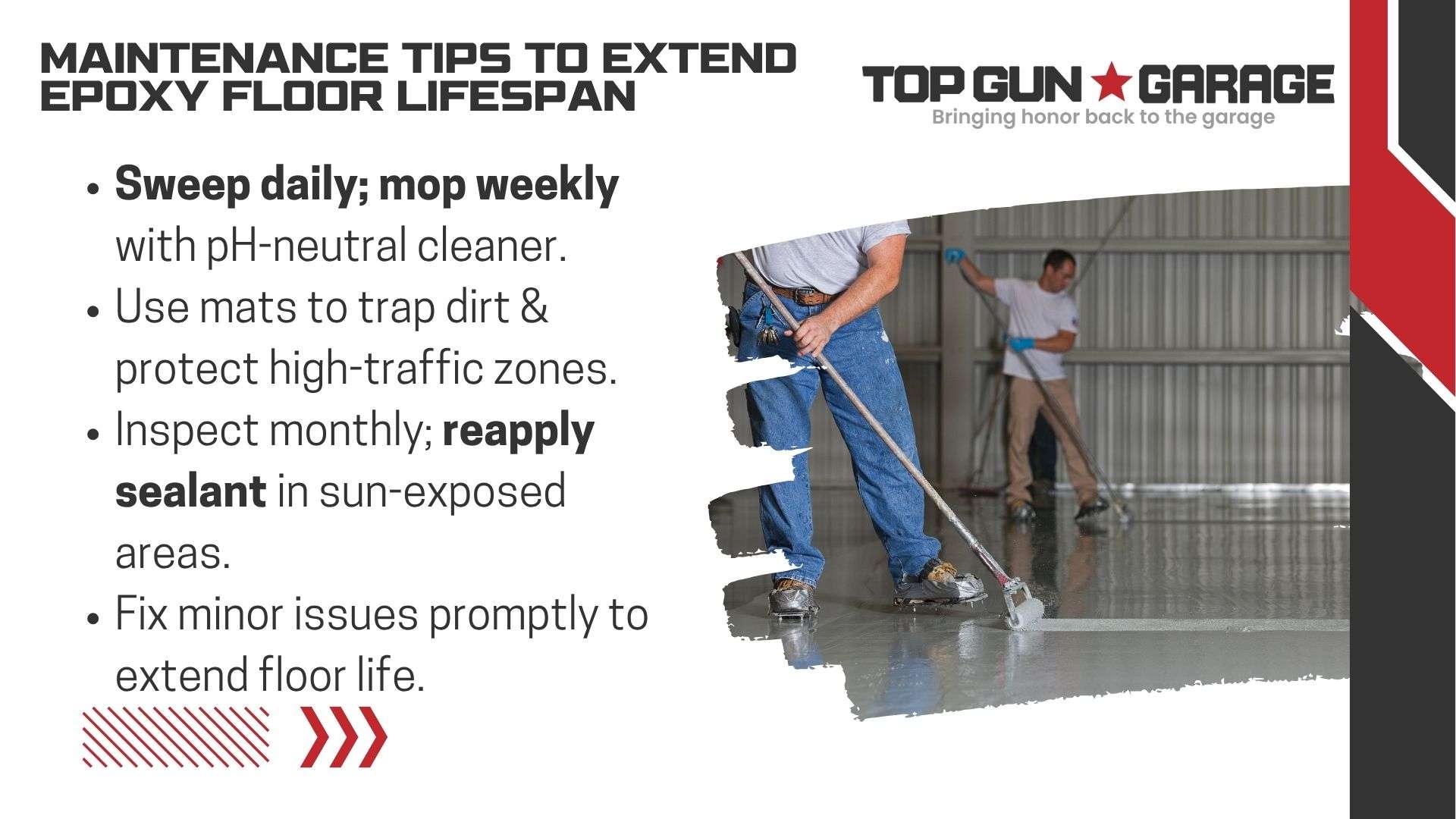 Preserving the performance of coated surfaces demands consistent care tailored to their environment. Simple habits prevent wear while maintaining visual appeal across residential and commercial spaces.
Daily Care Strategies for Lasting Results
Implement these practices to protect surfaces from damage:- Sweep daily to remove abrasive particles like sand or gravel
- Mop weekly with pH-neutral cleaners to avoid chemical reactions
- Place rubber mats near entryways to trap dirt before it spreads
- Check for hairline cracks near heavy storage areas
- Test surface adhesion by pressing tape on suspicious spots
- Reapply sealant every 2-3 years in sun-exposed spaces
Comparing Epoxy, Vinyl, and Other Flooring Solutions
Selecting the right material for high-traffic areas requires balancing performance and practicality. Different types of floors excel in specific settings, from residential garages to industrial workshops. This analysis evaluates durability, cost, and maintenance needs across popular options.Durability and Lifespan Comparison
Epoxy systems outperform alternatives in demanding environments. Vinyl planks crack under heavy tools, while tile grout stains from oil spills. Rubber mats cushion impacts but degrade faster when exposed to sunlight or chemicals.| Material | Average Lifespan | Chemical Resistance | Impact Tolerance |
|---|---|---|---|
| Epoxy | 15-25 years | Excellent | High |
| Vinyl | 5-10 years | Moderate | Low |
| Polished Concrete | 10-15 years | Good | Medium |
Cost and Maintenance Considerations
Initial installation costs vary widely. Epoxy requires professional application but demands minimal upkeep. Vinyl offers lower upfront pricing yet needs frequent replacements in commercial spaces. Key maintenance differences:- Epoxy: Annual deep cleaning, occasional resealing
- Vinyl: Daily sweeping, adhesive repairs
- Concrete: Quarterly polishing, stain treatments
Conclusion
Selecting the right resin coatings demands attention to detail and professional expertise. Proper application depth and surface preparation create a durable foundation that withstands daily wear. Quality installation prevents peeling, while routine care protects treated surfaces from UV damage and chemical exposure. These protective layers outperform traditional options with seamless, stain-resistant finishes. Their resilience in high-traffic areas makes them the ideal choice for both homes and commercial spaces. Top Gun Garage specializes in precision installations using industrial-grade materials. Serving Naples, FL, and surrounding areas, their team ensures optimal adhesion and longevity. For a free estimate on transforming your space with high-performance surfaces, call (239) 488-7000. Trust experts to deliver coatings that combine strength, safety, and lasting visual appeal.FAQ
Does coating depth influence durability in high-traffic areas?
Thicker resin layers provide better resistance to abrasion and heavy use. Industrial-grade coatings (12–15 mils) handle machinery or constant activity, while residential spaces (8–10 mils) suit moderate foot traffic. Properly applied systems reduce wear from daily use.
What steps ensure strong adhesion during installation?
Surface preparation involves grinding, acid etching, or shot blasting to remove contaminants. Cracks must be filled, and moisture barriers applied. Brands like Rust-Oleum recommend pH-neutral cleaning before applying primer for optimal bonding.
Can UV exposure degrade coatings over time?
Direct sunlight causes yellowing or brittleness in standard resin systems. UV-stable options, such as polyaspartic topcoats from Sherwin-Williams, retain color and flexibility. Indoor spaces with limited sunlight require less UV protection.
Are commercial-grade options different from residential ones?
Industrial coatings contain higher solids content and additives for chemical resistance. Products like ArmorPoxy’s ArmorClad include quartz sand for slip resistance, while DIY kits focus on aesthetics and light-duty performance.
How do cleaning routines prevent premature wear?
Sweeping debris daily and mopping with mild detergents prevent abrasive particles from scratching surfaces. Avoid harsh chemicals like bleach. Reapplying a clear topcoat every 3–5 years restores shine and protection.
Is professional installation worth the cost?
Certified installers ensure proper substrate preparation, mix ratios, and curing conditions. DIY projects risk bubbles, uneven layers, or peeling. Long-term savings come from reduced repairs and extended service life.
Do temperature changes impact performance?
Extreme heat or cold causes expansion and contraction, leading to cracks if the substrate isn’t sealed. Epoxy systems with flexible resins, such as those from Legacy Industrial, adapt better to seasonal shifts.